
What Is Ease?
Ease is the term used to describe the difference between the size of a garment and the size of the body the garment is intended to fit. There are two types of ease used in garment design–wearing ease and design ease. Wearing ease is necessary for movement in places like the underarm and elbow. Whether the garment is designed to wear over other clothing or just undergarments will also help to determine how much wearing ease is needed. Design ease determines the shape and fit of a garment. A batwing sweater will have a lot of ease at the underarm and chest while a set-in sleeve sweater will usually have only a small amount of ease. In a bulky sweater the thickness of the fabric will take up some of the ease between the outer circumference of the sweater and the circumference of the body. Some garments can be worn with negative ease for a form-following fit because of the inherent stretch of knit fabric.
Some general guidelines regarding ease and fit:
- Very close fit – 0 to 2″/5 cm negative ease
- Close fit – 0 to 2″/5 cm positive ease
- Standard fit – 2 to 4″/5 to 10 cm positive ease
- Loose fit – 4 to 6″/10 to 15 cm positive ease
- Oversized fit- 6″/15 cm or more positive ease

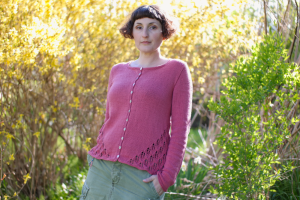
How To Determine Your Preferred Ease
Ease is ultimately a matter of personal preference. Some people like to wear their sweaters with a lot of ease and others prefer no ease at all. The amount of ease suggested in a pattern is just a suggestion, based on a theoretical range of body sizes. Every knitter will not fit neatly into one of these sizes. When I am grading a knitting pattern I apply the same amount of intended ease to each size to maintain a consistent fit across the size range, but the amount of ease the garment is worn with is ultimately up to the knitter. Hand knitting is wonderfully customizable, and knitters can choose the amount of ease they prefer. An evenly graded size range, a schematic, and finished measurements will make it easier for knitters to achieve the fit they want.
To determine how much ease you prefer, measure the width of a sweater that you like the fit of at the bust/chest and multiply the width by 2 to get the circumference. Then measure your body around the fullest part of your bust/chest. Subtract your body measurement from the sweater measurement. This is your preferred ease and corresponds to the suggested ease given in a pattern. If a pattern suggests 6″ to 8″/15 to 20 cm of ease but you know from your measurements that you prefer 2″/5 cm of ease, you may want to knit one size smaller than suggested for your chest measurement.
It’s also important to get the right amount of ease at the upper arm. Measure the width of your sweater’s sleeve just below the underarm and multiply by 2 to get the circumference, then measure around your arm just below the underarm. Subtract your arm measurement from the sweater measurement to determine how much ease you like in your sleeves. Now look at the upper arm circumference of the pattern size you chose. If the pattern’s sleeve circumference is the same as your well-fitting sweater, that’s perfect! If the upper sleeve circumference is different from your preferred sleeve circumference you may want to choose a different size or adjust the circumference of the sleeve. Negative ease in the sleeves will make them ill-fitting and uncomfortable.
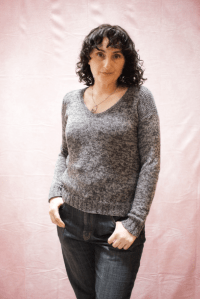
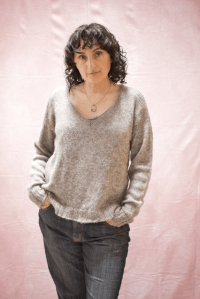
Ease and Bust Size
You can see from my two versions of the Lake Geneva Sweater above that the same garment can look very different depending on the amount of ease it’s worn with. Ease is calculated at the full bust, so the size of your bust relative to the rest of your torso will also affect the amount of ease in your garment. My high bust measurement (measured around my chest just below the underarms) is 34 1/2″/87.5 cm and my full bust is 38″/96.5 cm. The smaller version, worn with negative ease at the bust, still has some positive ease in the sleeves and body because my full bust is 3 1/2″/9 cm larger than my high bust, and most standard women’s size charts assume a B cup, or a full bust 2″/5 cm larger than your high bust. If you wear a C or D cup, or your full bust is 3″ to 4″/7.5 to 10 cm larger than your high bust, you may need less ease at the full bust to achieve your preferred fit everywhere else. If your cup size is larger than DD or 5″/12.5 cm larger than your high bust, you may wish to make a smaller size than recommended to fit the rest of your body and add extra fabric at the bust only with additional rows or stitches in the front of the garment.
The Relative Ease Fallacy
There have been some discussions recently about whether larger people need to have more ease in their garments to achieve the same look and fit as smaller people wearing the same type of garment. I think this idea is based on false assumptions and a misunderstanding of geometry. Remember, ease is the difference between the body measurement and the garment measurement. If the same amount of ease is applied to each size in the range, the difference between the body and garment measurements will remain the same.
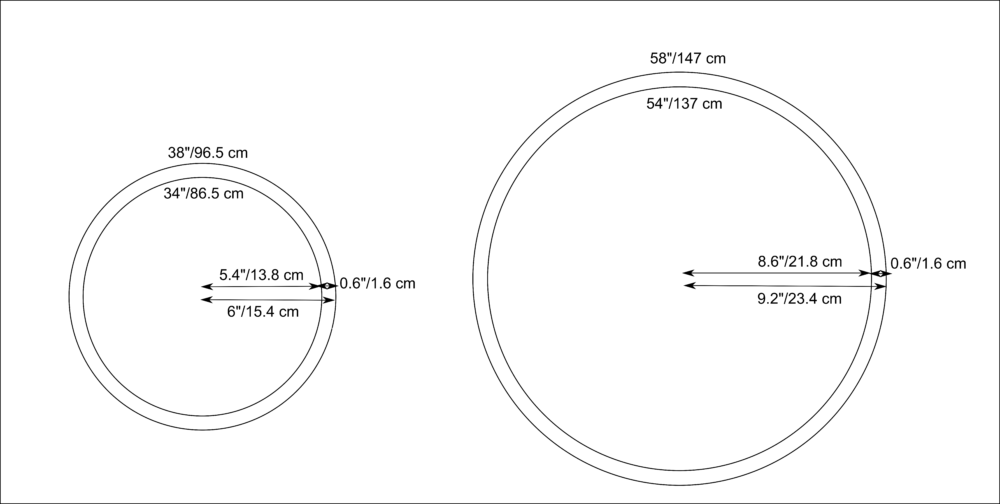
The two pairs of circles above illustrate what happens when the same amount of ease is applied to two different size garments. Imagine that the inner circle is the body and the outer circle is the garment. I calculated the radius of each circle in the pair and subtracted the radius of the smaller circle from the larger one. The difference between the outer circle and the inner circle is the ease. It is not relative to the size of the circles and stays exactly the same as long as the difference in the circumferences stays the same. This is why relative ease doesn’t work. You will not achieve the same fit by applying different amounts of ease across the size range. Notice also that even though the outer circle is 4″/10 cm larger than the inner circle, the difference between the radii is only about 1/2″/1.5 cm.
How much ease do you prefer? Do you usually follow a design’s suggested ease? Tell us about it in the comments!

 Kephren Pritchett