Category: Techniques and Tutorials

A list of stitches and abbreviations used in my patterns with explanations and links to tutorials.

  • The Side-to-Side Join

    The Side-to-Side Join

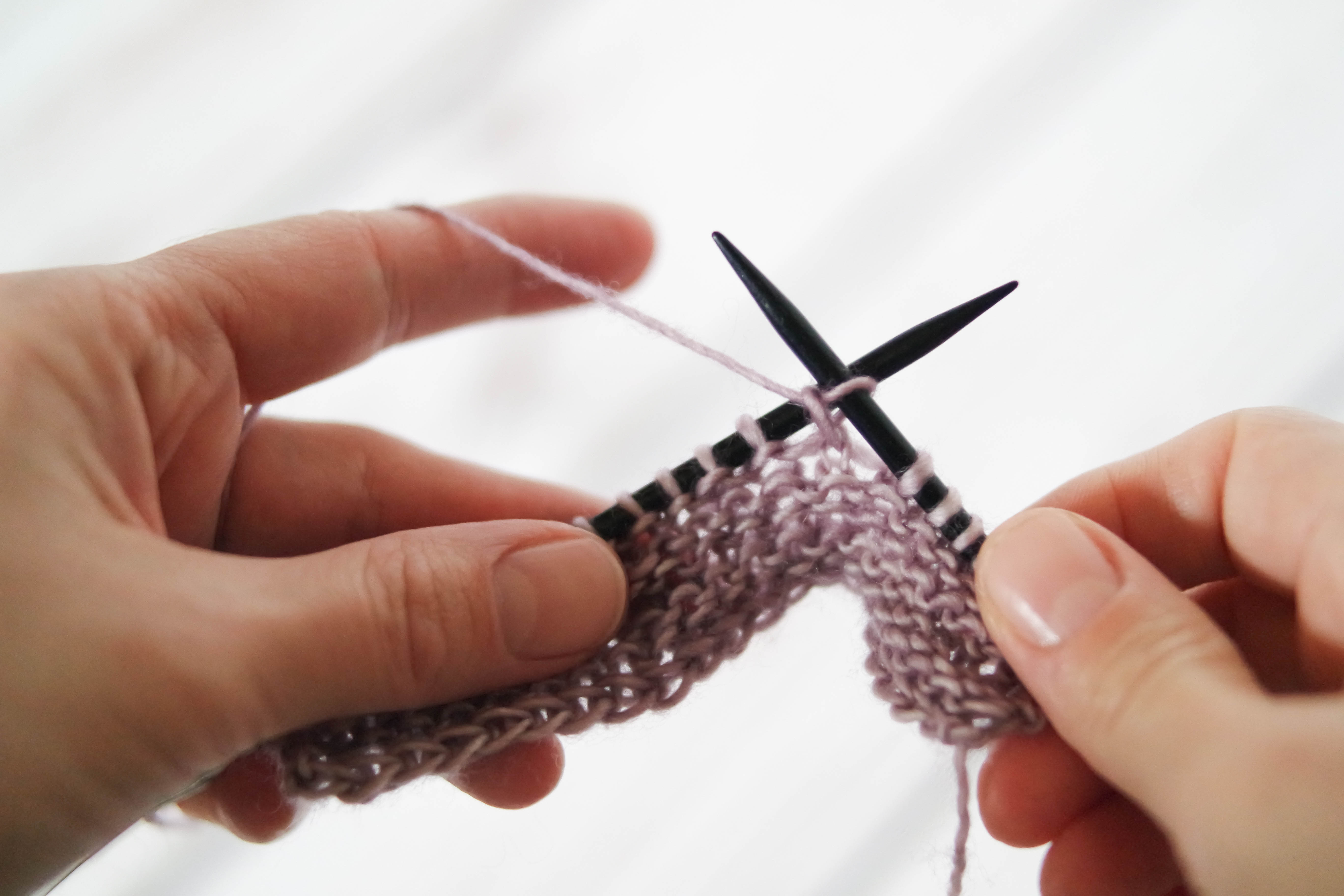
    When knitting cardigans, stitches are often picked up and worked onto the front edges of the sweater for the button bands and button hole bands. Perfectly serviceable bands are created this way, and if care is taken to pick up the correct amount of stitches and work at the right gauge, the bands will work, but there are a few things that can go wrong. The bands may pucker (too few stitches picked up) or flare (too many stitches picked up). Ribbing, seed stitch, and garter stitch, all excellent band choices for their non-curling properties, have a tendency to spread width wise, which can cause perpendicular bands to droop.

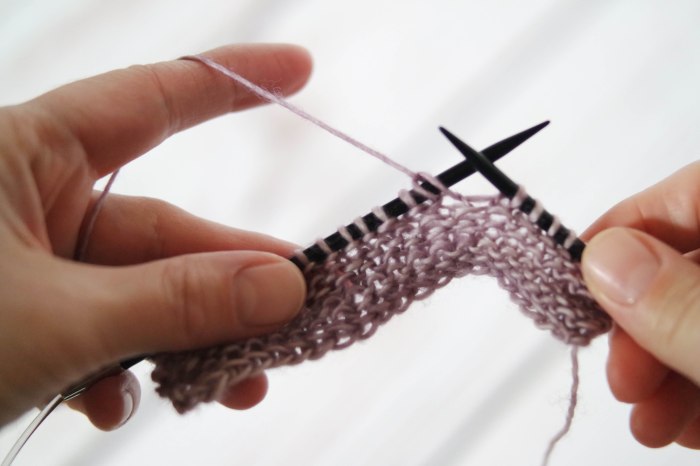
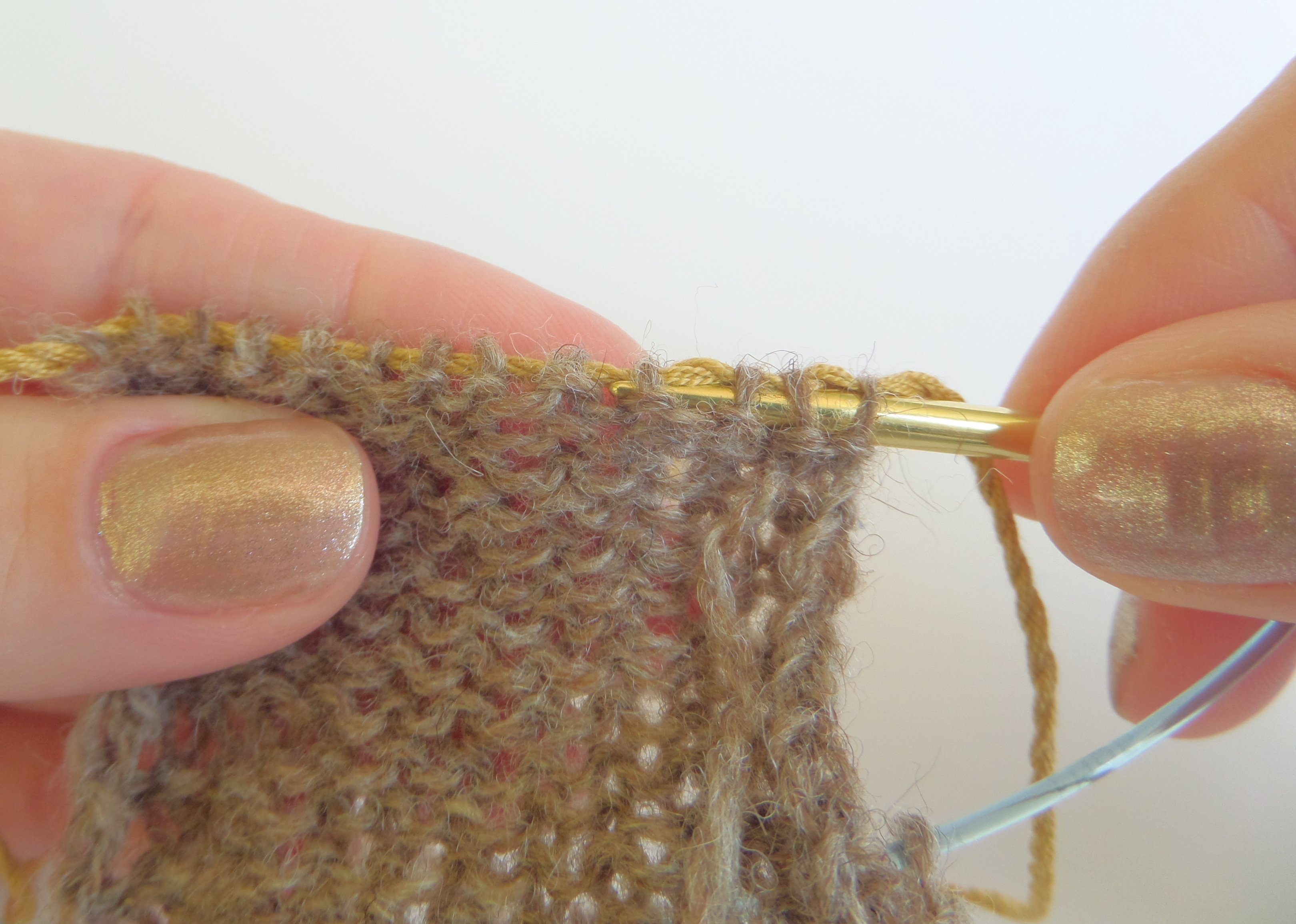
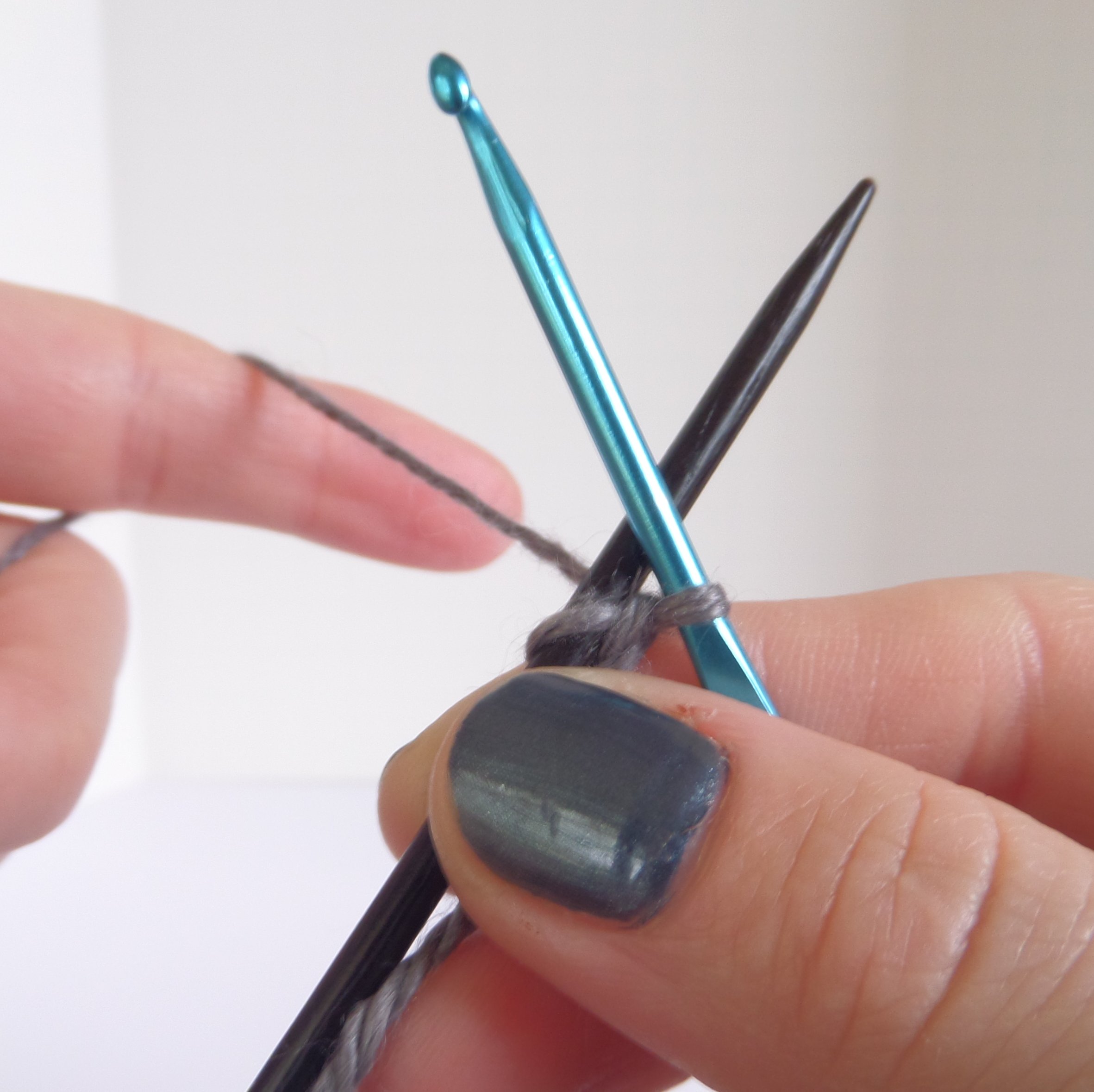
    One way to avoid all of these problems is by working the bands in the same direction as the body of the sweater, parallel to the fronts. The same number of rows can be worked on the band as there are on the front of the cardigan, but at a tighter gauge, giving the bands just the right amount of stretch. Seed stitch, ribbing, and garter stitch are given a firm vertical tug, keeping their width-wise spread in check. A different color can be used, or even a different yarn. Bands like this are often sewn on, or sometimes stitches are picked up along the sweater fronts and bound off as the band is attached.  I think the side-to-side join is the neatest and easiest way to attach parallel front bands, but I rarely see it used, so I’ve illustrated the technique in steps below.

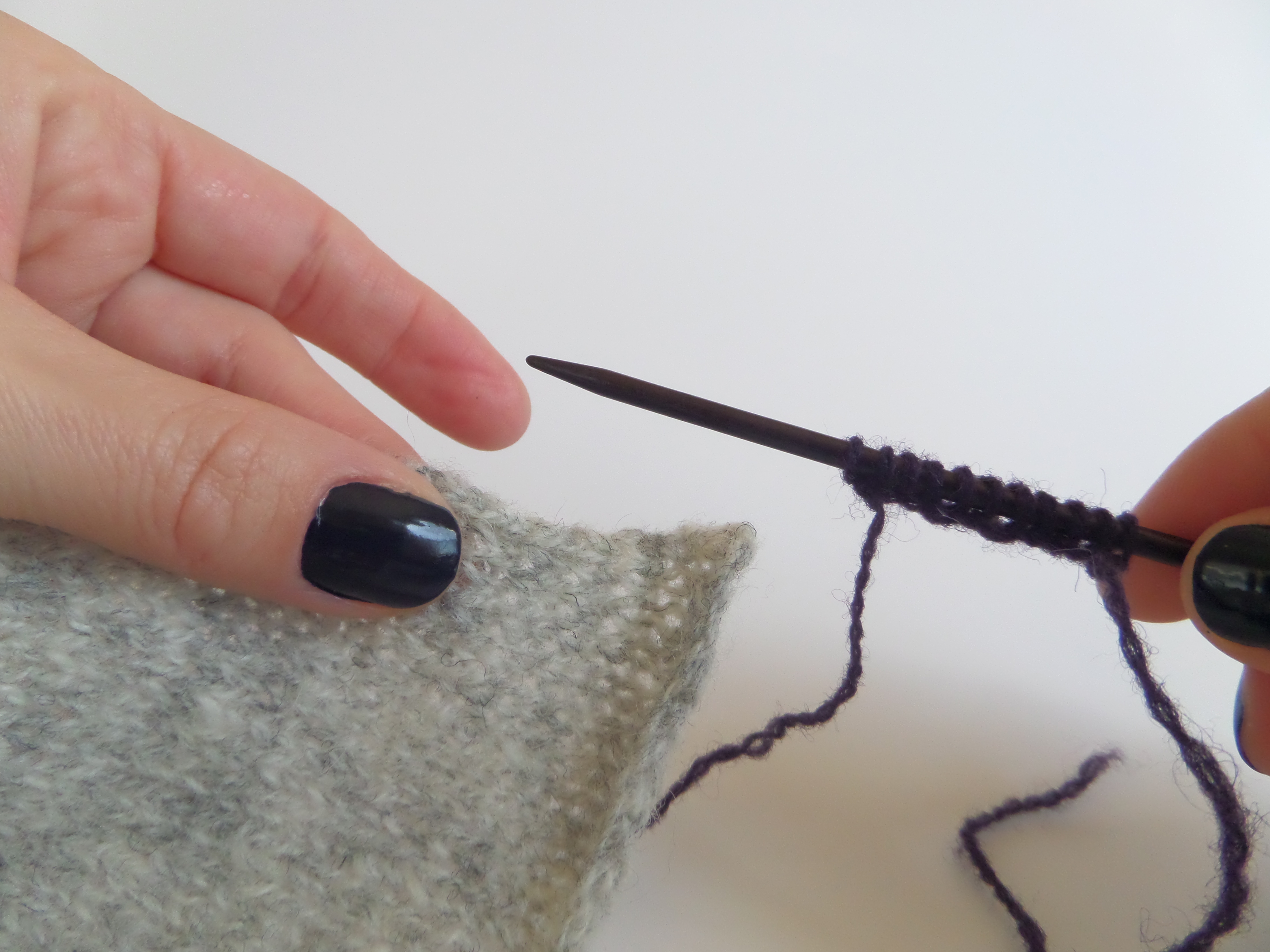
    Setup: Start by casting on the number of stitches needed for your band. Double pointed needles or short straight needles 1 or 2 sizes smaller than the needles used for the body of the sweater will work best.
    SAMSUNG CAMERA PICTURES

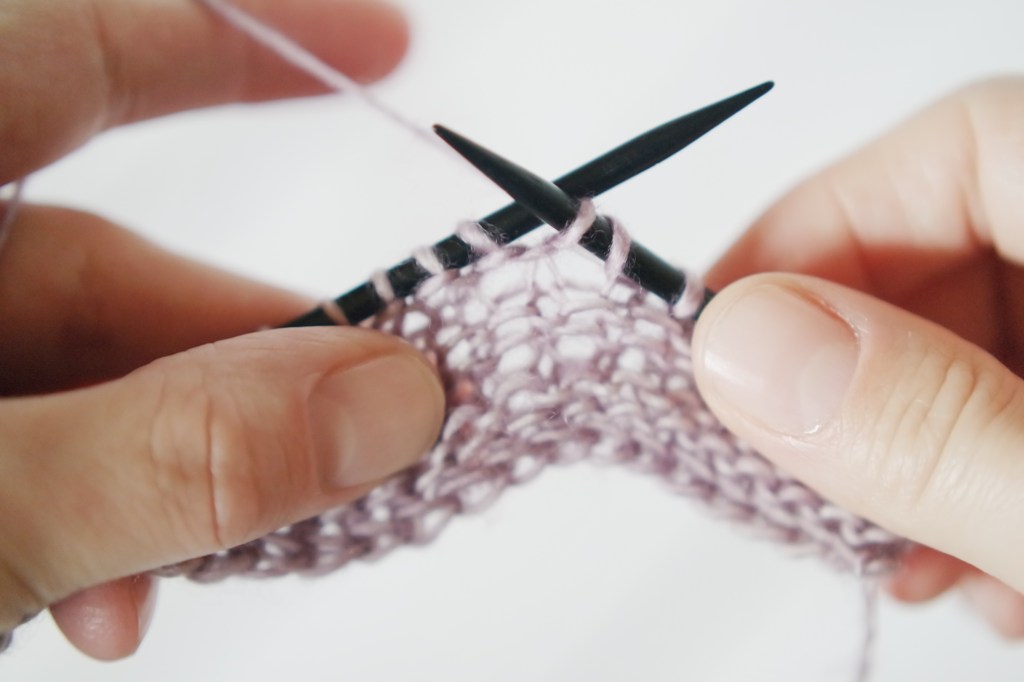
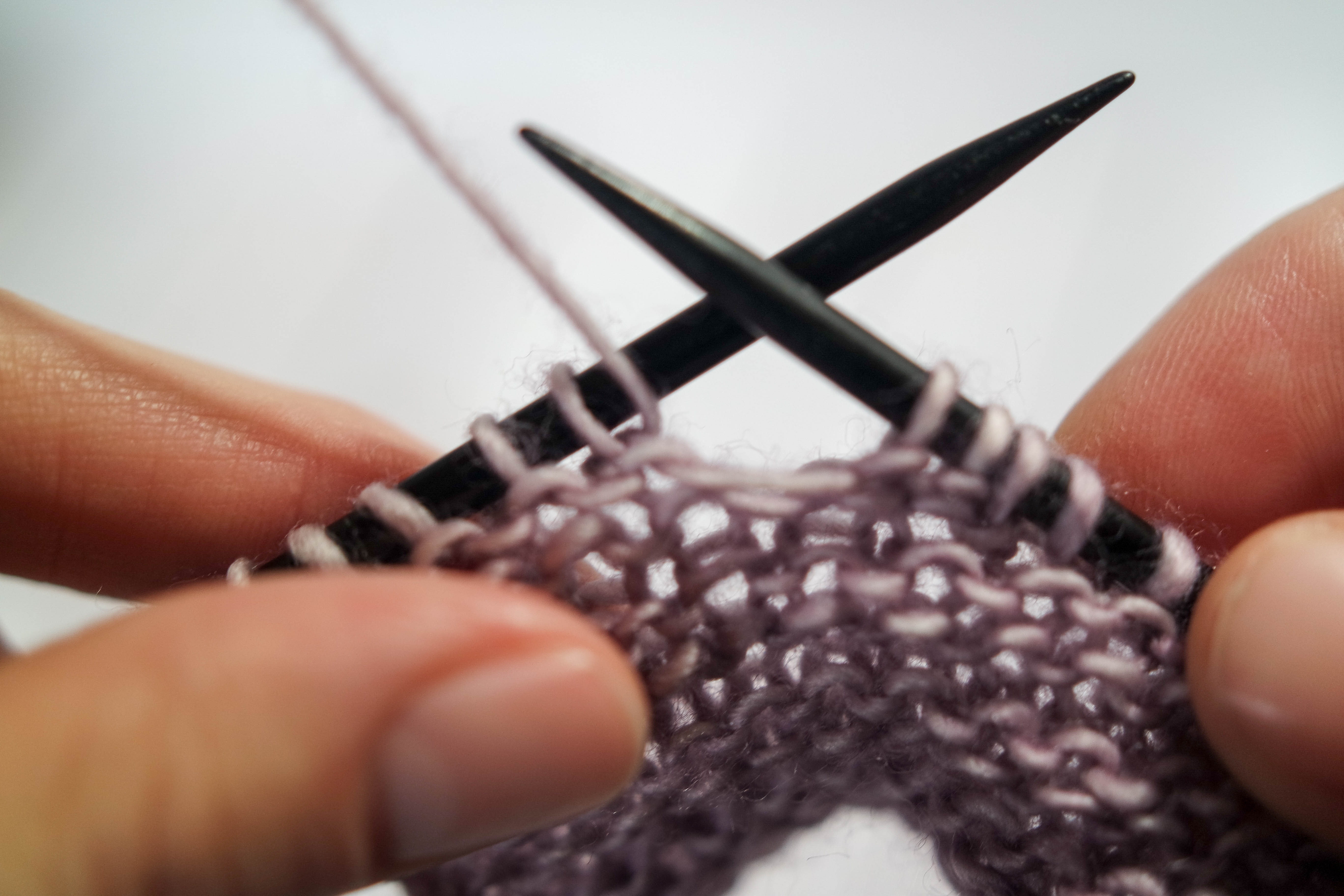
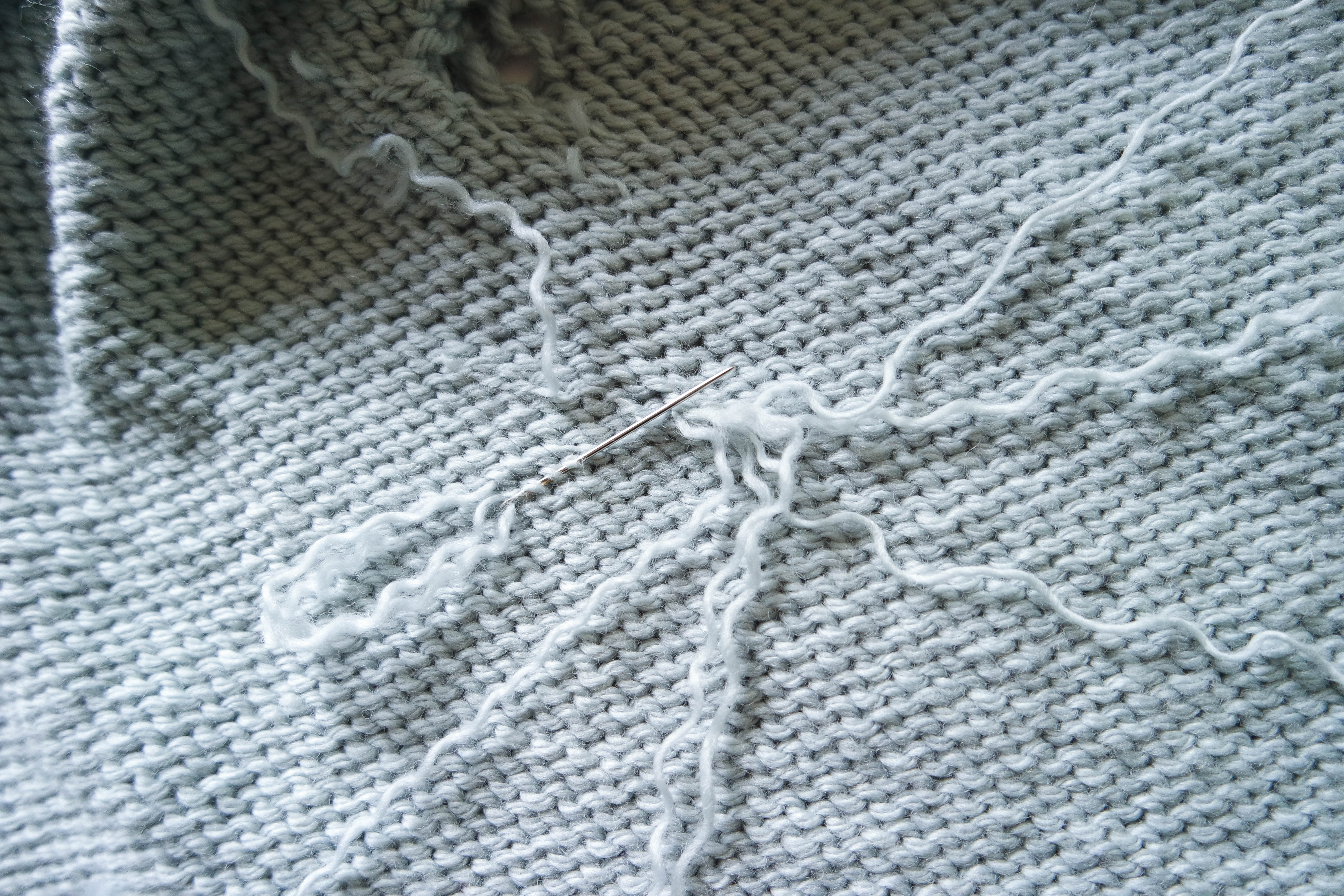
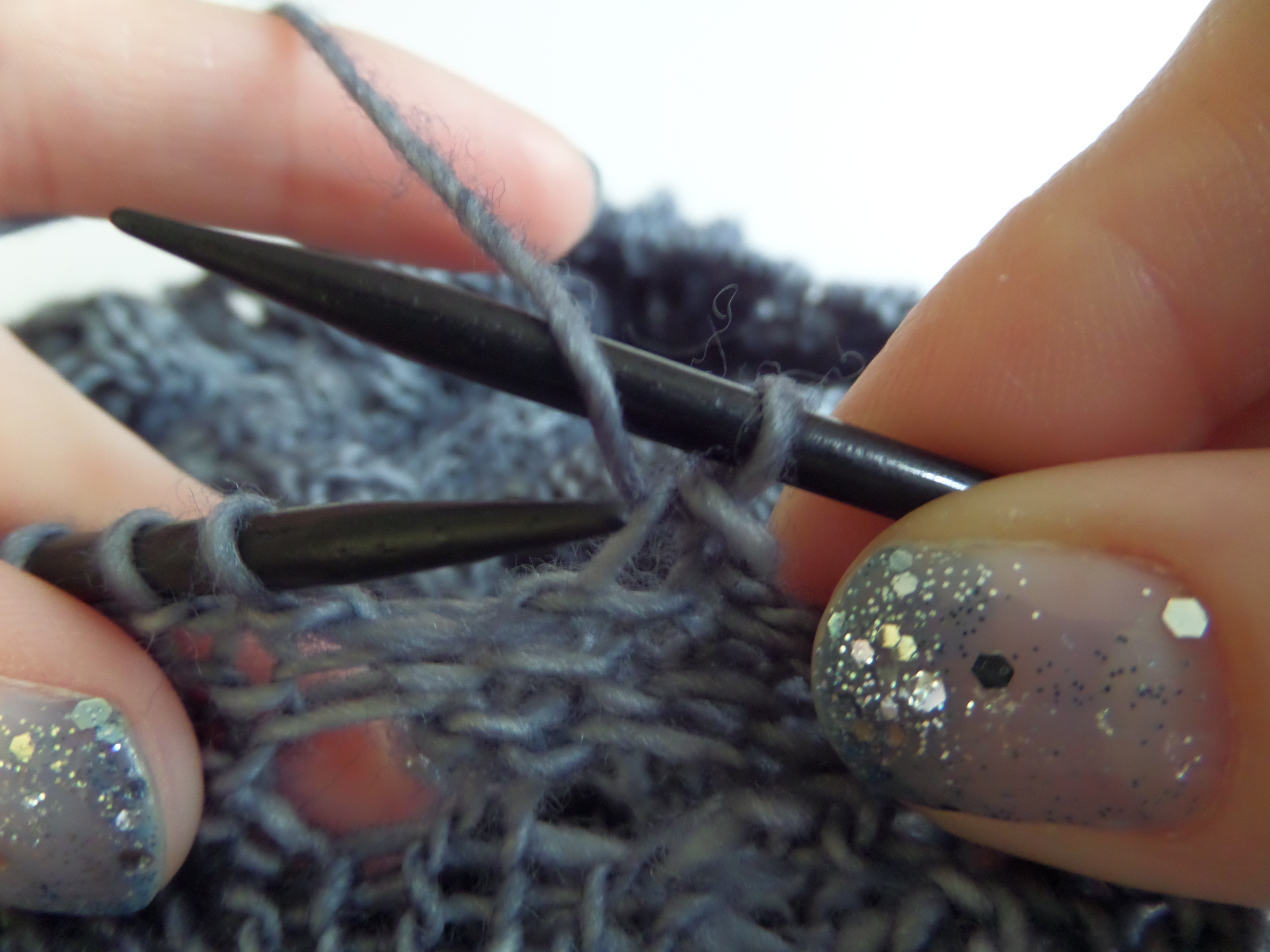
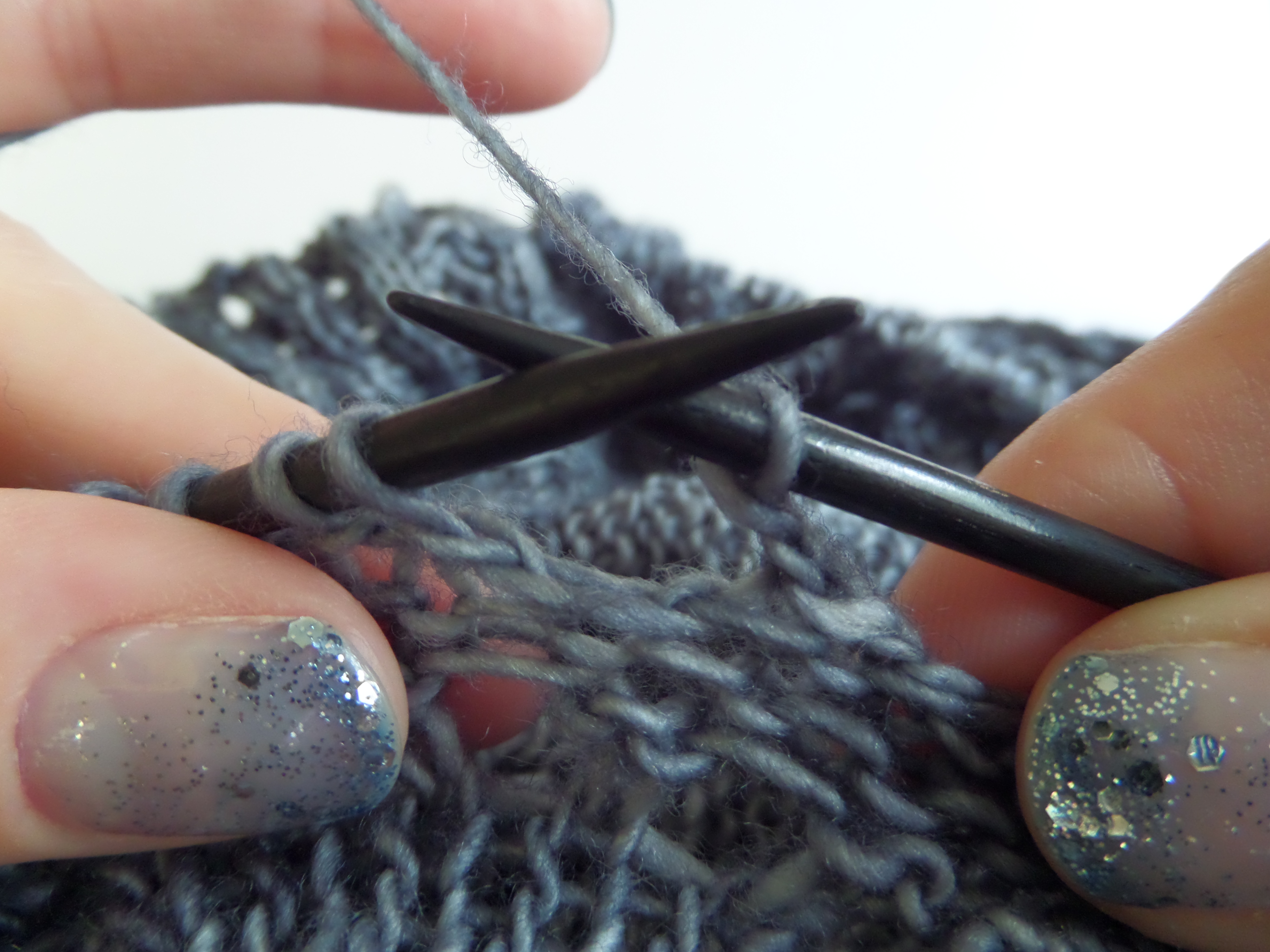
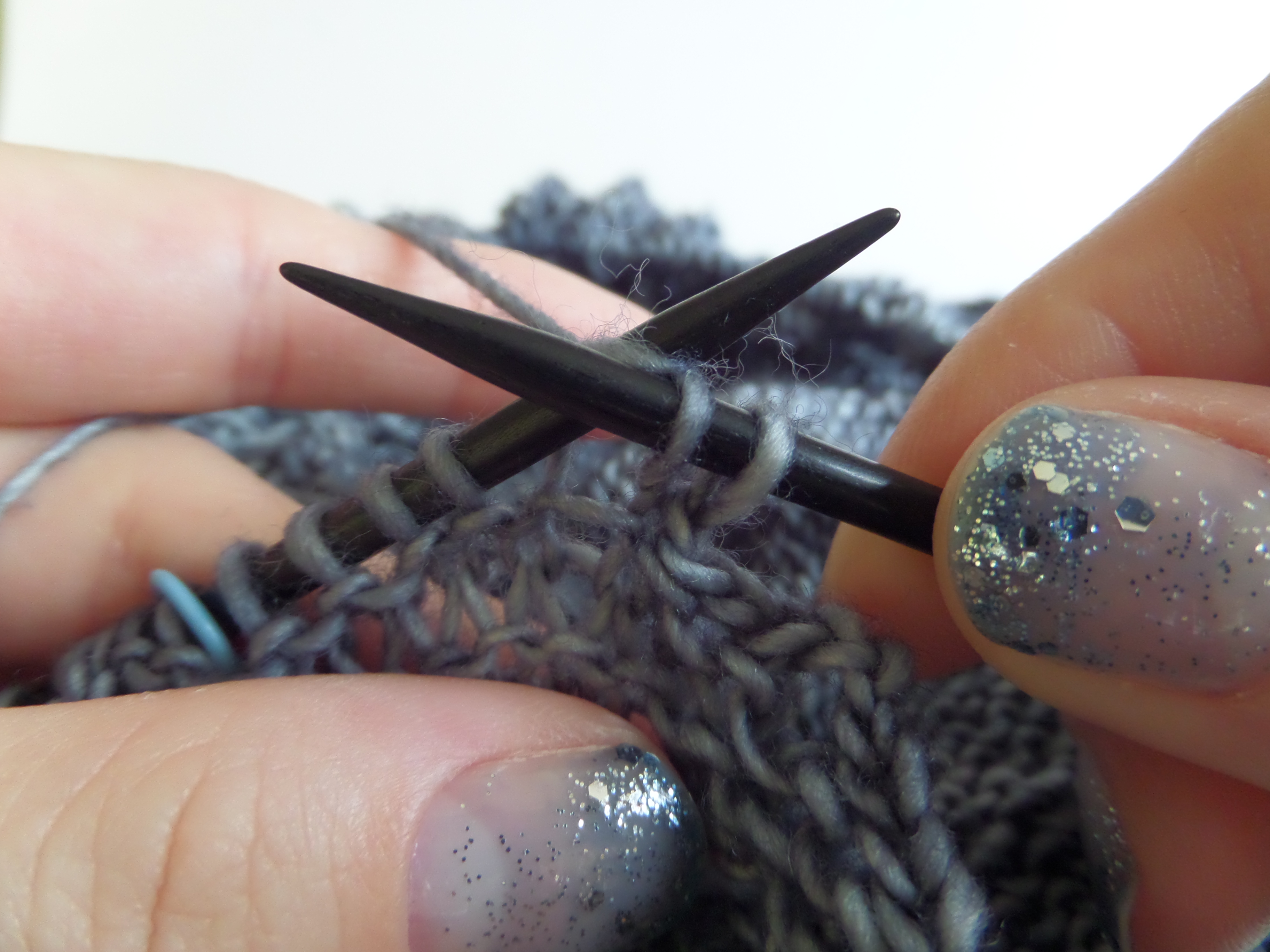
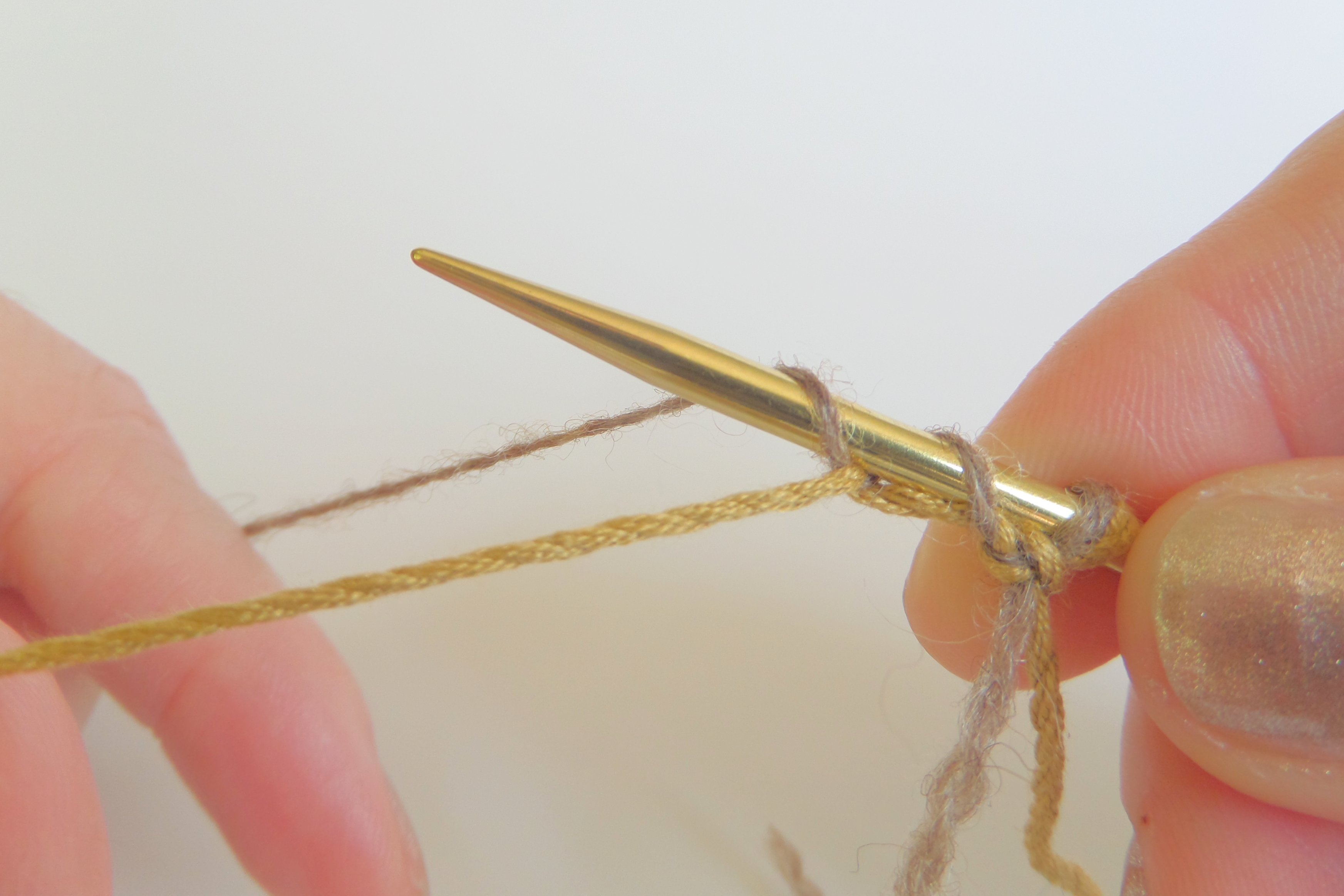
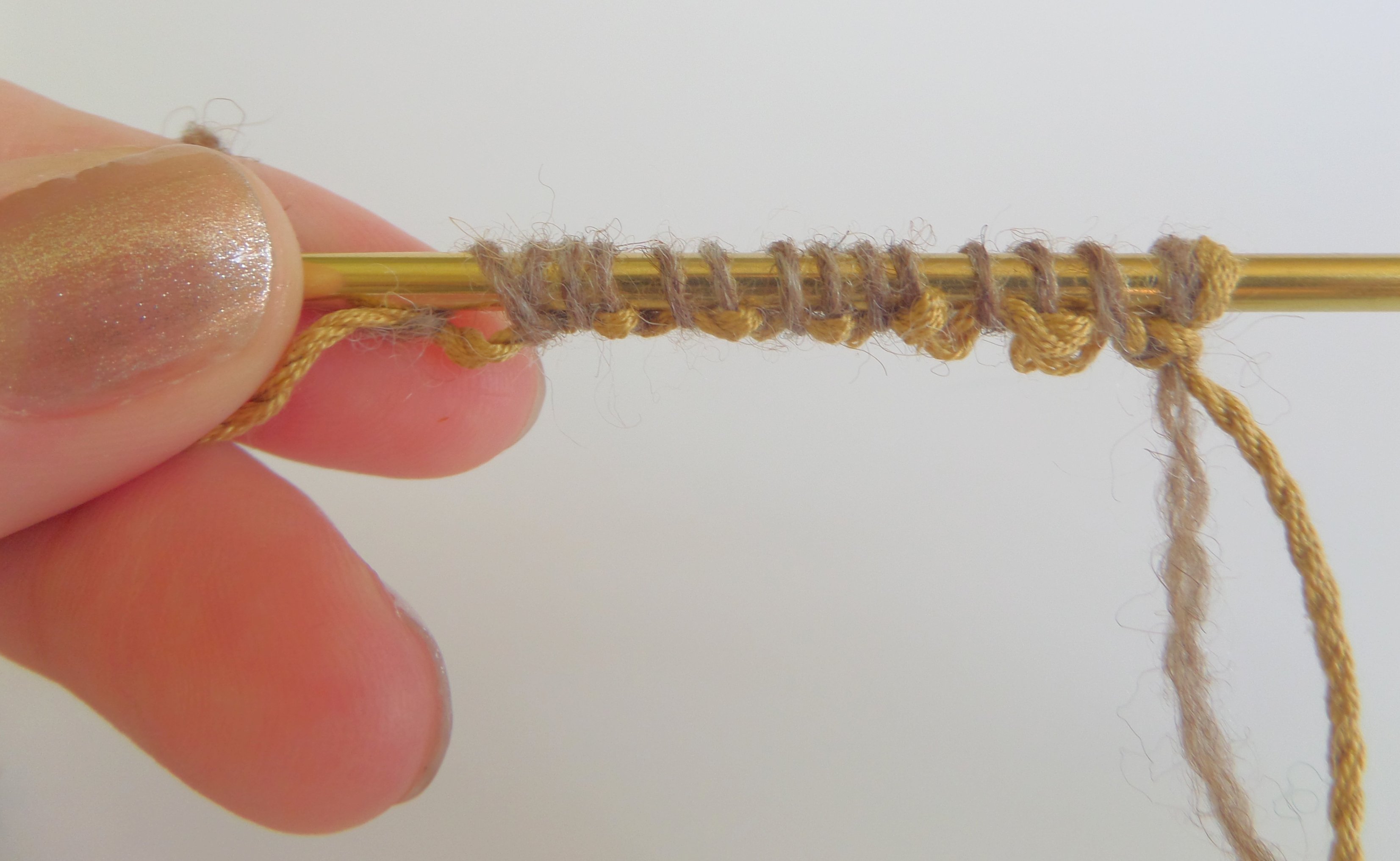
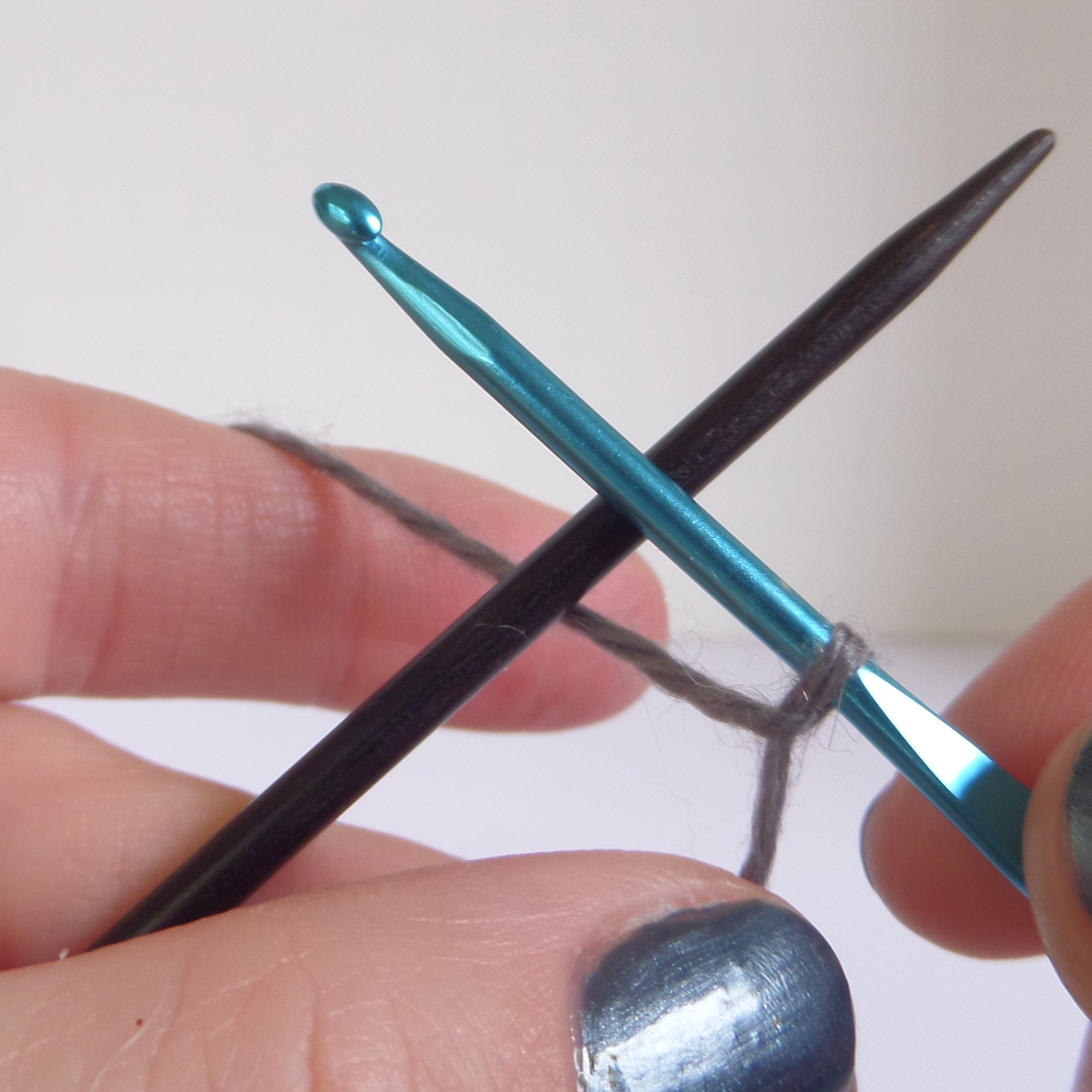
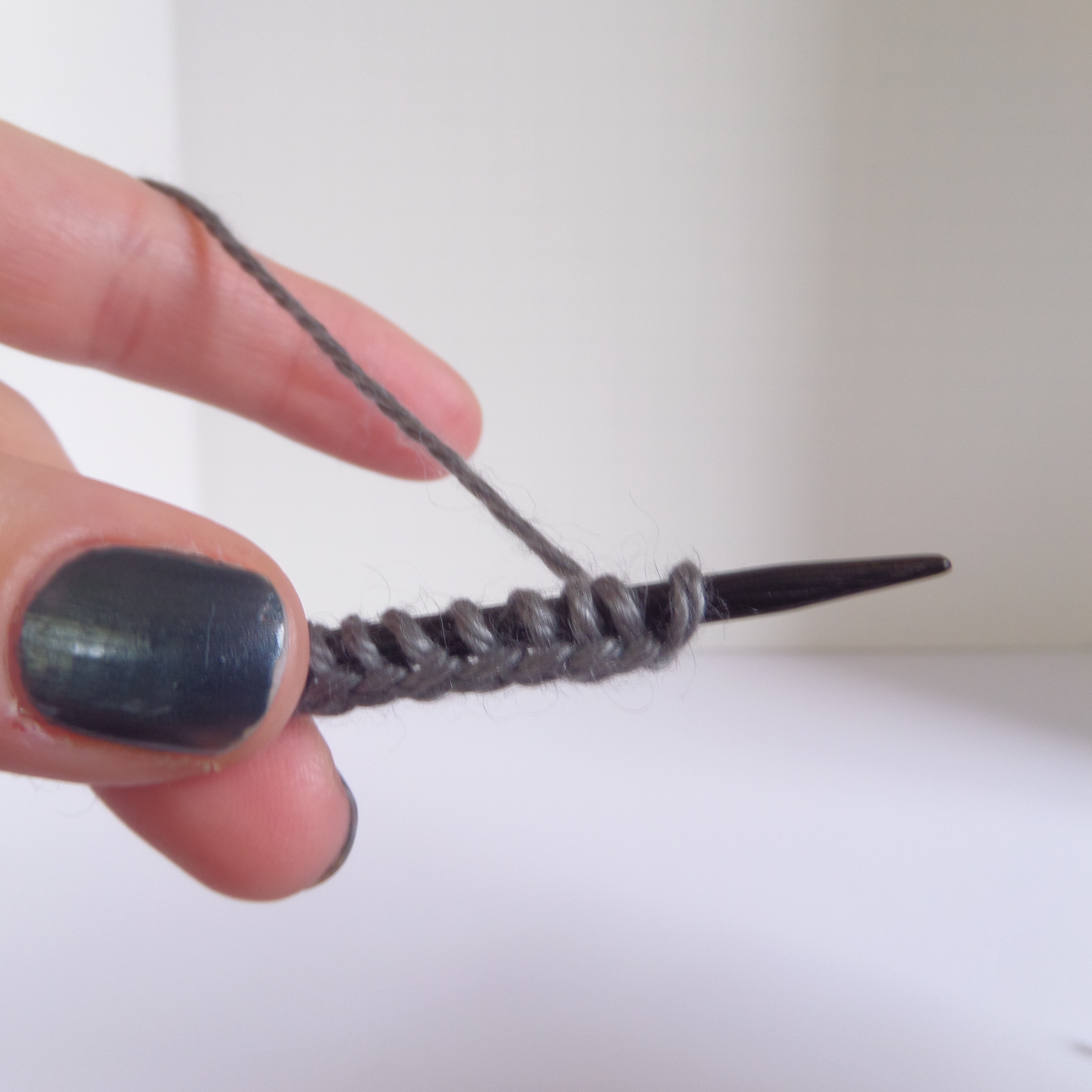
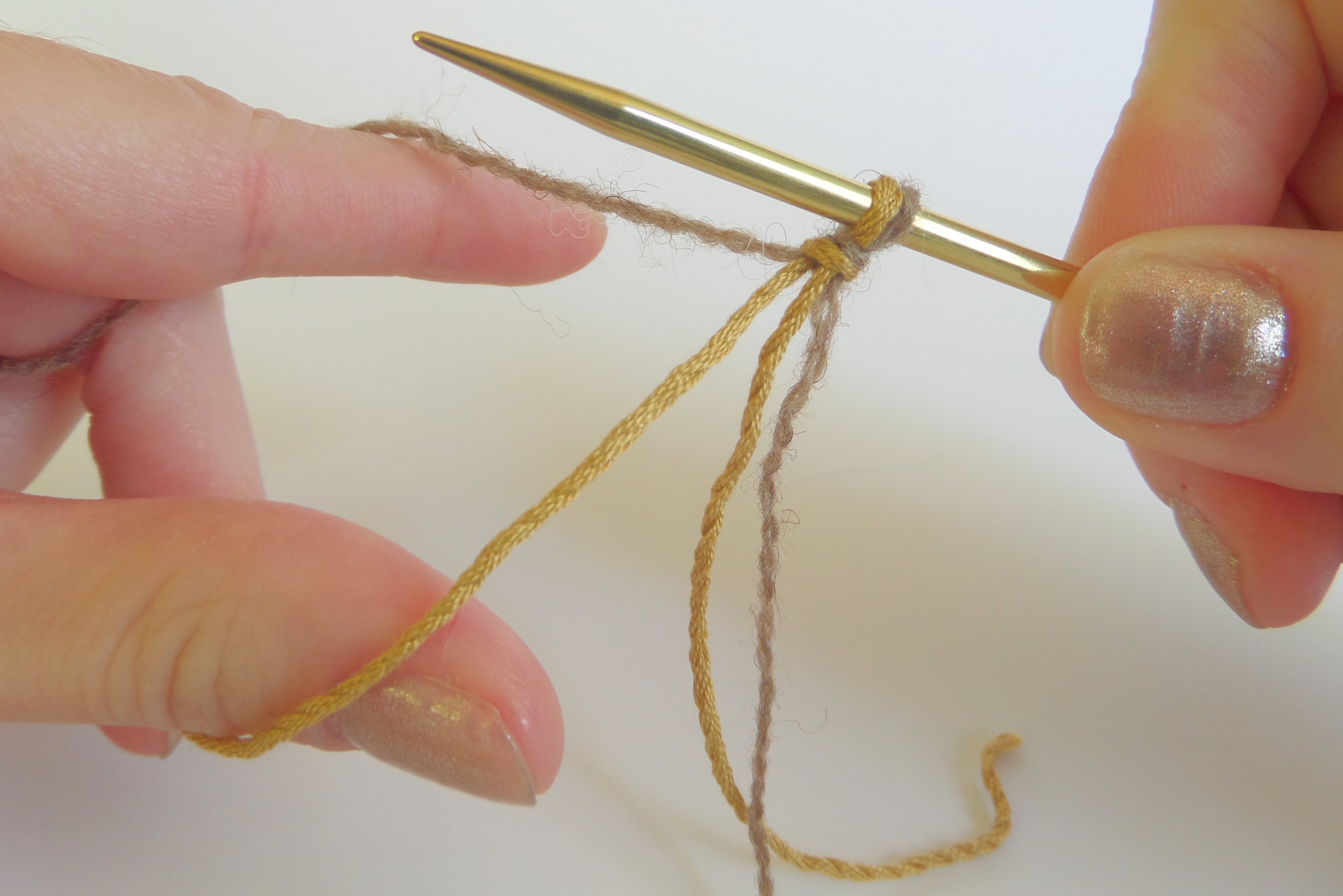
    Step 1: Insert the needle into the edge of your cardigan from front to back.
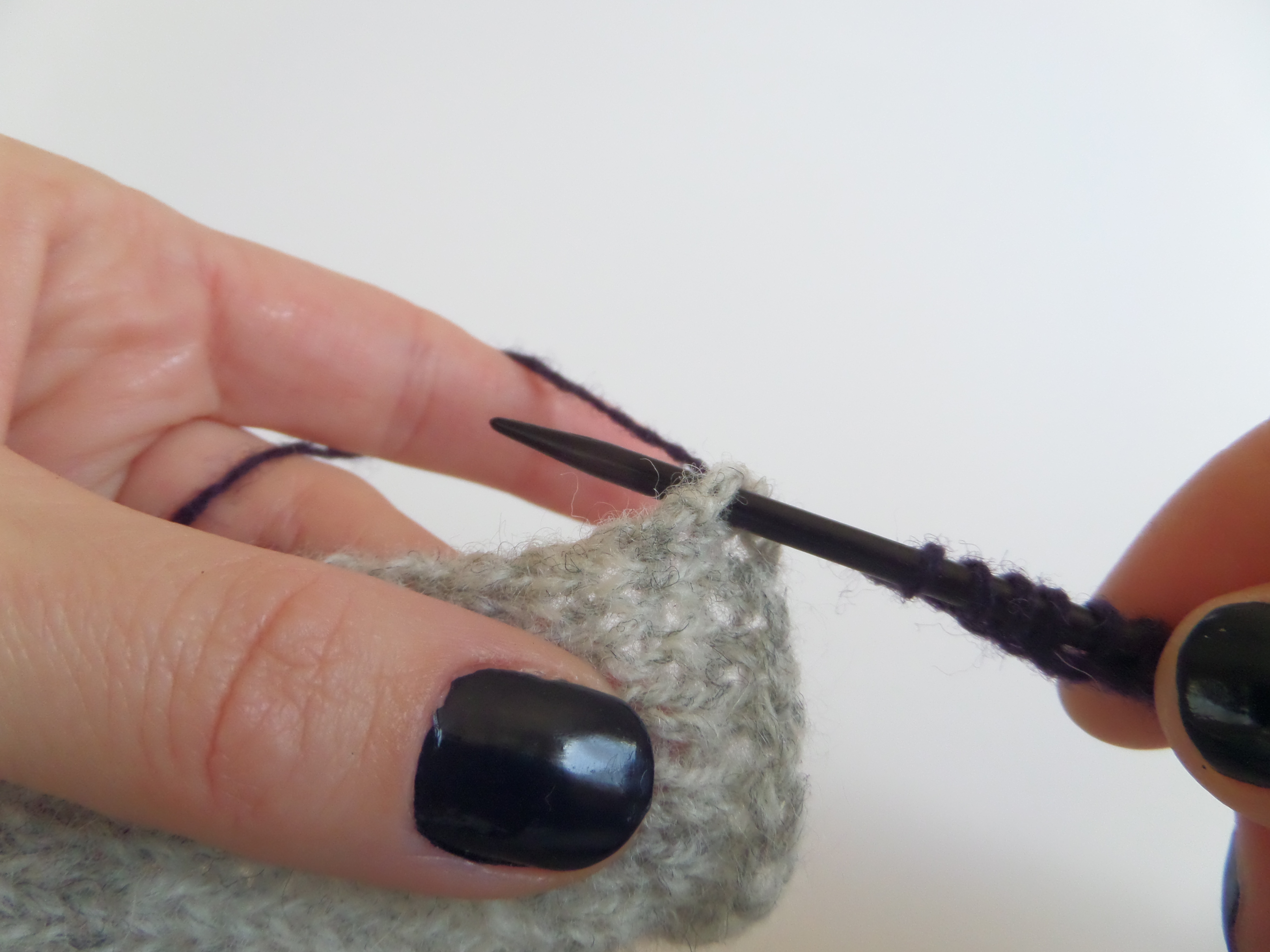
    SAMSUNG CAMERA PICTURES

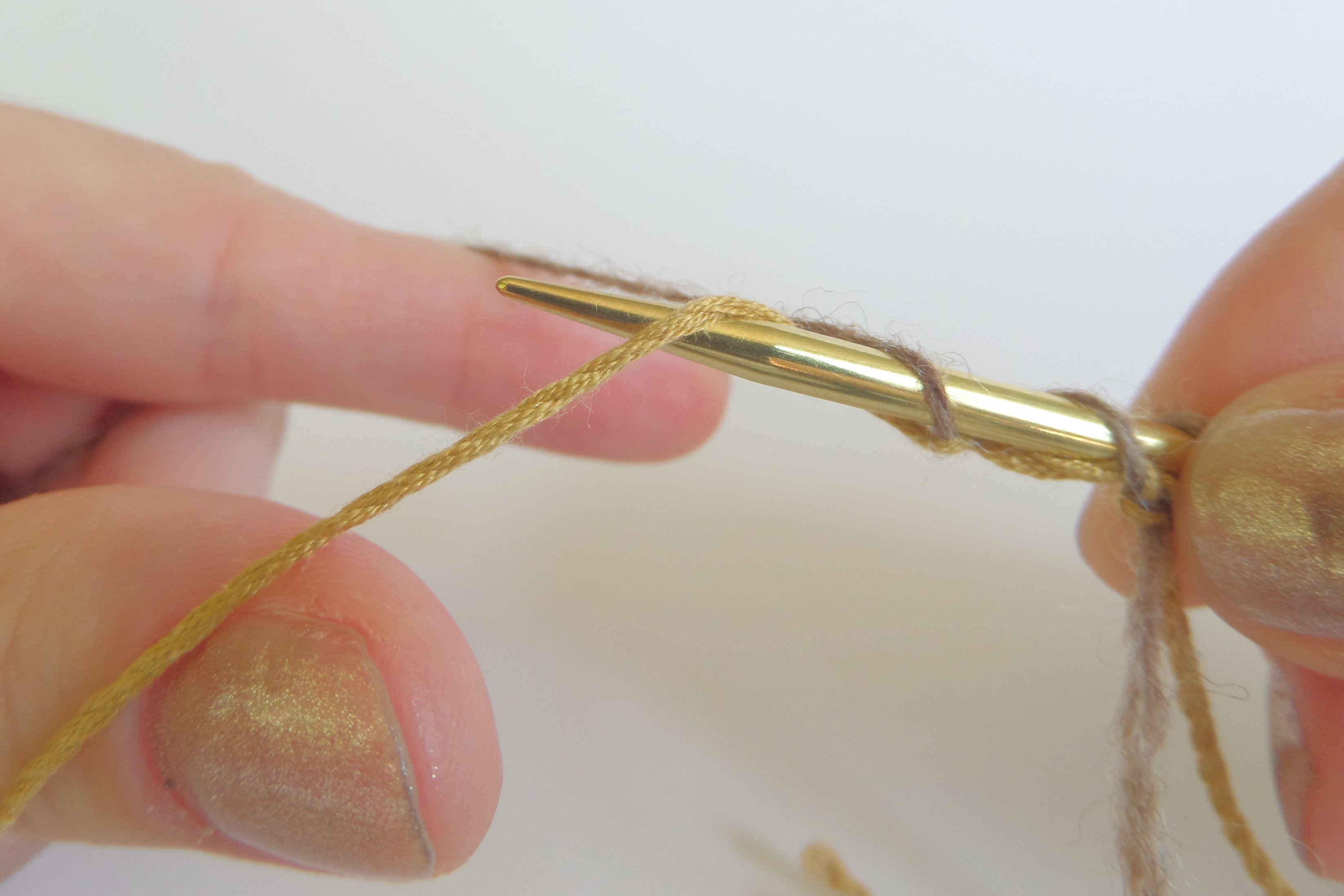
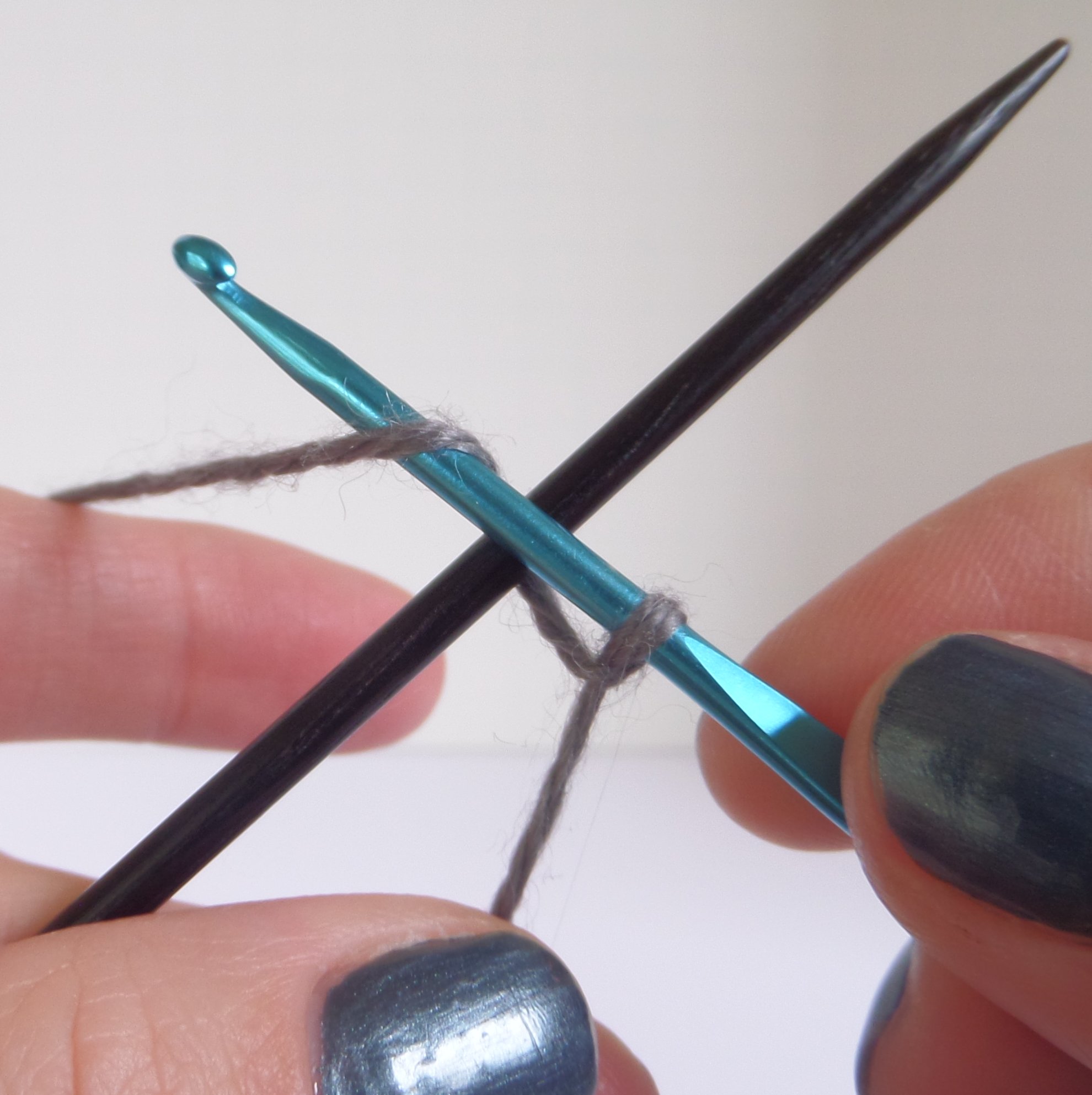
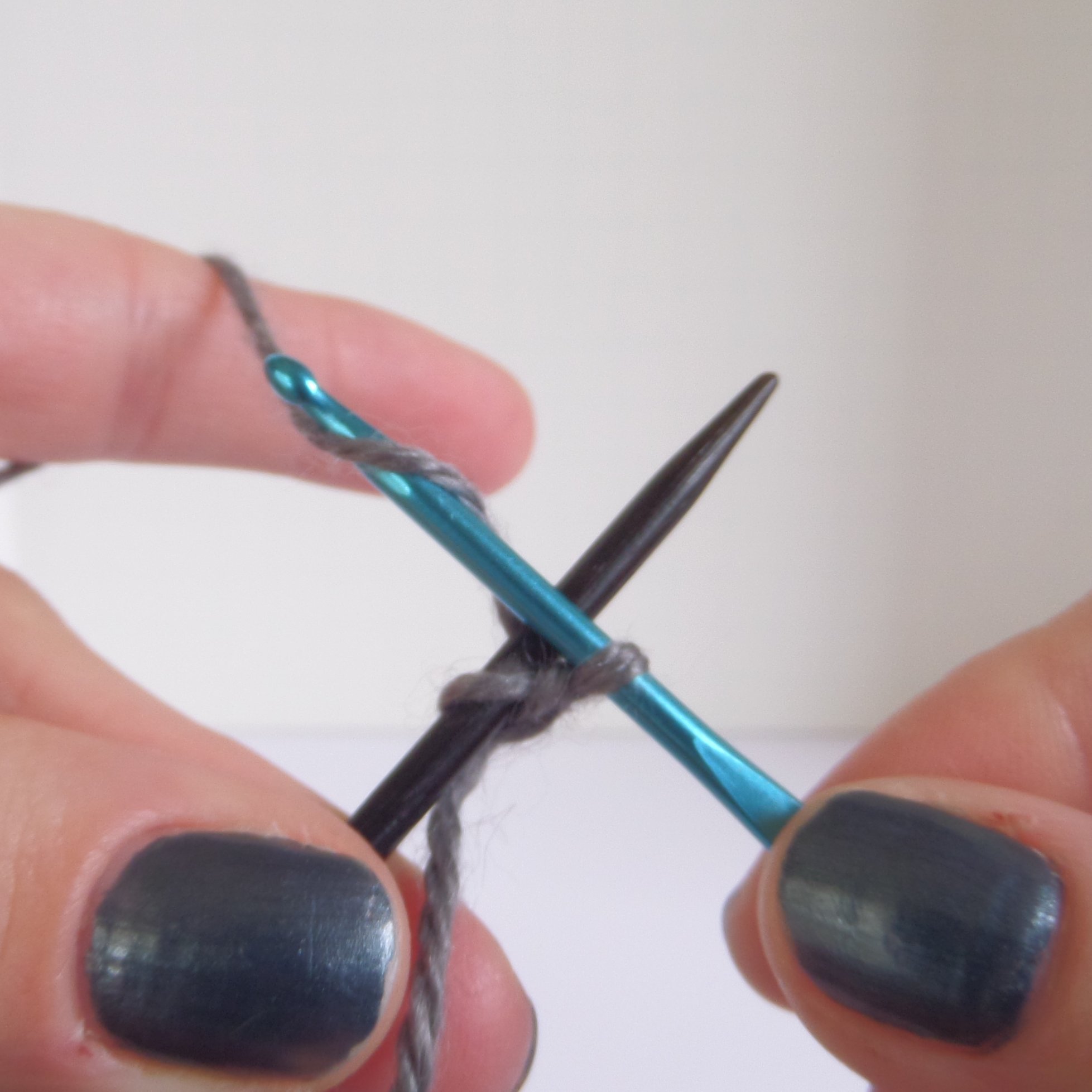
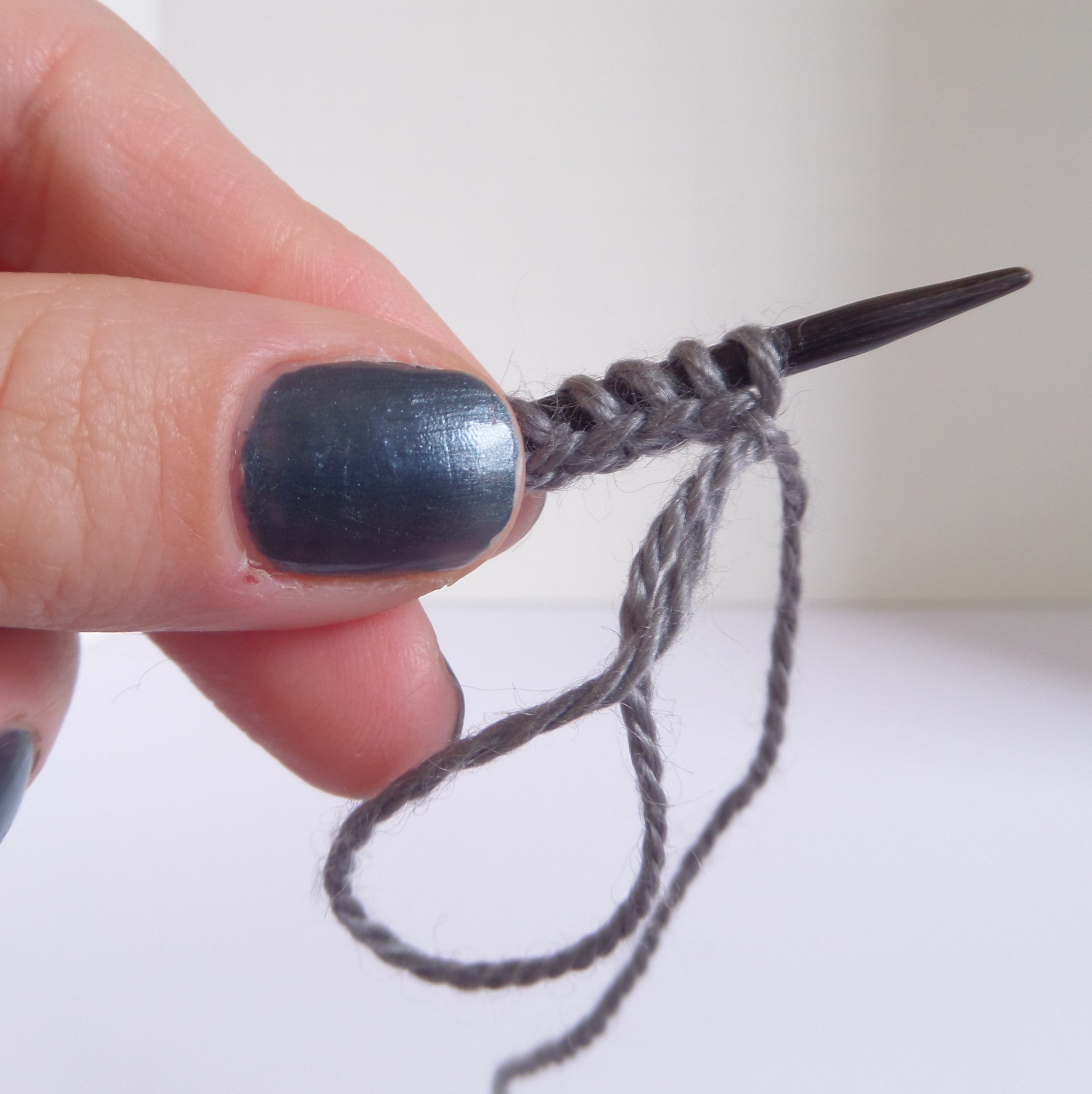
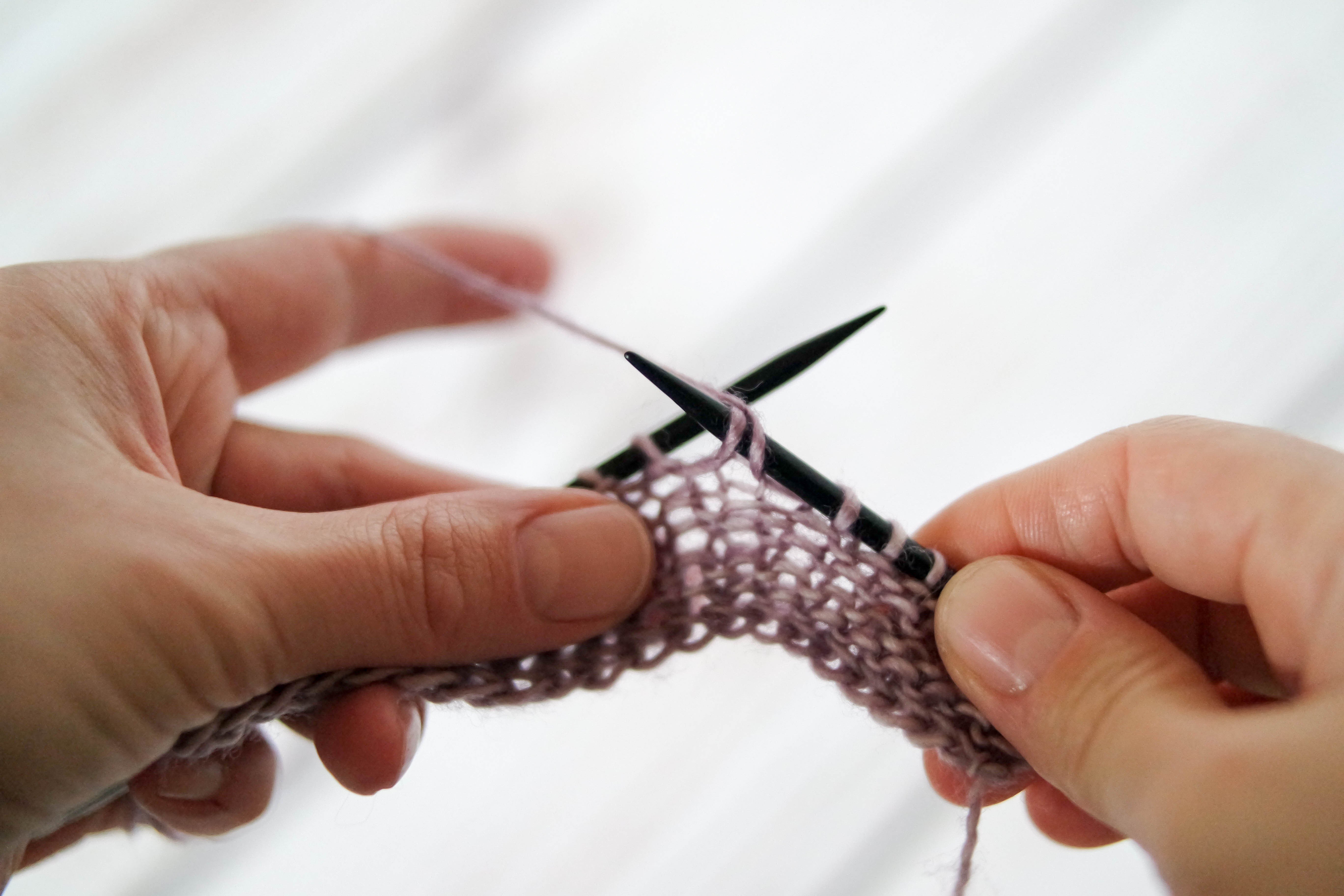
    Step 2: Pull a loop through.SAMSUNG CAMERA PICTURES

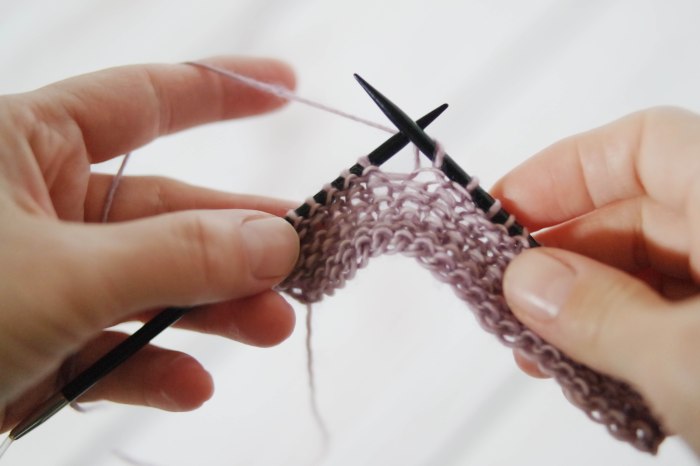
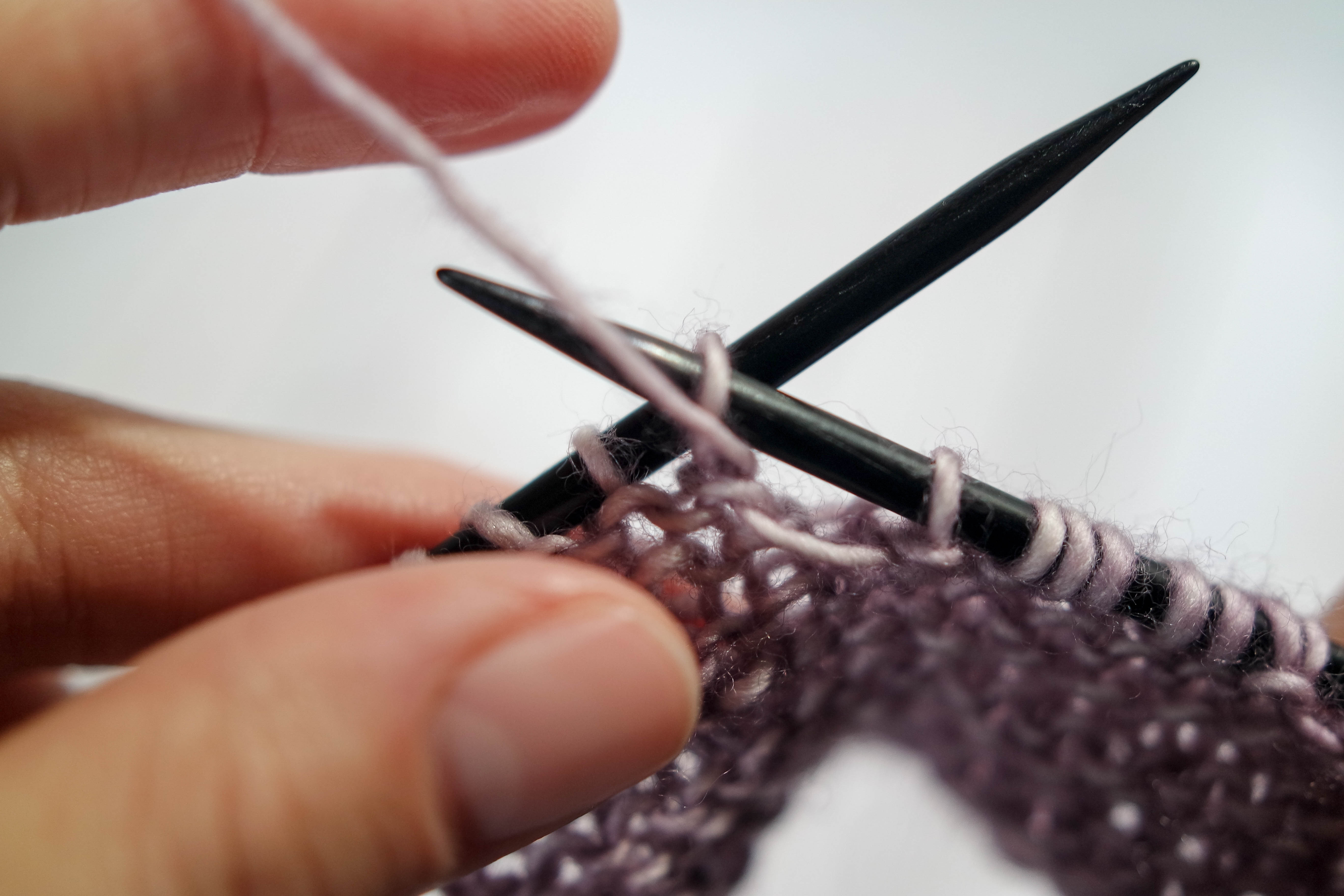
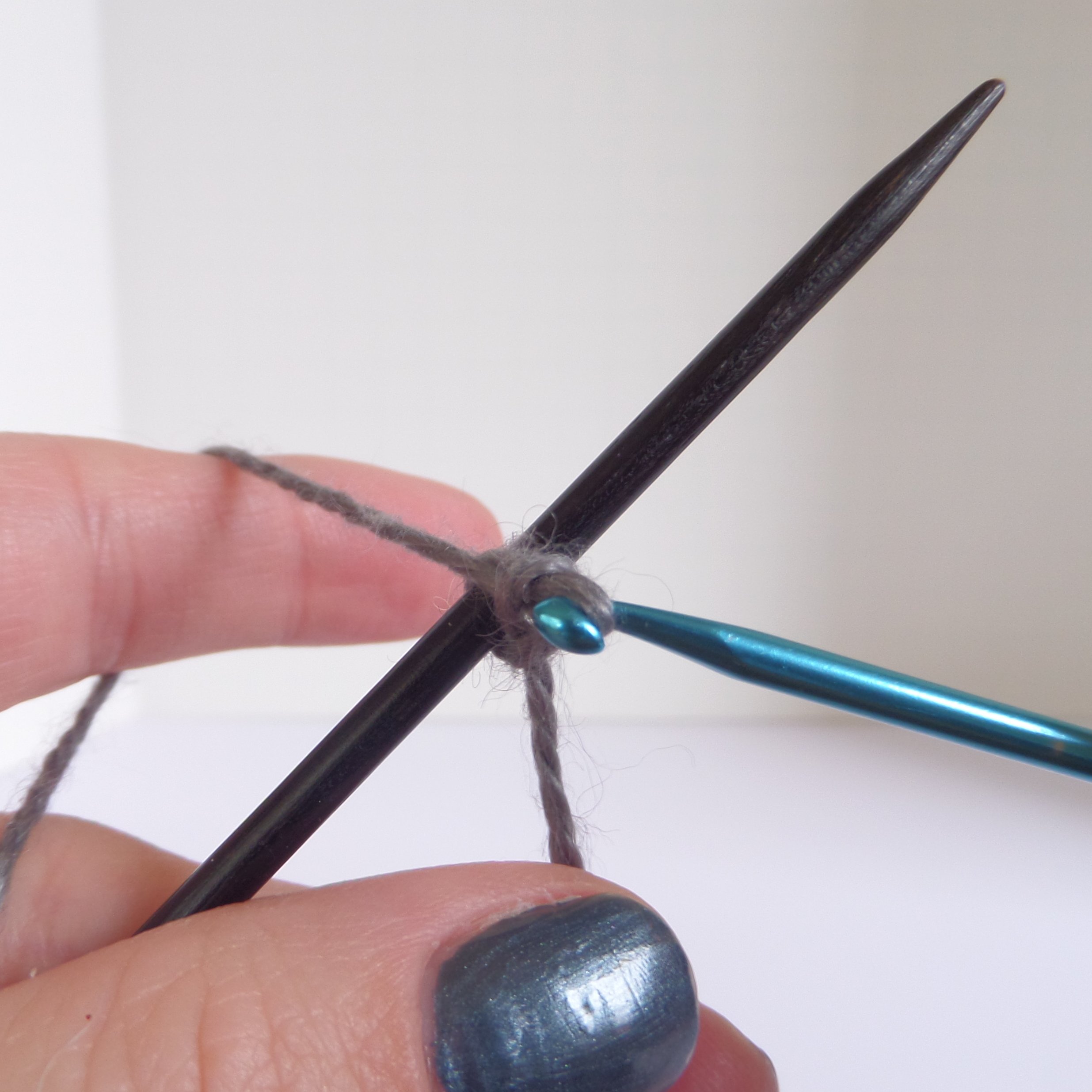
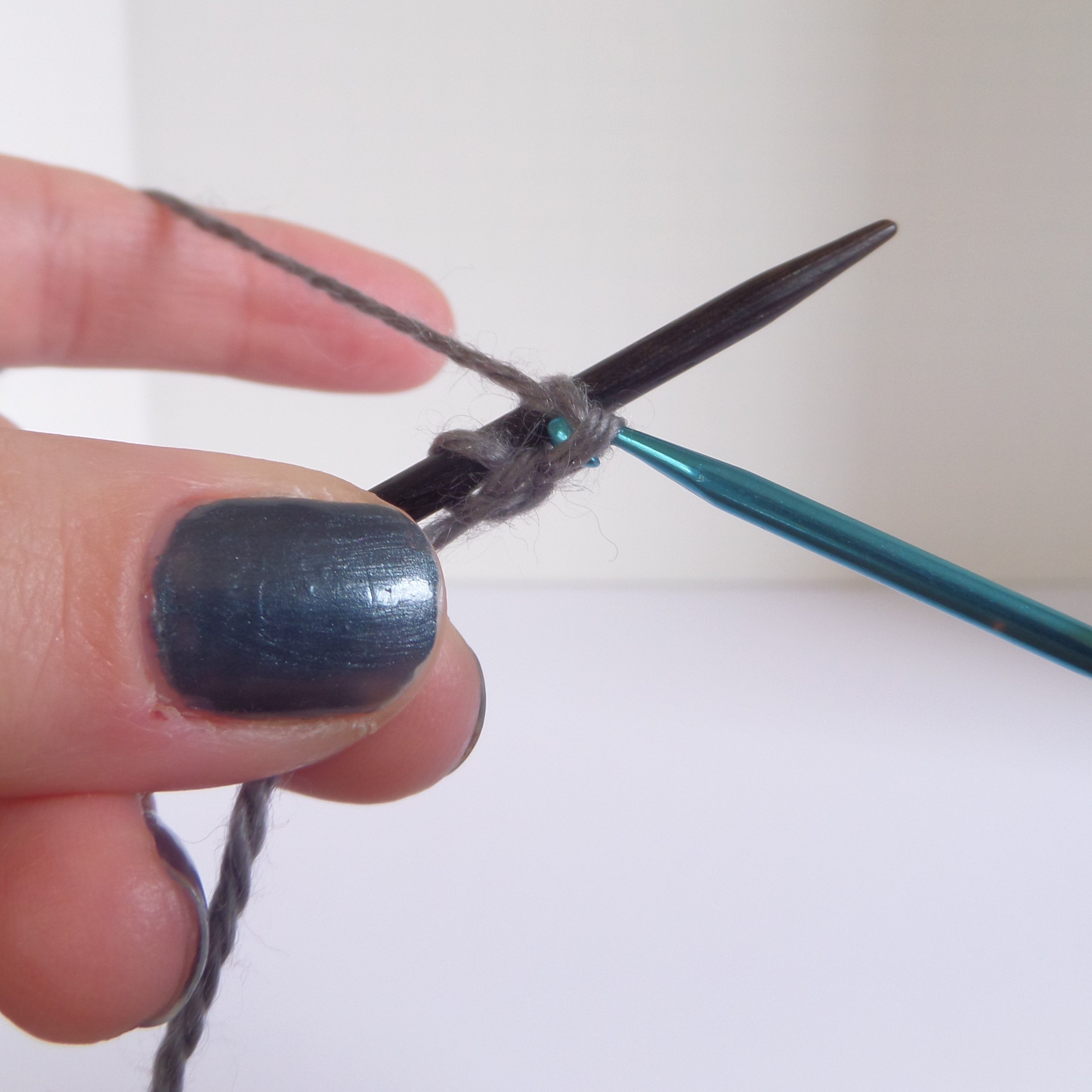
    Step 3: Remove the loop from the needle and pull out enough yarn to comfortably knit the next 2 rows. The excess length will be removed later so this does not need to be exact.SAMSUNG CAMERA PICTURES

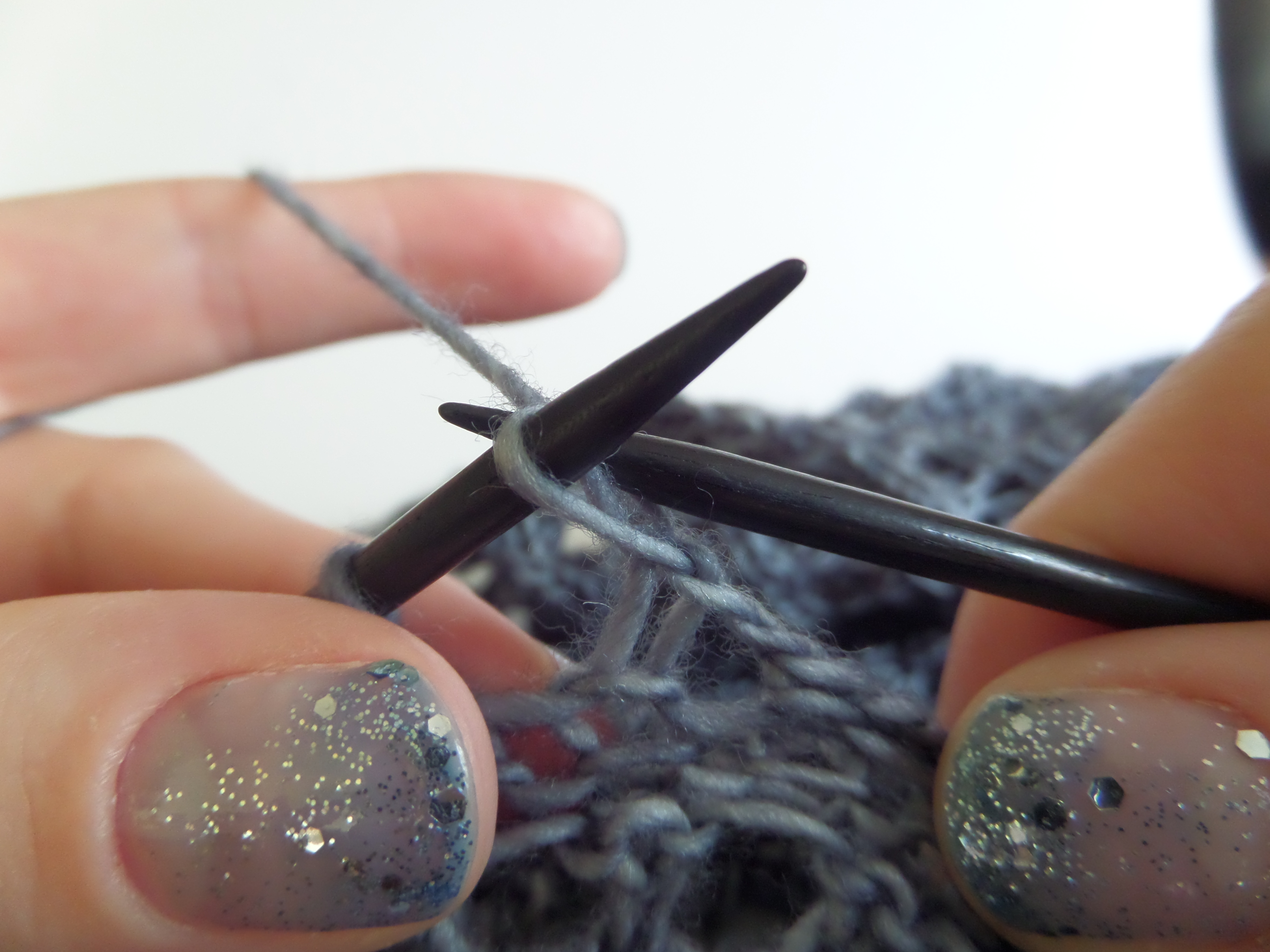
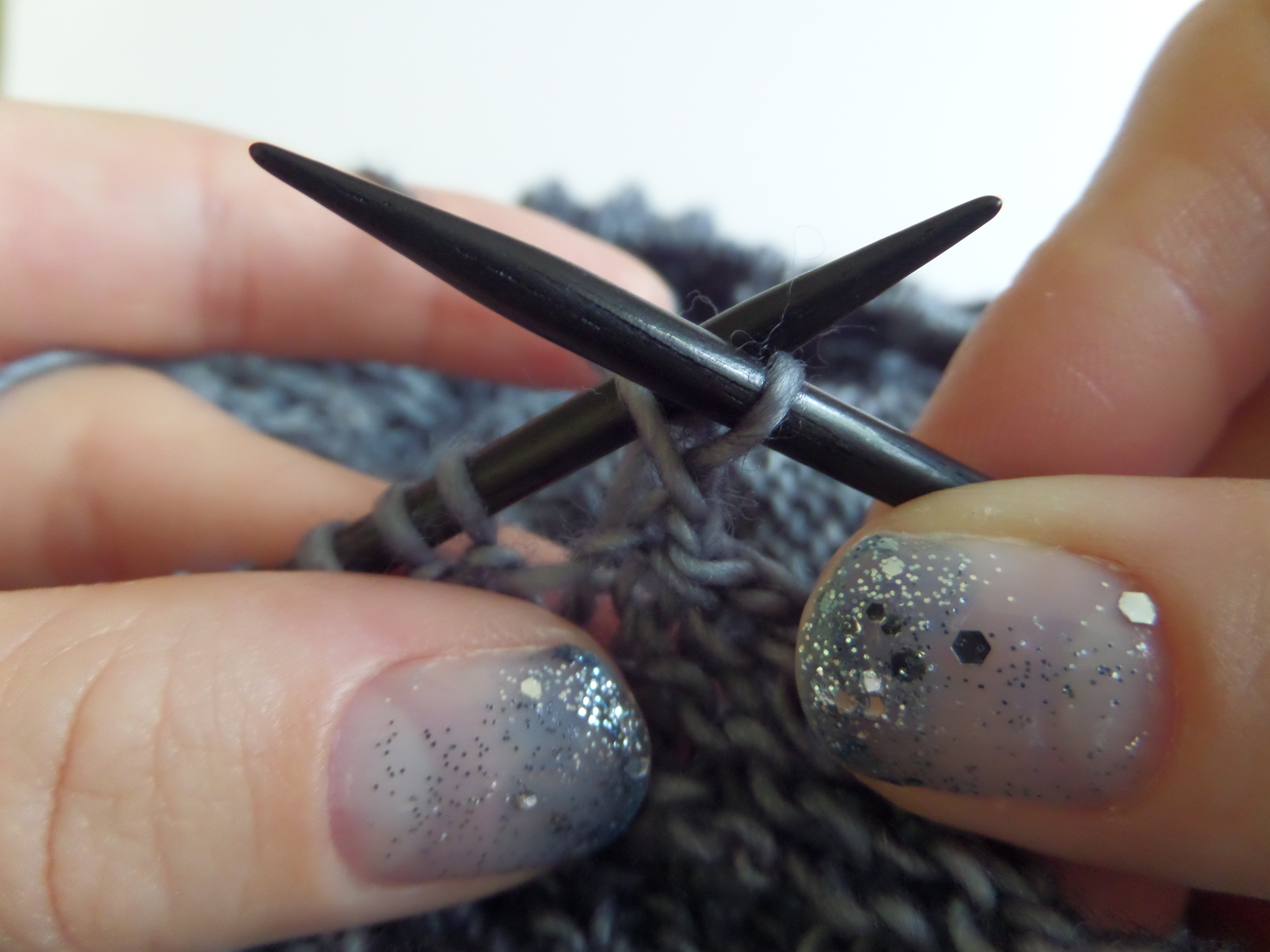
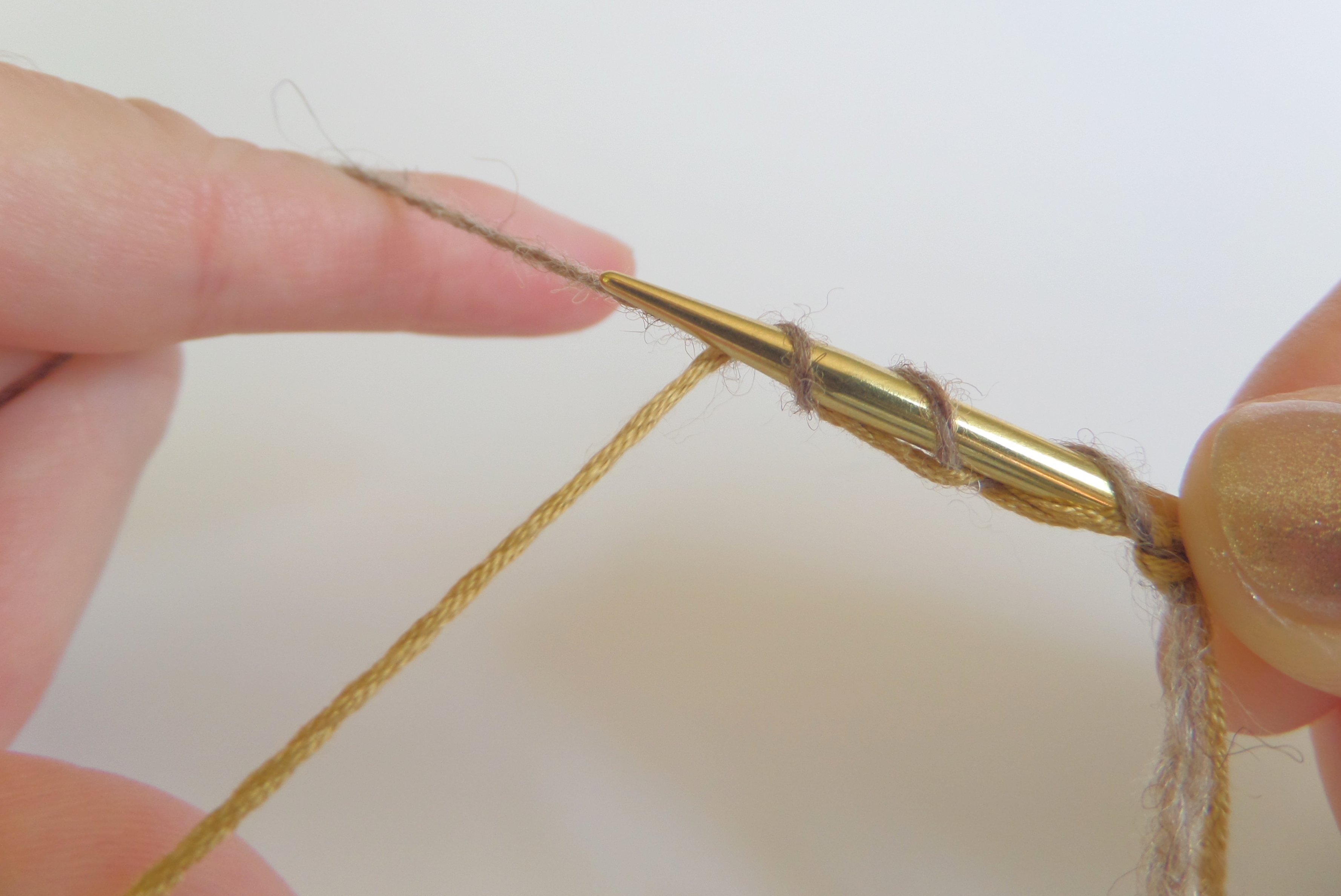
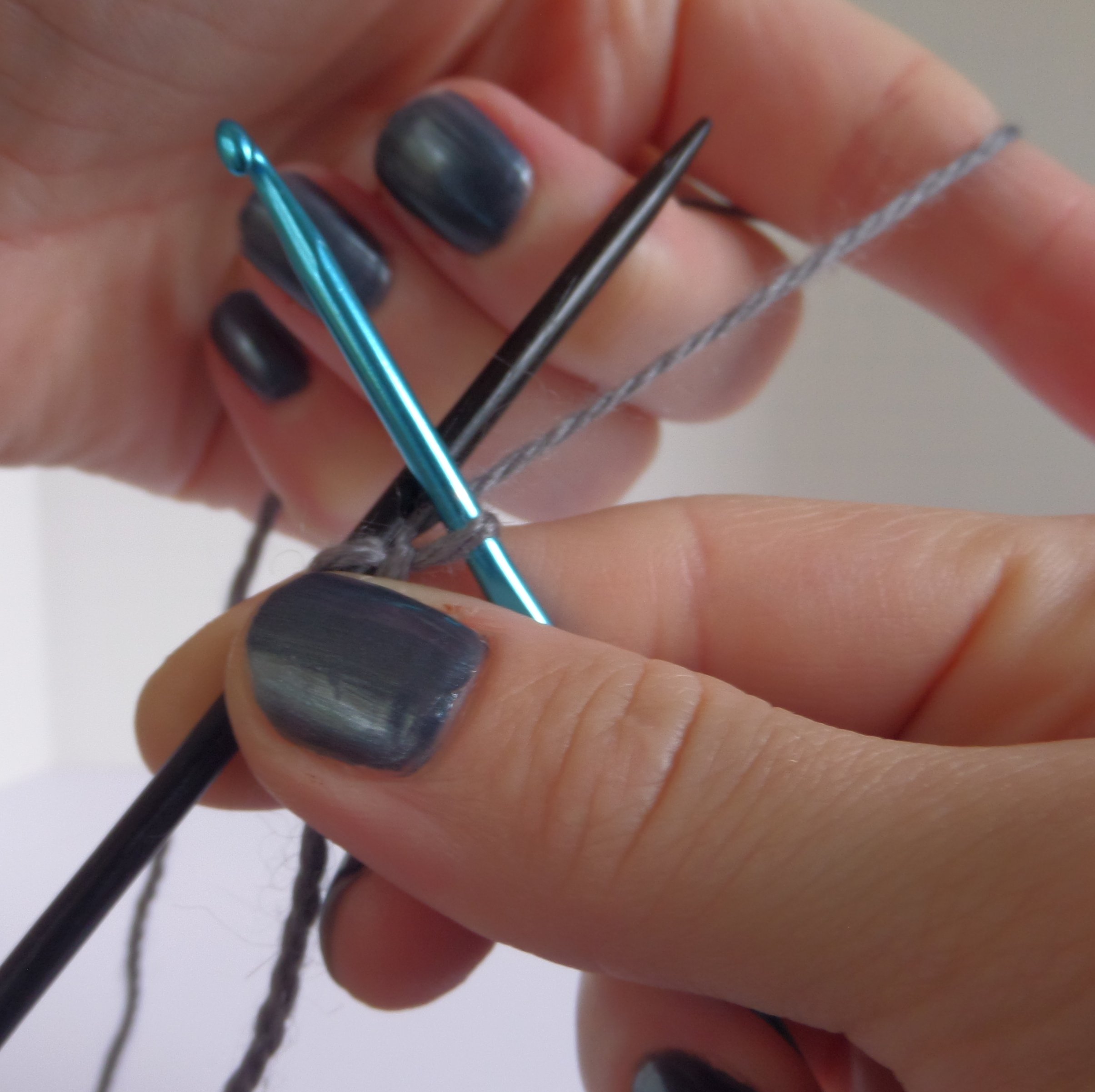
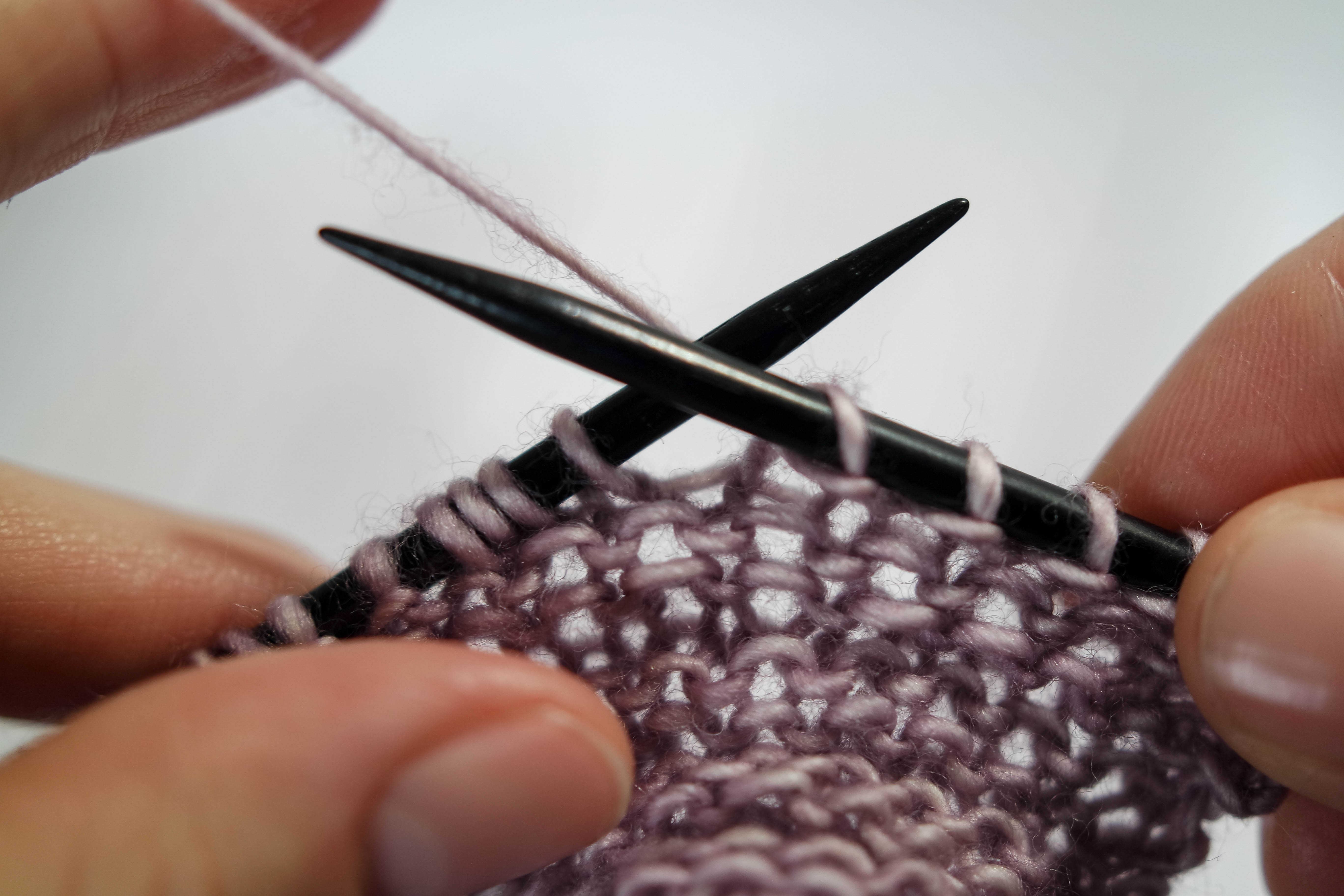
    Step 4: Work the first wrong-side row of the band with the bottom half of the loop.SAMSUNG CAMERA PICTURES

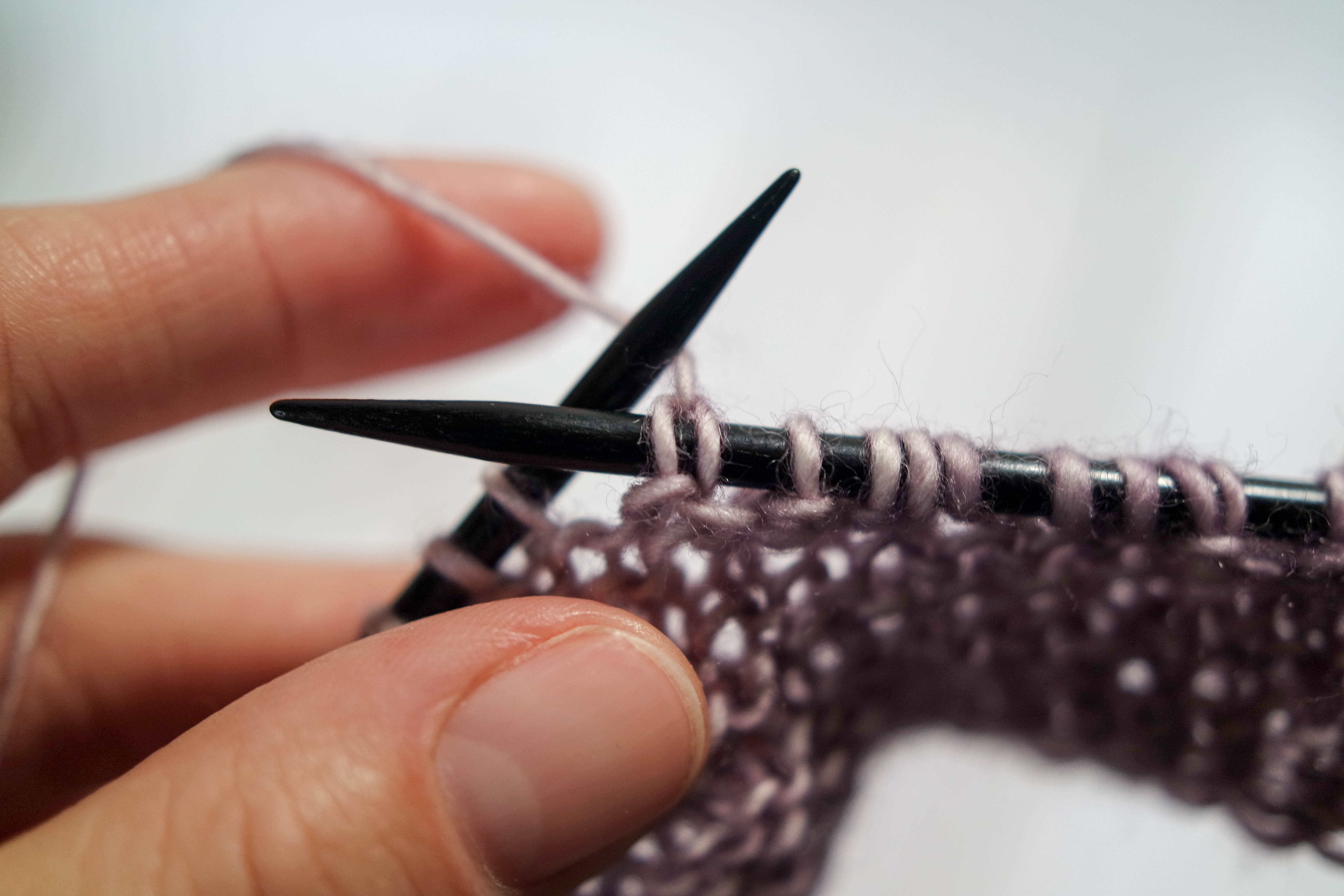
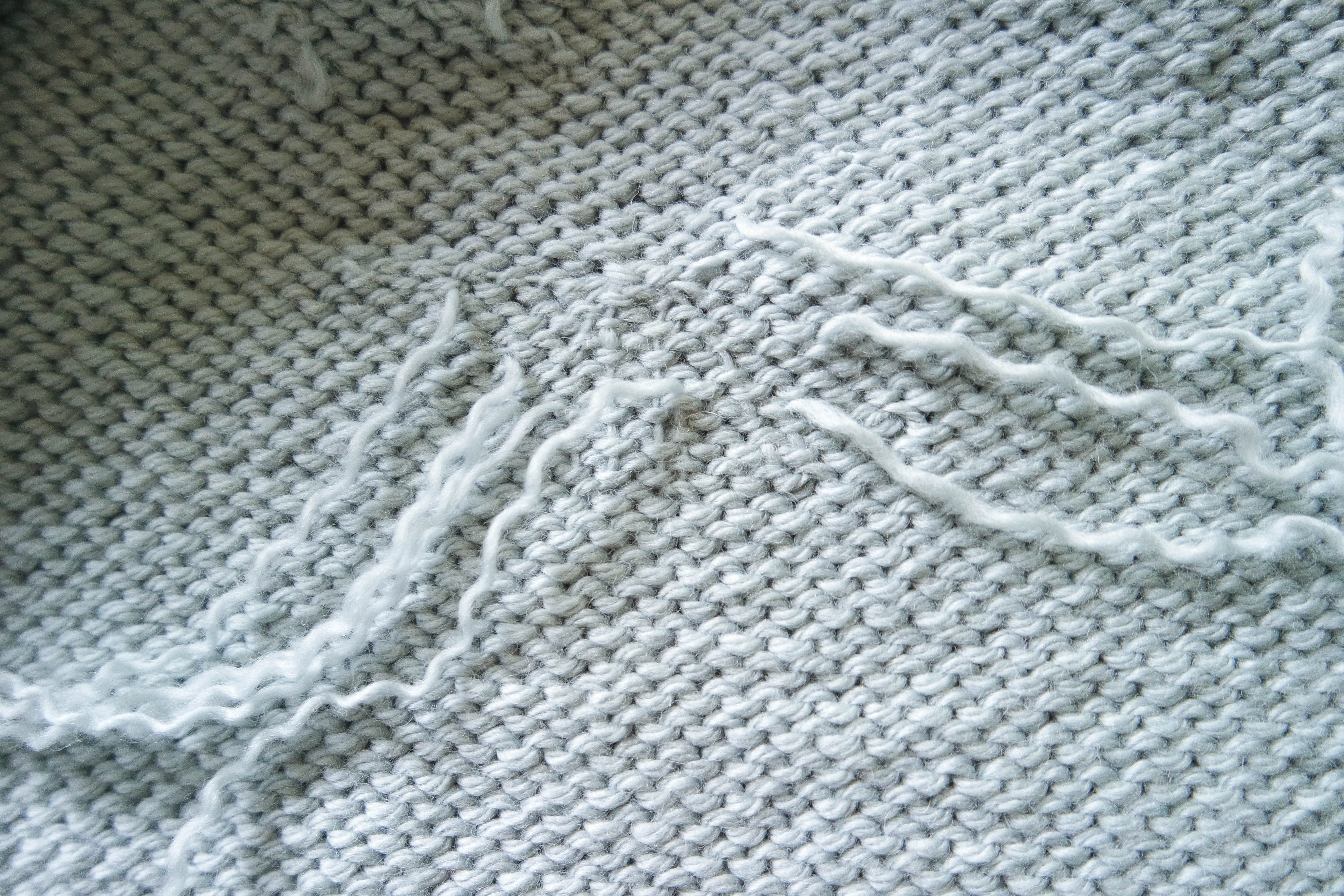
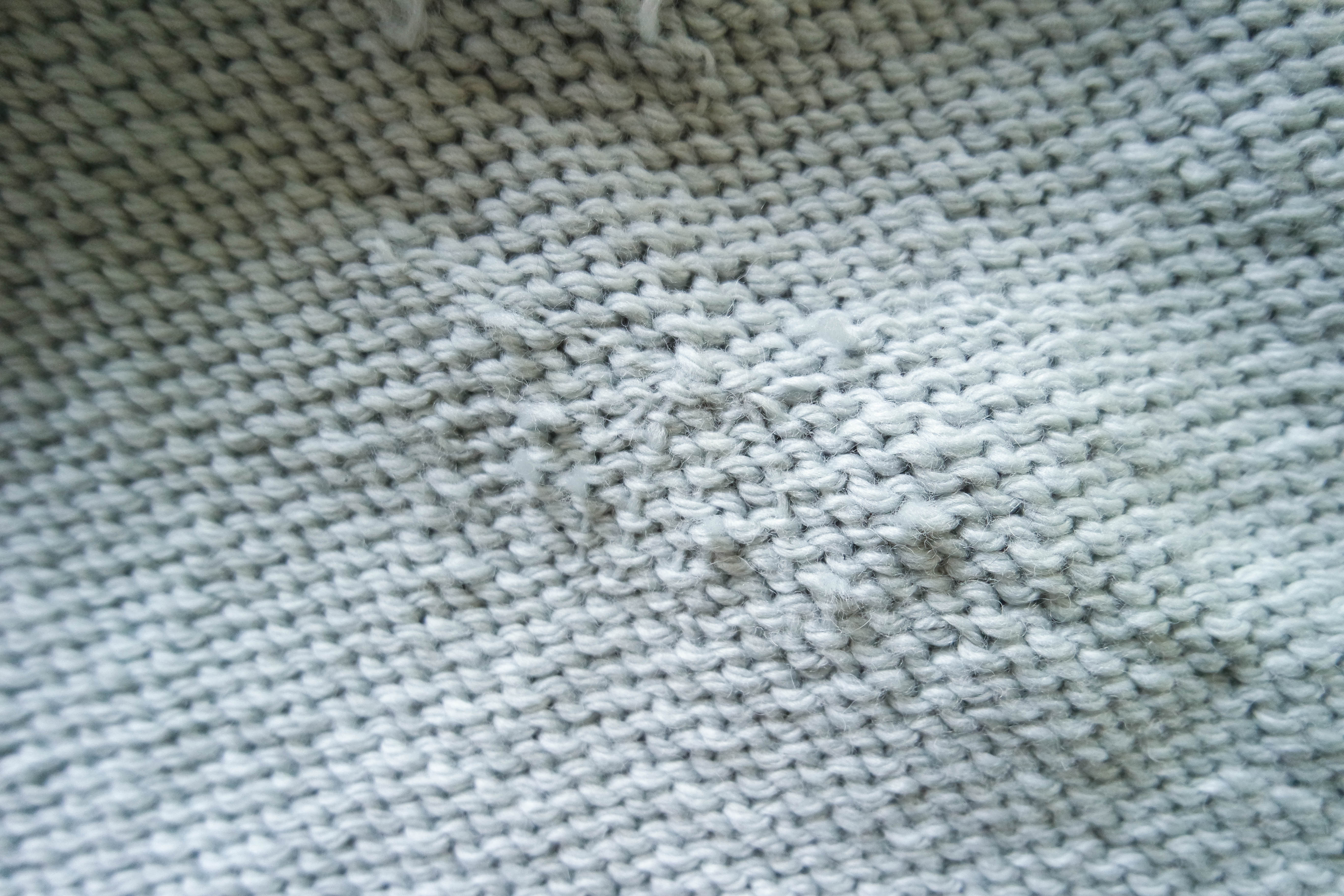
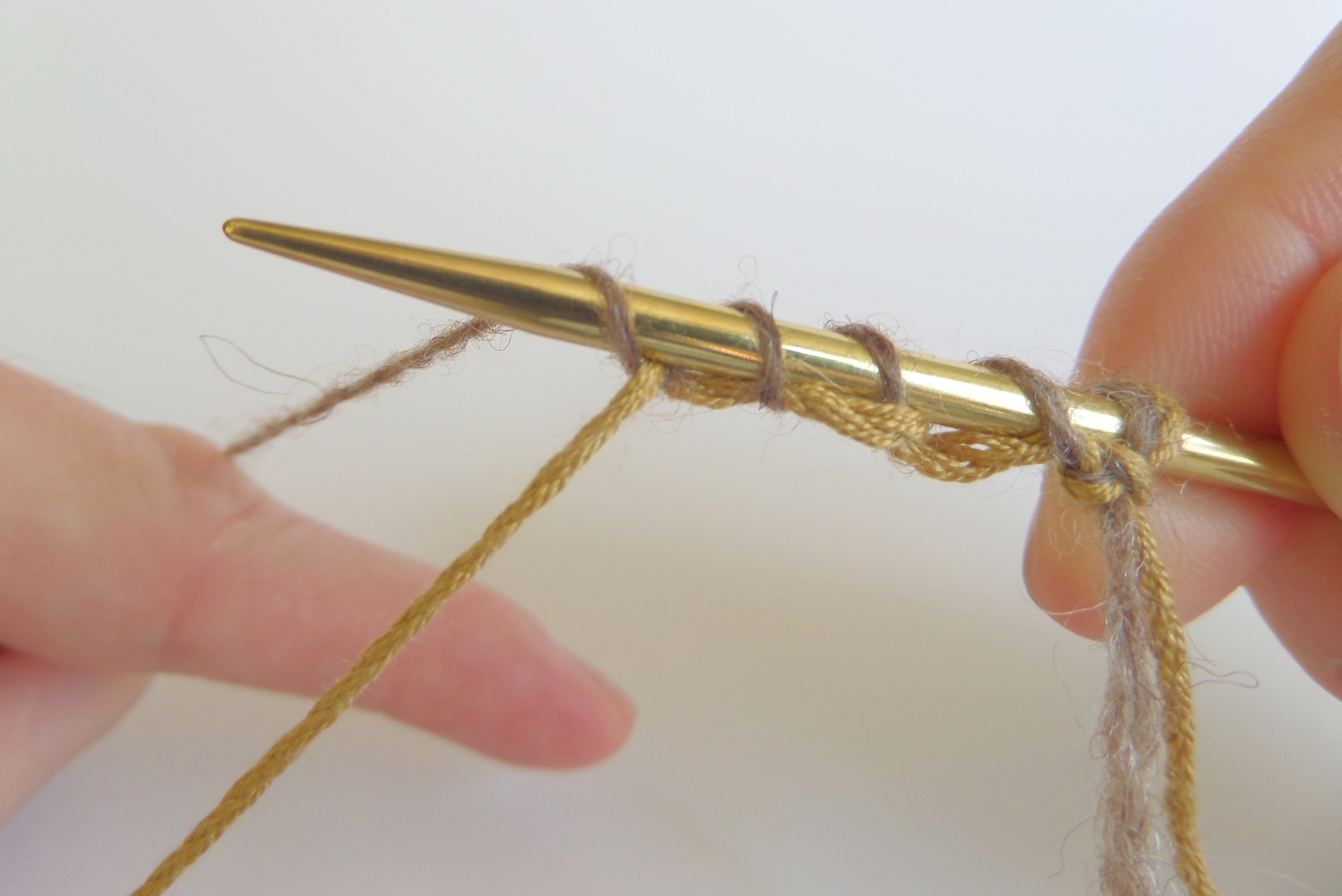
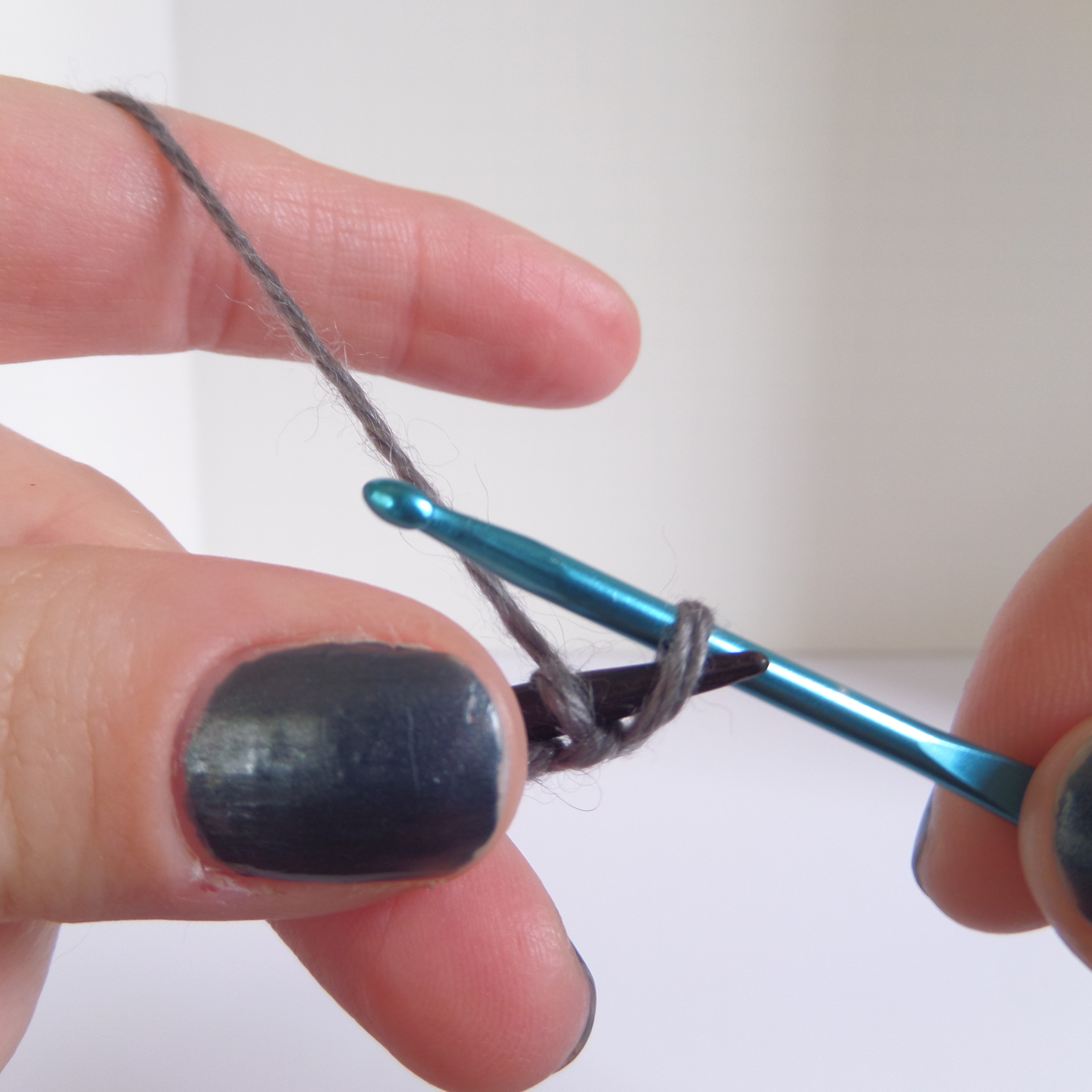
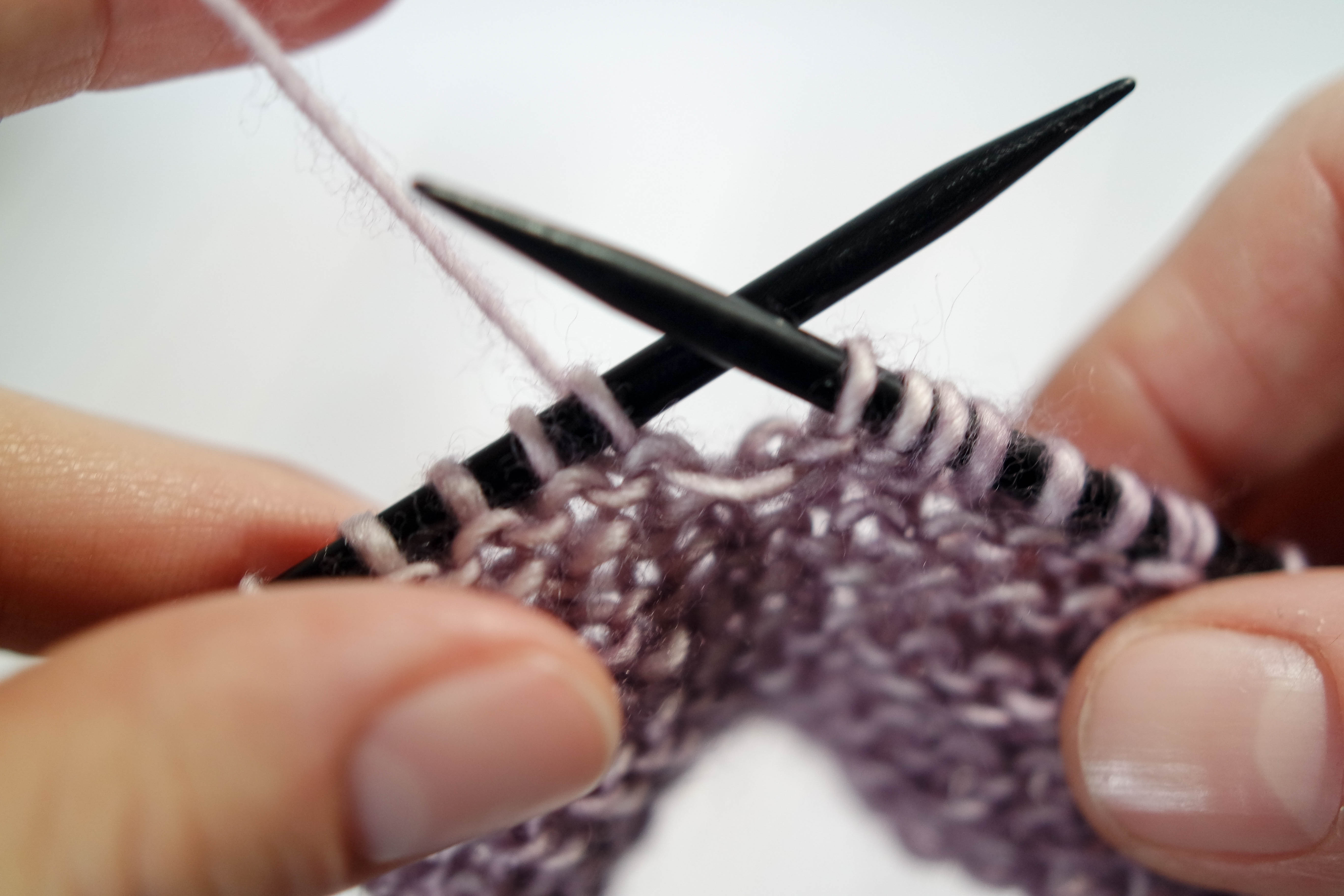
    Step 5: Work the second right-side row of the band with the top half of the loop and pull tight so the band is snugged up against the front.SAMSUNG CAMERA PICTURES
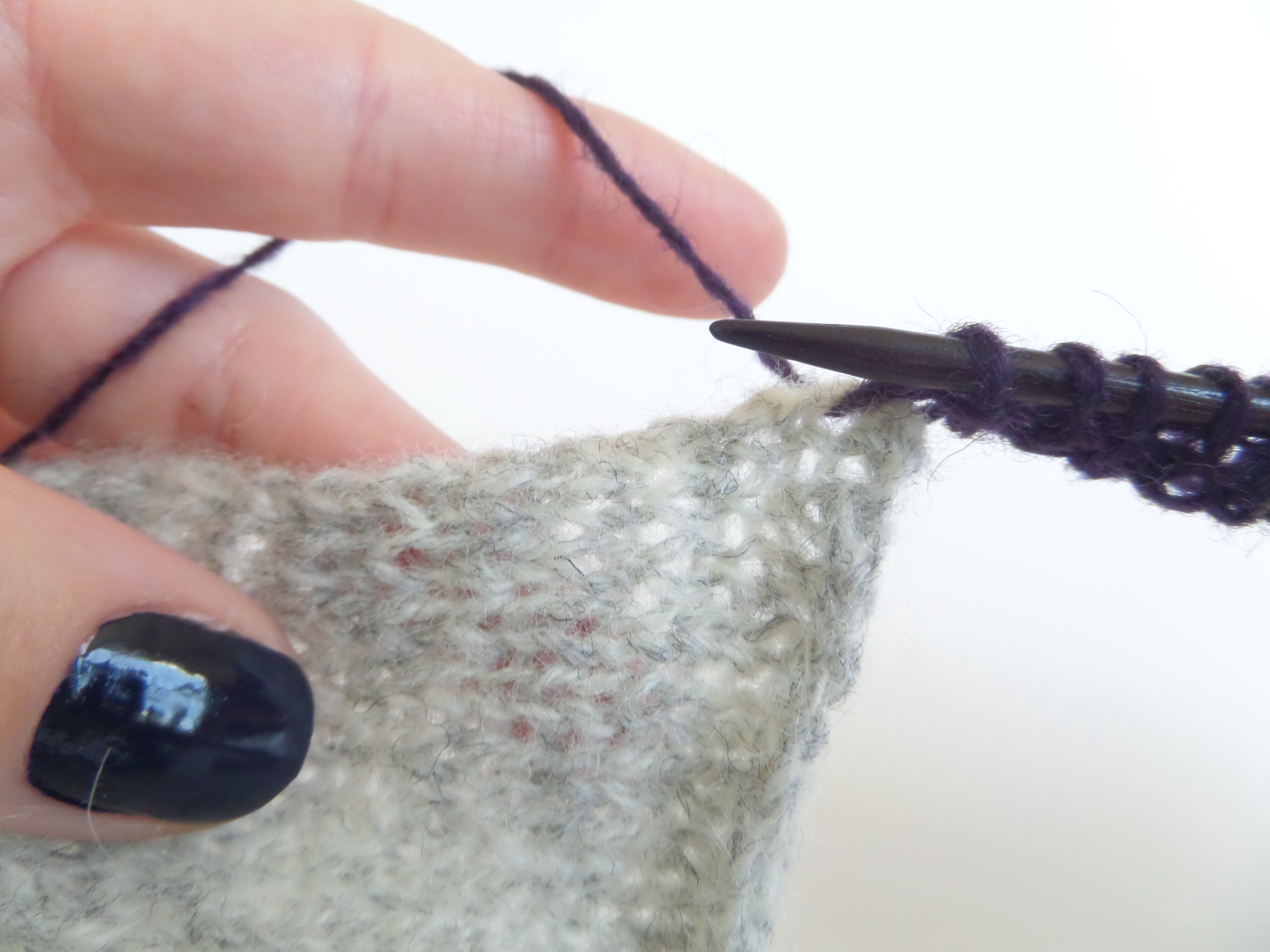
    Repeat steps 1 through 5 for the length of the fronts. Two rows are worked for every picked-up loop, so you will have to skip every second row on the sweater front for the band to have the same number of rows. If you are working a round neck cardigan, both bands can be worked first and continued into the neck band. For v-neck cardigans, the bands can continue around the neck edge to be joined at the back neck.

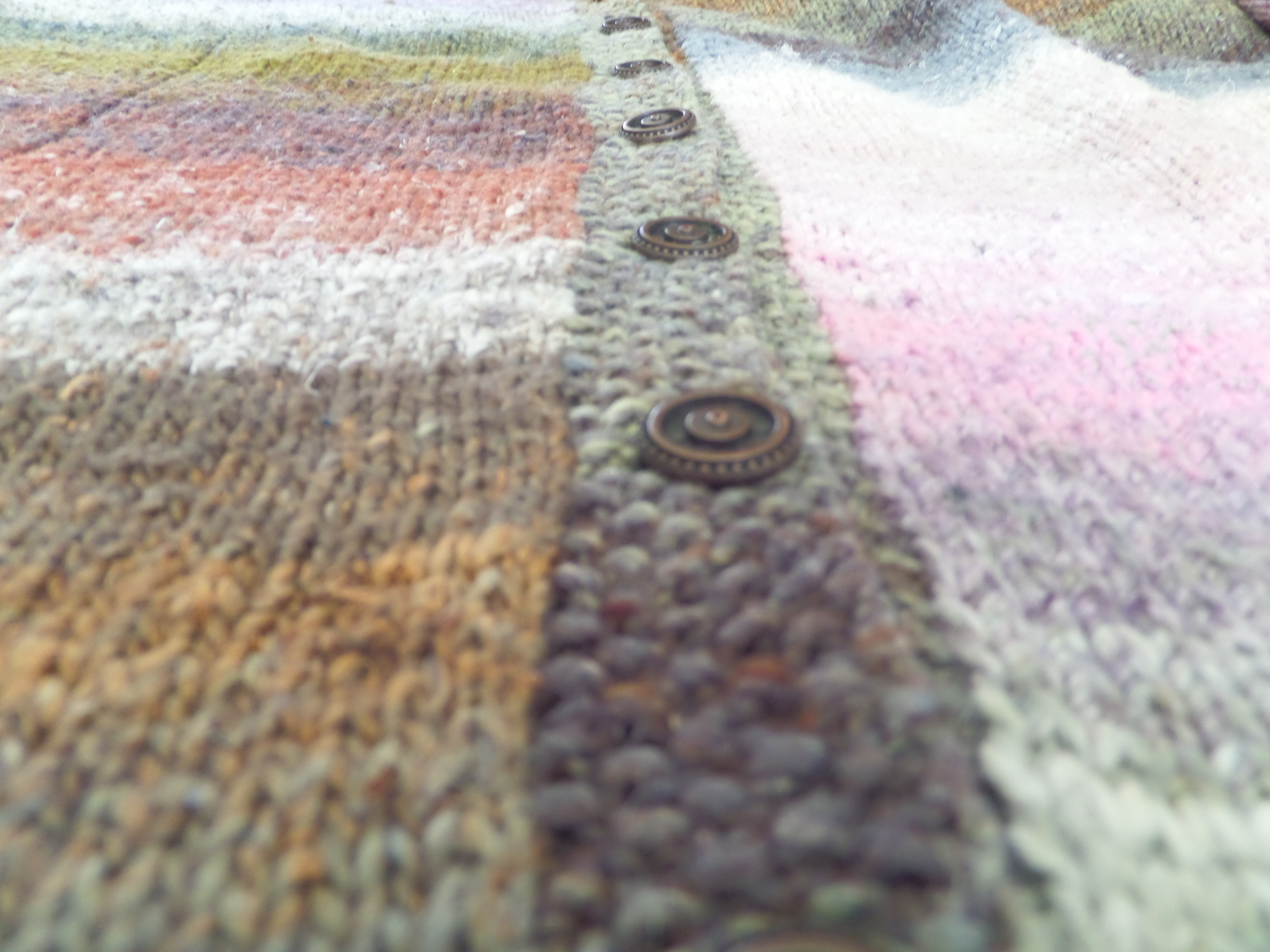
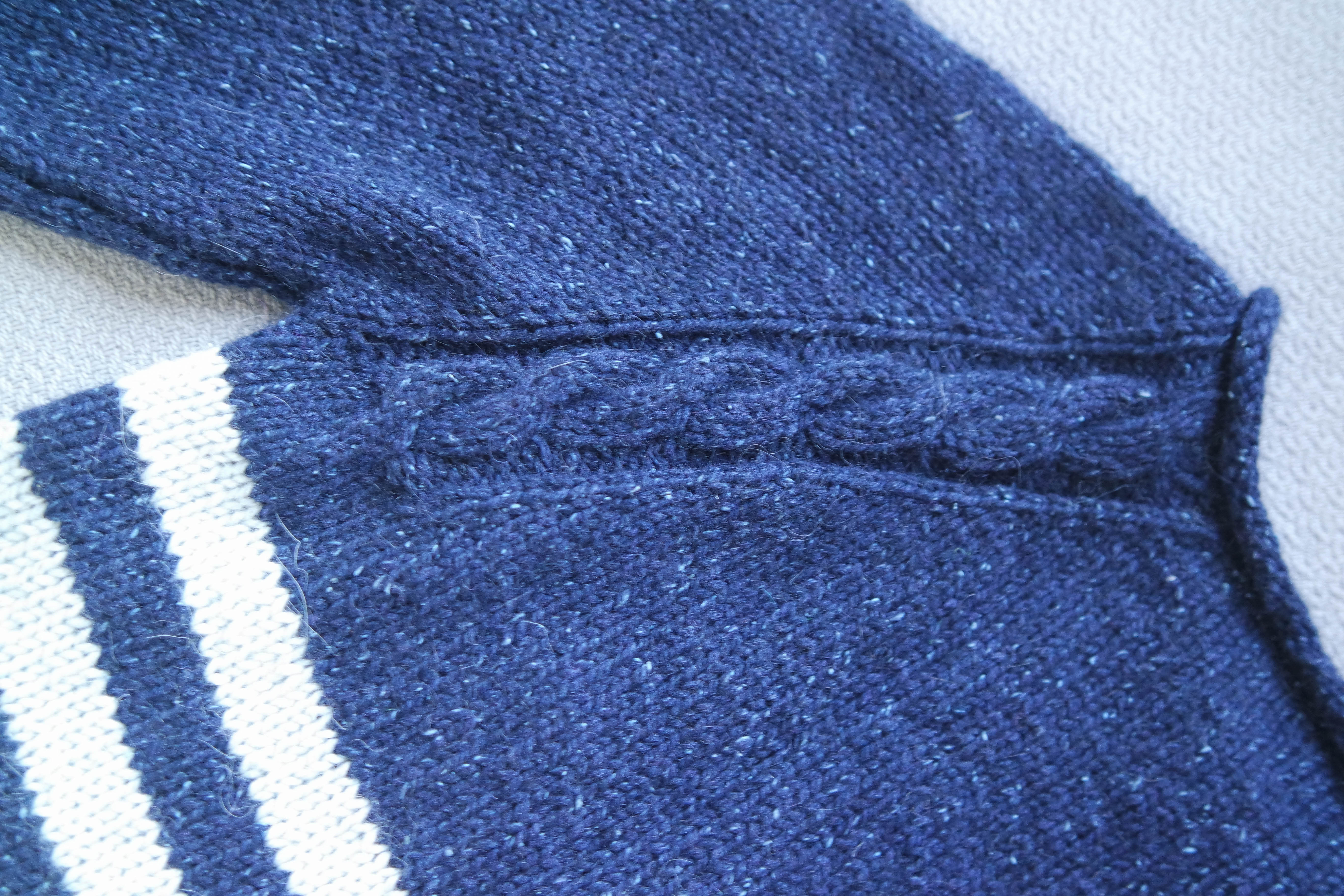
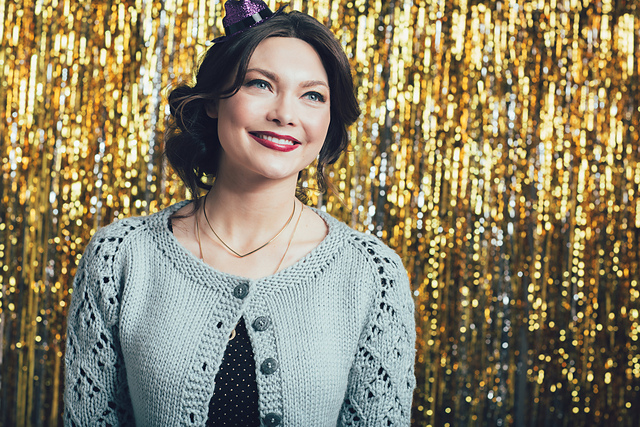
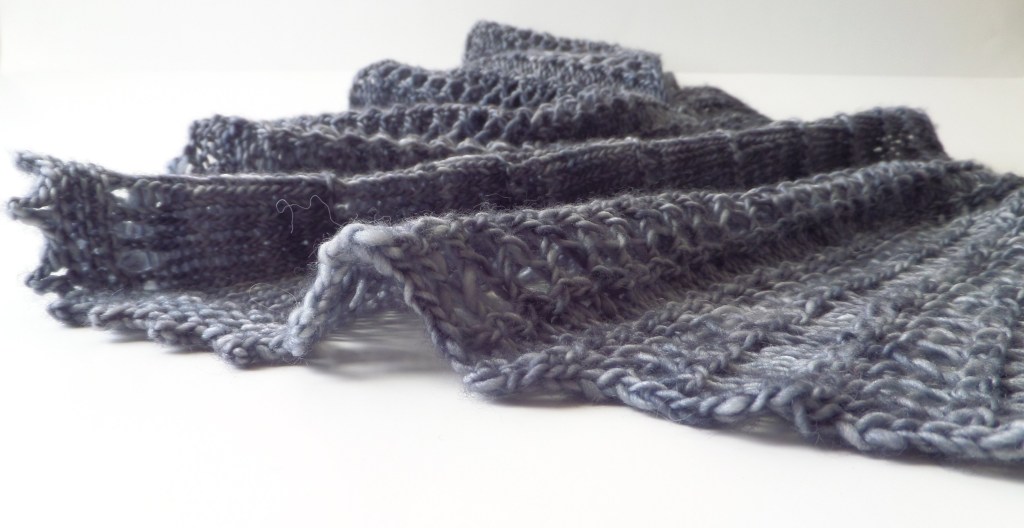
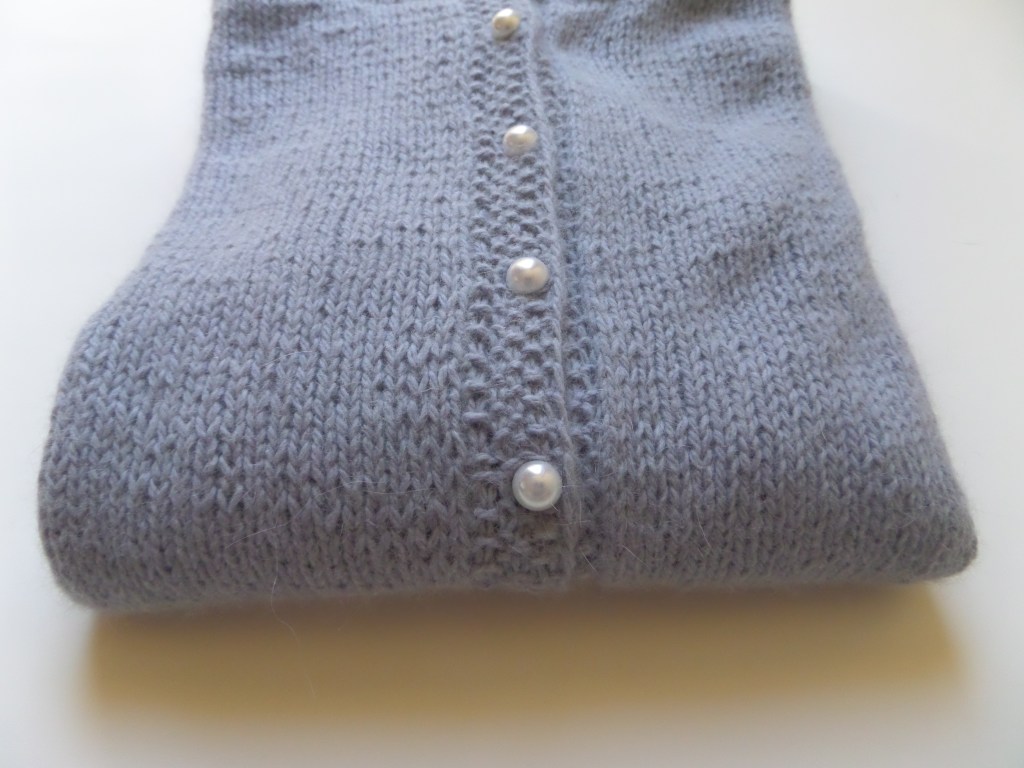
    Cardigans aren’t the only use for the side-to-side join! Anywhere you would would like to attach a parallel piece of knitting to an already finished piece this method will work. The cover photo and the photos below are examples of sweaters that I made using this technique.

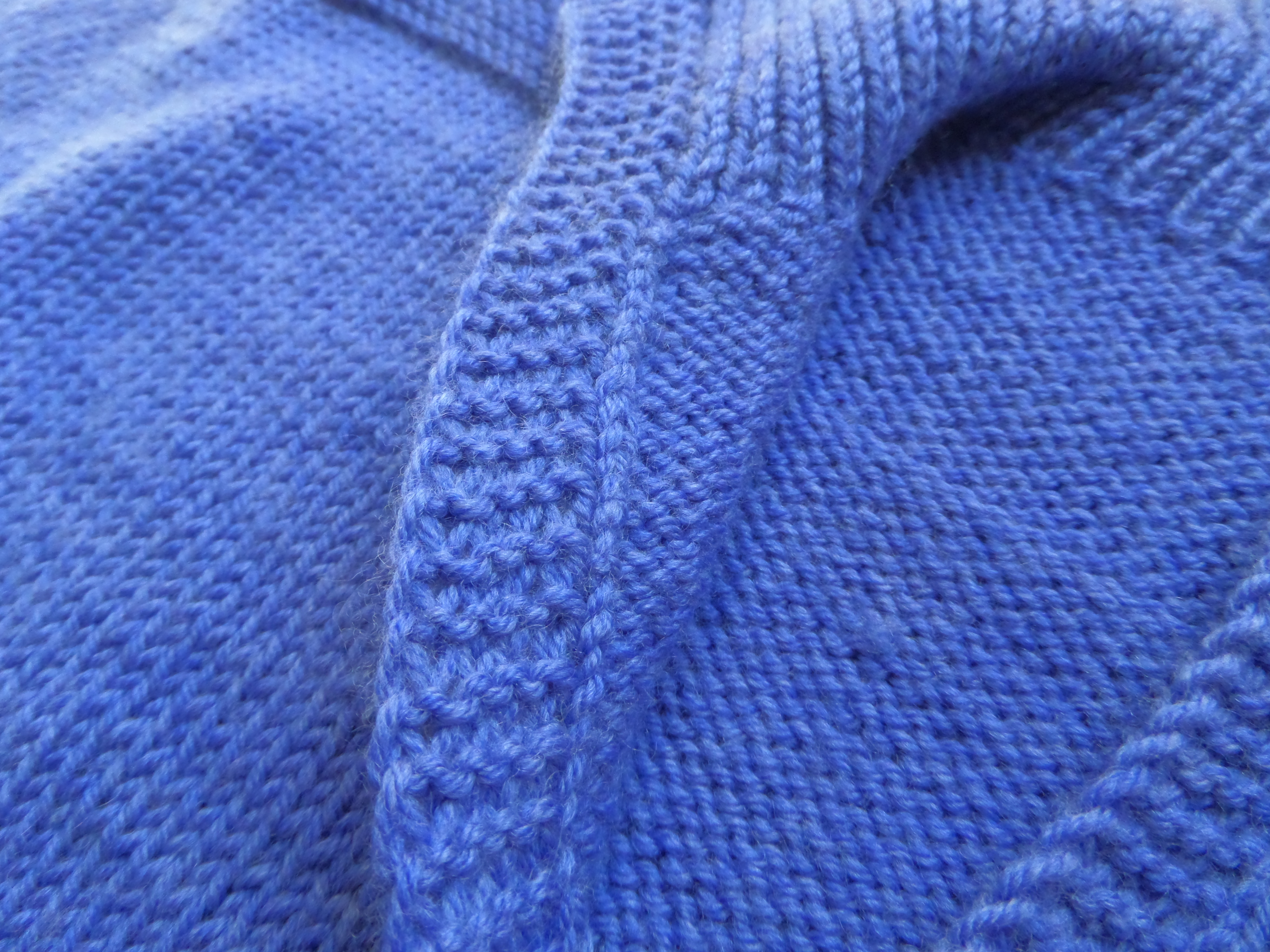
    Garter stitch bands.
    Garter stitch bands.
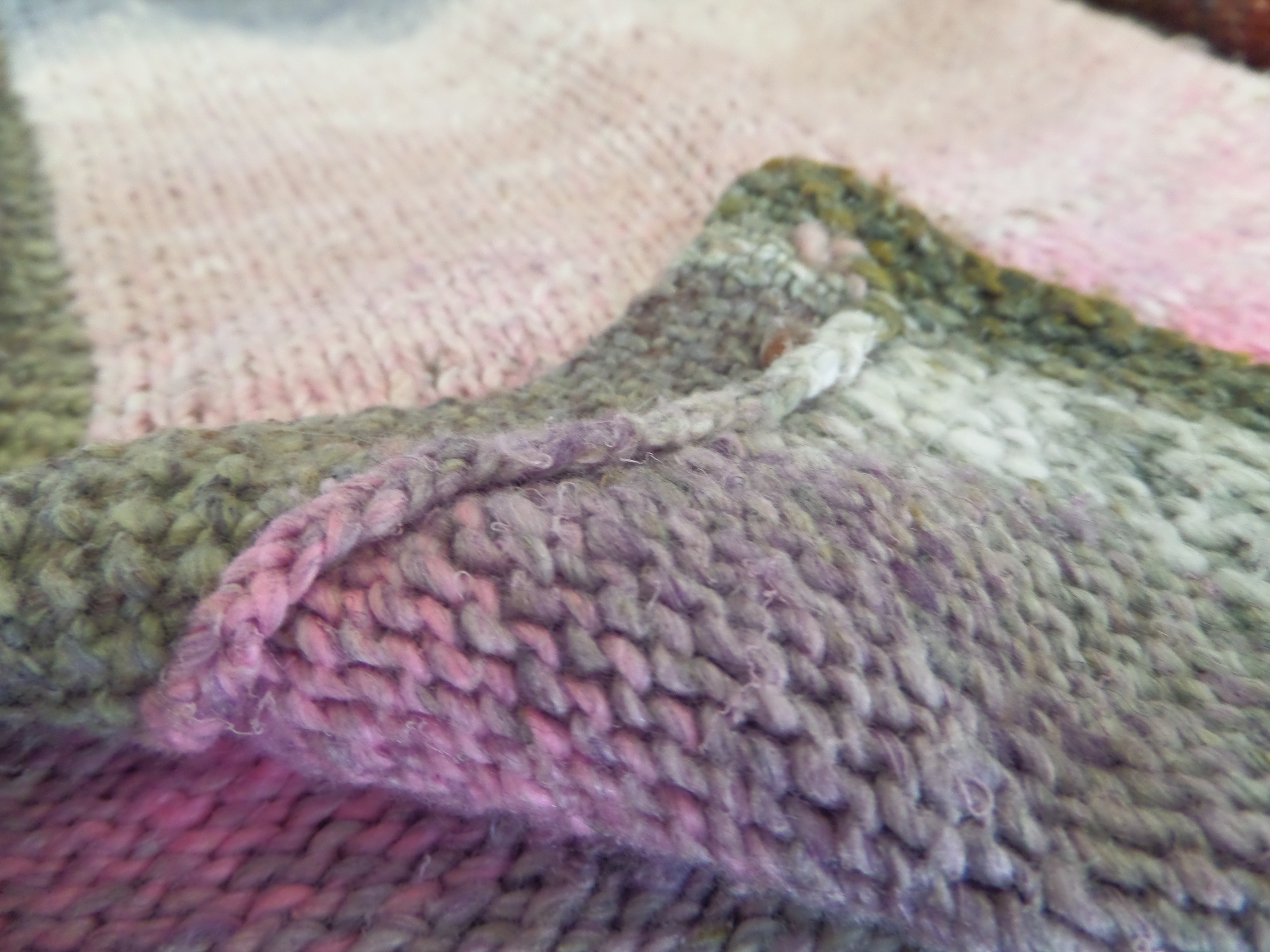
    From the wrong side you can see hoe the band continues into the collar.
    The wrong side view, Here you can see how the band continues into the collar.
    Seed stitch bands.
    Seed stitch bands.
    The wrong side view.
    From the inside.
    SAMSUNG CAMERA PICTURES
    Knit 1, purl 1 ribbing seen from the right side on the left and the wrong side on the right.

    Let me know in the comments if you’ve seen this method before or if you’ve tried it yourself.

    Thank you for knitting!
  • Estimating Yardage

    Estimating Yardage

    Have you ever wondered how designers arrive at the recommended yardage listed in a pattern? Are you designing a sweater and wondering how to accurately list the yardage for sizes that haven’t been knit yet? Or maybe you are changing the gauge or length of a sweater you’re knitting and want to make sure you don’t run out of yarn? In all of these situations you can estimate how much yarn you’ll need using a swatch, a kitchen scale, the information from your yarn’s ball band, and a calculator or spreadsheet. This is how I do it.

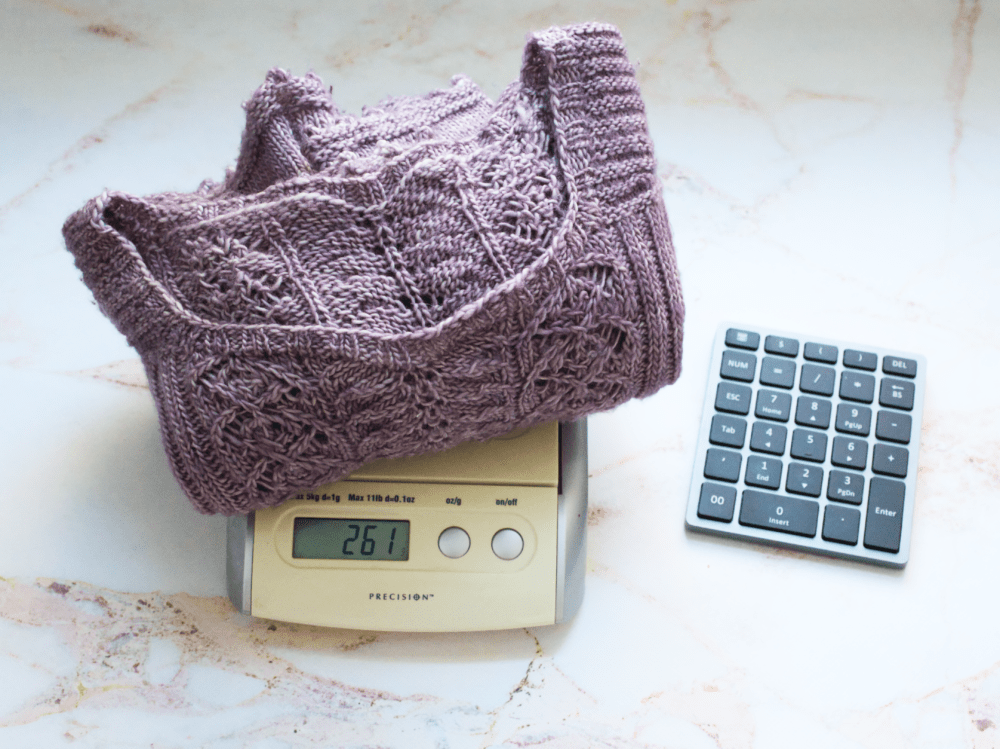
    First, determine how much yarn it takes to make a square inch or square centimeter of your knitted fabric. You can start with a large rectangular swatch or an entire garment. Weigh your swatch or sample using the kitchen scale. I like to use the weight in grams because it’s a smaller unit of measure than ounces, and ball or skein weights are usually given in grams.

    Next, determine the area of your swatch or sweater. If your swatch is a square or rectangle you can multiply the length by the height to determine the area. For example, if your swatch measures 8 x 8 inches the area is 64 inches. (If you’re more comfortable with metric go ahead and use centimeters for all measurements instead.) Divide the area by the weight. Let’s say your swatch weighs 10 grams. 64/10 = 6.4. It takes 1 gram of that particular yarn to make 6.4 square inches of that particular fabric. If you wanted to add 2 inches in length to a sweater with a circumference of 40 inches that’s 80 square inches. 80/6.4 = 12.5. You would need an additional 12.5 grams of yarn.

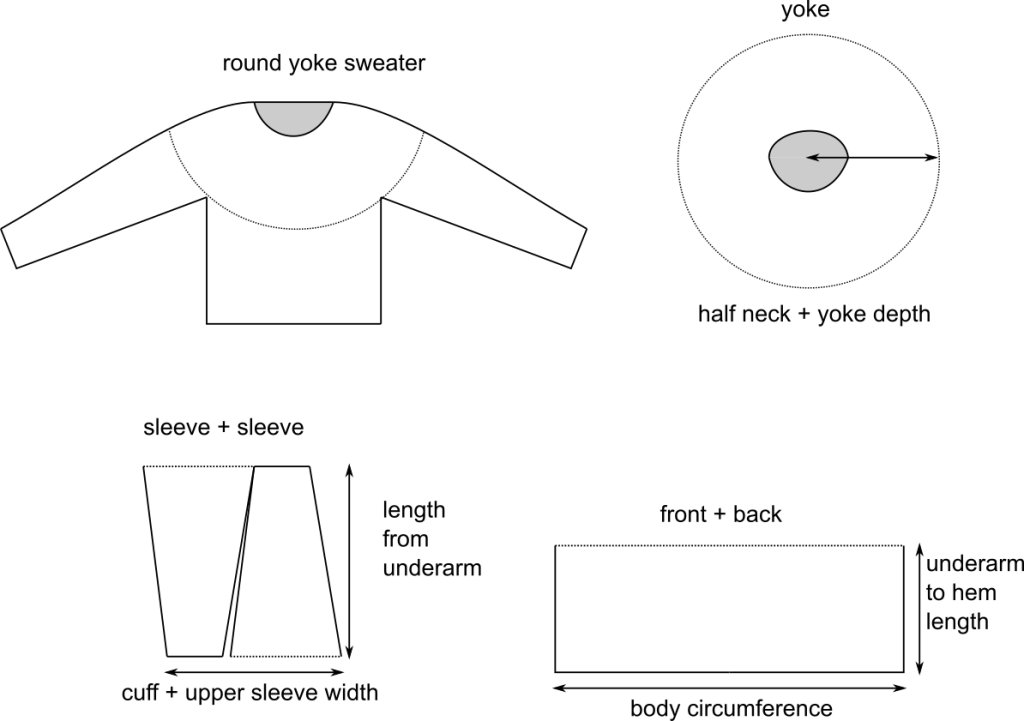
    To find the area of an entire sweater I reduce the design into simple shapes like rectangles and parallelograms as shown in the illustrations below, and multiply the length by the height to find the area of each shape.

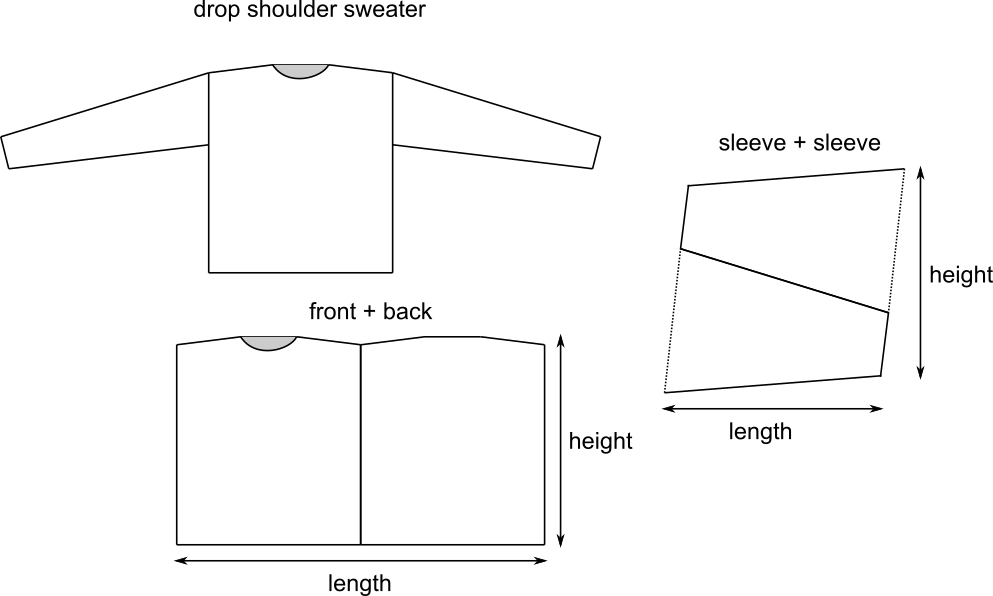
    Drop Shoulder

    A line drawing of a drop shoulder sweater showing how the sleeves and body can be reduced to parallelograms and rectangles.

    A drop shoulder sweater is the simplest design for finding the area. The front and back are rectangles and there are two trapezoids for the sleeves. Add the length and width of the two sleeves together to make one parallelogram. If there is a collar it is probably a rectangle also, and you can add the length to the height to find its area.

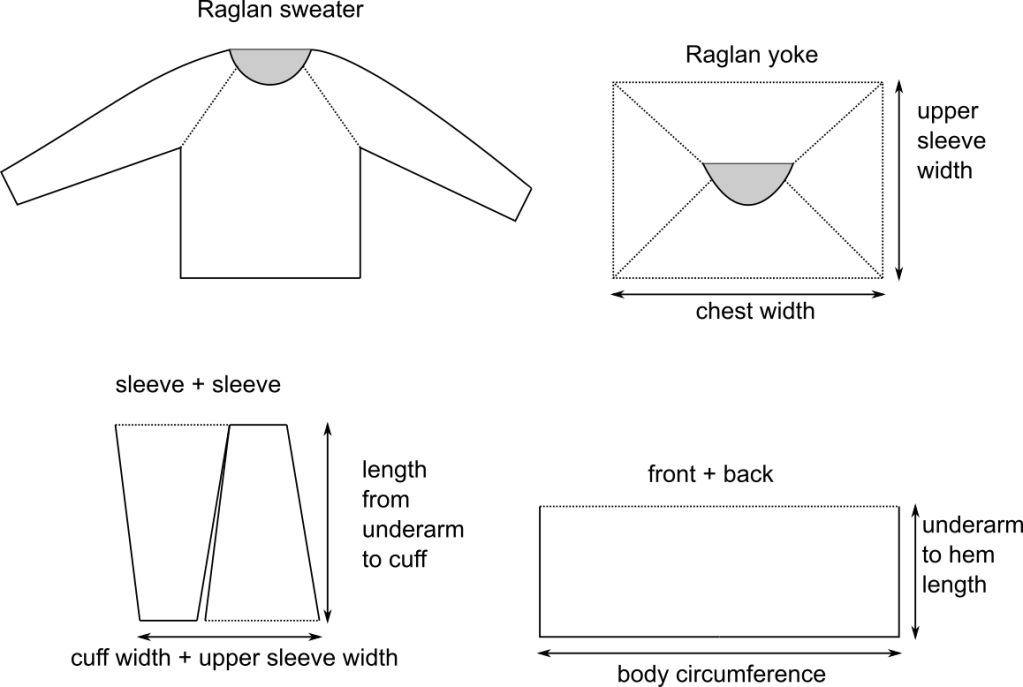
    Raglan Yoke

    A line drawing of a raglan sweater showing how the yoke forms a square.

    If you take a raglan sweater off the needles at the underarm and lay it out flat you’ll see how the yoke can be simplified into a rectangle. Multiply the chest width by the upper sleeve width before the underarm cast on to find the area of the yoke. Unless it’s a deep V or a scoop neck I don’t subtract anything for the neck. This just adds a little buffer to the yardage. The area of the body below the underarm and the sleeves below the shoulder can be calculated in the same way as the drop shoulder sweater.

    Round Yoke

    A line drawing of a round yoke sweater showing how the yoke forms a circle, and how the sleeves, front, and back form rectangles when combined.

    For round yokes, first determine the radius of the yoke by adding half the neck width to the yoke depth, square the radius, then multiply by pi. This will give you the area of the yoke. The area of the sleeves and the body below the underarms will be the same as the raglan sweater.

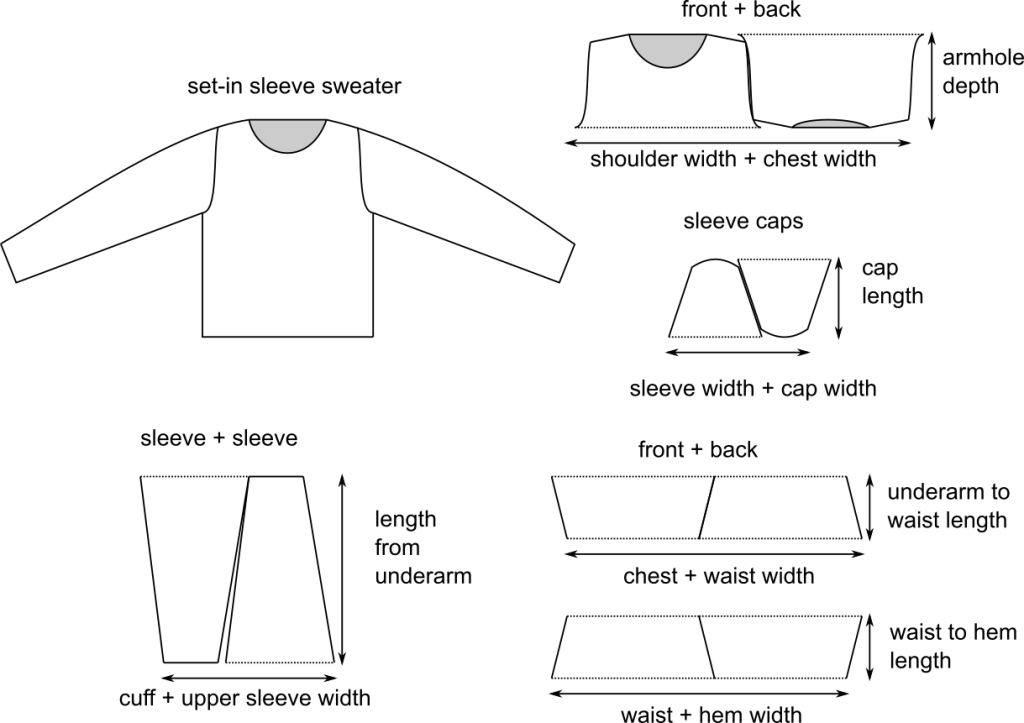
    Set-In Sleeve

    A line drawing of a set-in sleeve sweater, and illustrations of all the sweater parts.

    A set-in sleeve sweater will have a few more shapes than the others. The sleeve caps can be treated as trapezoids the same way as the sleeves and added together to create one parallelogram. The body of the sweater below the underarms can still be treated as two rectangles, but if there is significant waist shaping you may wish to break the top and bottom into trapezoids and add them together. The yoke can also be treated as a trapezoid, and adding the front and back together will make a parallelogram.

    After you have determined the area of your sample you can find how many grams of your yarn it takes to make 1 square inch of your fabric by dividing the area of the sample by the weight of the sample. You can then multiply the grams per square inch by the total area of every other size in your pattern. This will tell you how much of that particular yarn it takes to make each size by weight, but you should also convert the weight into yards to make the estimate useful to knitters who want to use a different yarn.

    Using the information from the ball band of your sample yarn, divide the weight of one skein by the yards per skein to find the yards per gram, then multiply the yards per gram by the weight of each size. This will give you the yardage needed for each size. You can also estimate the number of skeins needed for each size by dividing the total weight by the weight of one skein and rounding up to the nearest whole number.

    You can see from the illustrations above that the area measurements are not exact, and each knitter’s tension will affect the amount of yarn used also. These are only estimates, but you want to be sure that your knitters will not run out of yarn before completing their projects, so it is a good idea to add a buffer to the recommended yardage, which is usually 10%, but could be more or less depending on the design.

    Estimating yardage is just one of the tech editing services I offer. Yardage estimates are included with every grading job I do, but I can also check your yardage estimates or calculate the yardage for you when I tech edit your pattern. Just let me know that’s a service you’re interested in and tell me the size and weight of your sample. I would love to know what you think of this method of estimating yardage in the comments!

    Thank you for knitting!

  • Keeping Track of Repeats

    Keeping Track of Repeats

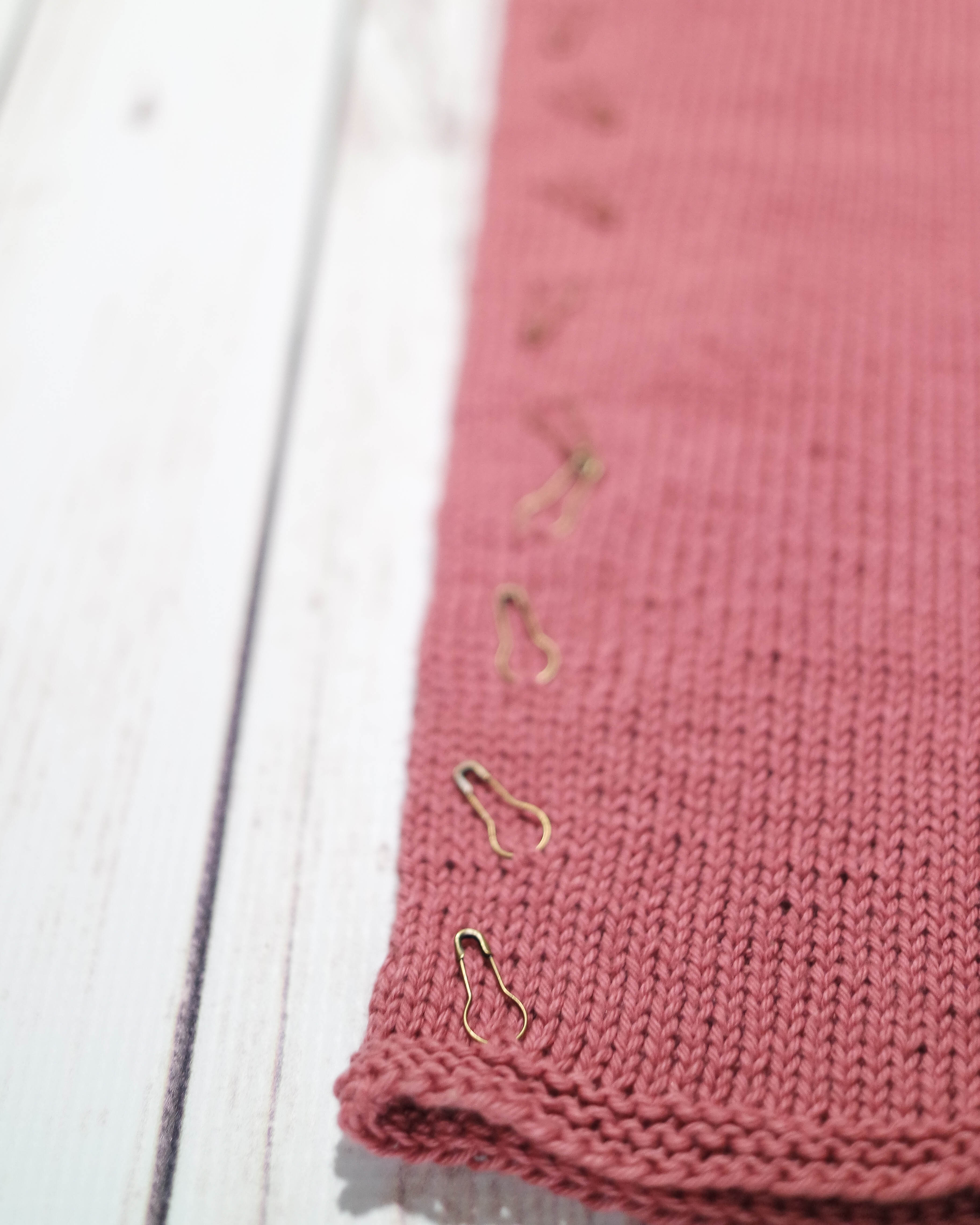
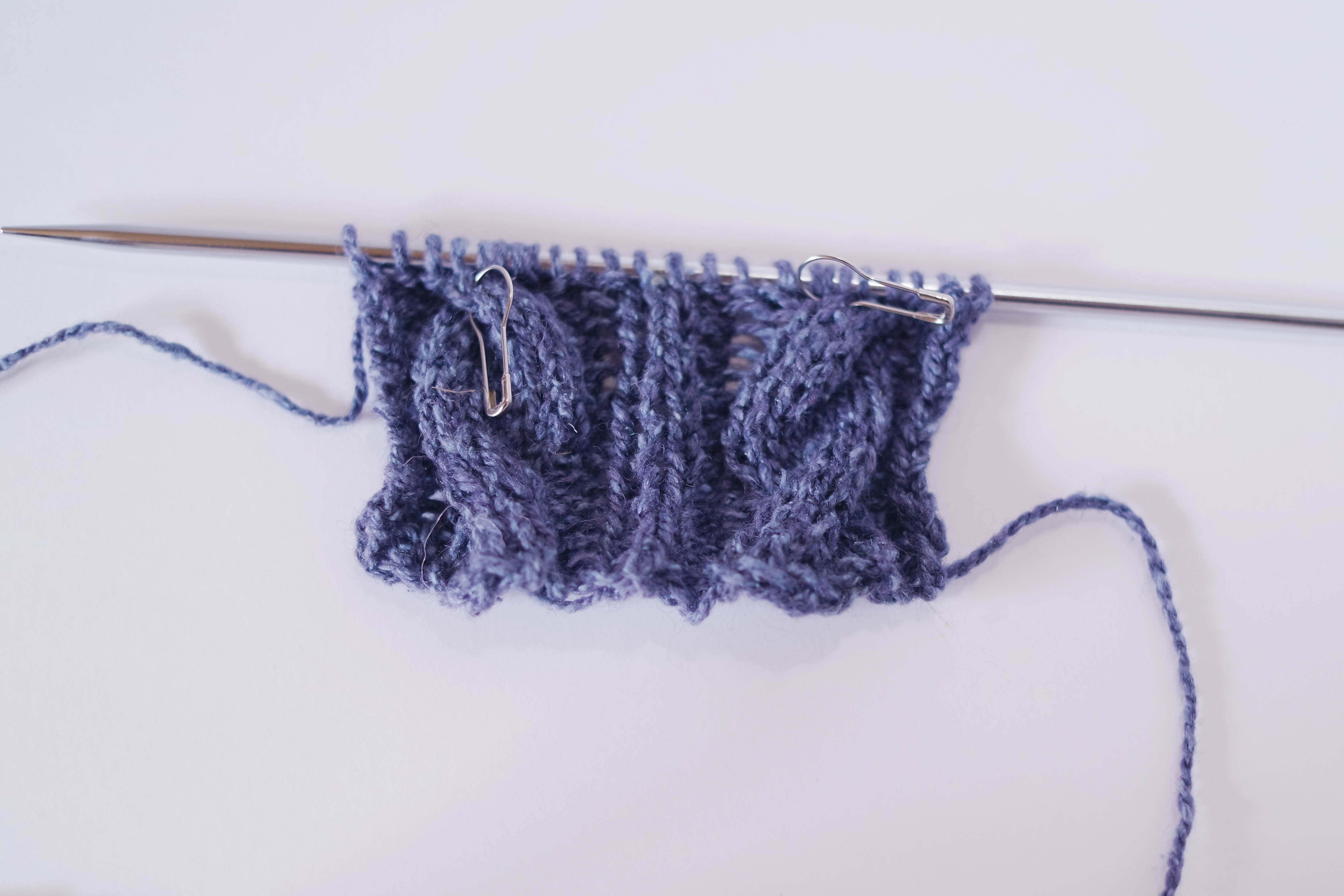
    I have seen knitters use all kinds of different methods to keep track of pattern rows and repeats. Row counters, spreadsheets, a handwritten list of every row with a check mark beside it when that row is complete. I never liked any of these methods. What happens when you forget to click your row counter? Or lose your speadsheet? Or have to rip back and erase your check marks? No, I’ve found the best way to keep track of repeats in my knitting is in my knitting itself. A few years ago I discovered bulb safety pins, (shown above) which have become my favorite tools for this purpose, but before that I used coil-less safety pins or locking stitch markers.

    The method is simple; whenever you perform the repeated action, (increase, decrease, cable, etc.) place a pin in a stitch on that row. In the photo above I inserted a pin into every decrease row. That way all I had to do was the count the rows from the last pin to determine when to make the next decrease. I left all the pins in place so I could easily tell how many decreases I had already made by counting the pins.


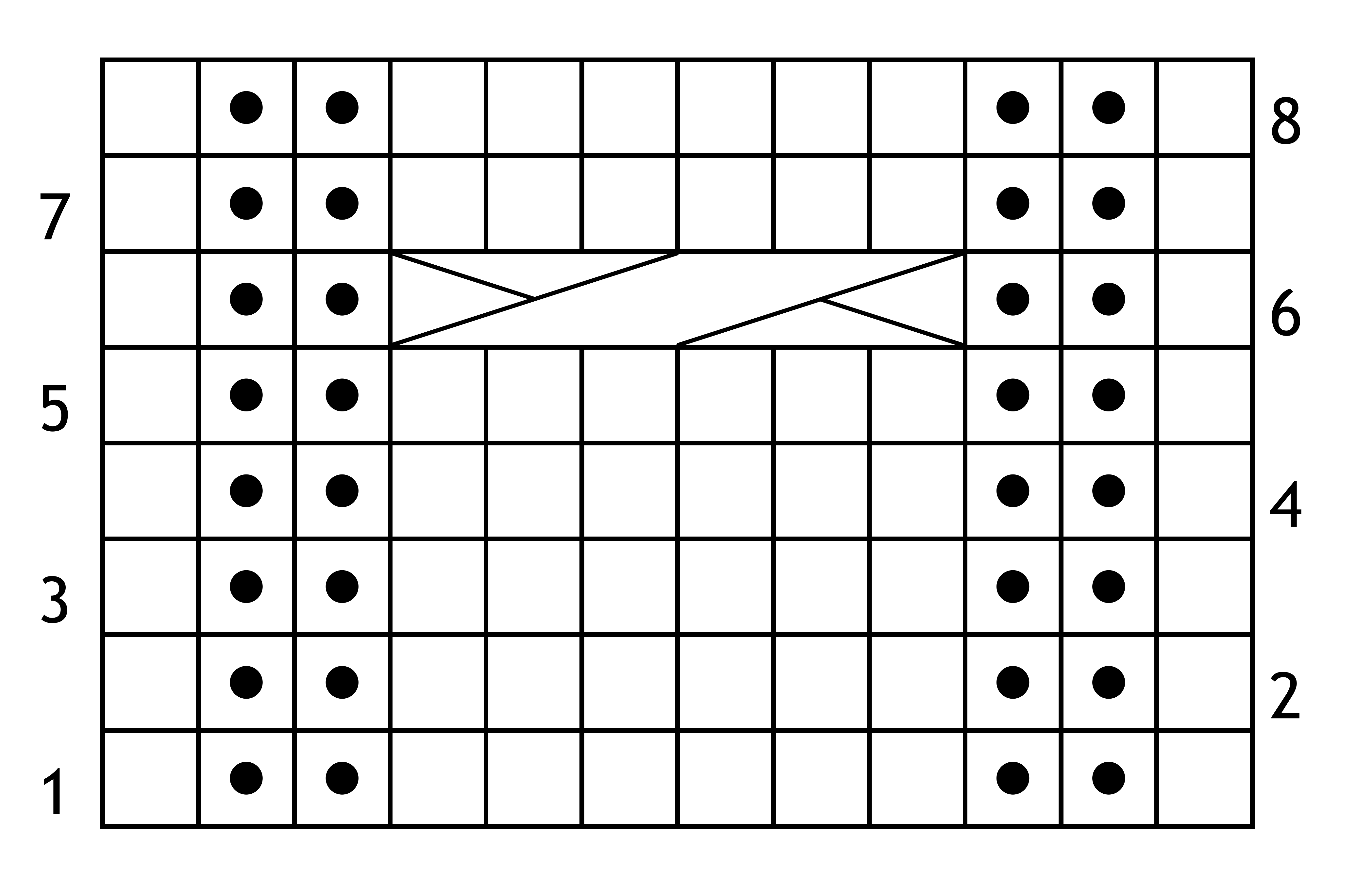
    You can do the same thing with cable patterns. Here I placed pins in the first cable row of the pattern.

    The cable row is repeated every eighth row, so when there are seven rows above the pins it is time to work the cable row again.

    After the cable row is completed the pins are moved up to the current row.

    In a pattern like the Bristol Raglan, where the raglan shaping and cable patterns are worked at the same time but at different rates, you can use pins to keep track of both sets of repeats at the same time. Just use two pins; one for the increases and another for the cables. With the pins right in your knitting you’ll know exactly when and where to perform the repeated action.

    I hope you find this tip helpful, and thank you for knitting!


  • For The Love Of Short Rows

    For The Love Of Short Rows

    I LOVE short rows! They are the perfect option for shaping seamless garments, and since I discovered German Short Rows I love them even more! German Short Rows are, in my opinion, the easiest, fastest, and best looking way to work short rows. I used them to shape the shoulders in the Keeley Sweater, and the neckline in the Blowout Cardigan and Jean’s Jacket. I also used short rows to shape the high/low hemline in the Linden Street Pullover and to create the lace and garter stitch wedges on A Thousand Rainy Days. There is a KAL for the love of short rows starting February 14, 2017, in the third vault on the left Ravelry group. Use the code ShortRowLove17 to get 20% off A Thousand Rainy Days and several other patterns from different designers. You can see the complete list here.

    German Short Rows use what is called a “double stitch” or ds to prevent forming a hole in the work where the short rows are turned. To make the double stitch, turn the work, slip the first stitch on the left needle to the right needle with the yarn in front, and pull the yarn up, over the needle and to the back of the work. Each step is shown in the photos below.

    Stop knitting before the end of the row. Your pattern will tell you how many stitches are worked in the short row.

    Turn.

    With the yarn in front, slip the first stitch on the left needle to the right needle.

    Pull the yarn up, over the needle, and to the back of the work to create the double stitch.


    The double stitch is always slipped with the yarn in front, so if the last stitch you worked was a knit stitch, the yarn will already be in front when you turn your work. However, if the last stitch was a purl stitch, you will have to bring the yarn to the front between the needles before you slip the double stitch. Here’s what that looks like:

    Purl.

    Turn your work.

    Bring the yarn to the front between the needles.

    Slip the first stitch on the left needle to the right needle.

    Pull the yarn up and to the back of the work.

    The double stitch looks like two stitches coming out of one; work into it only once.


    Learn to recognize the double stitches because most patterns will tell you to work to the double stitch or a few stitches before the double stitch before turning to work the next short row. On the return row work both strands of the double stitch together as one stitch.


    Thank you for knitting!
     

  • The Blowout Cardigan and Weaving In Ends With Bulky Yarn

    The Blowout Cardigan and Weaving In Ends With Bulky Yarn

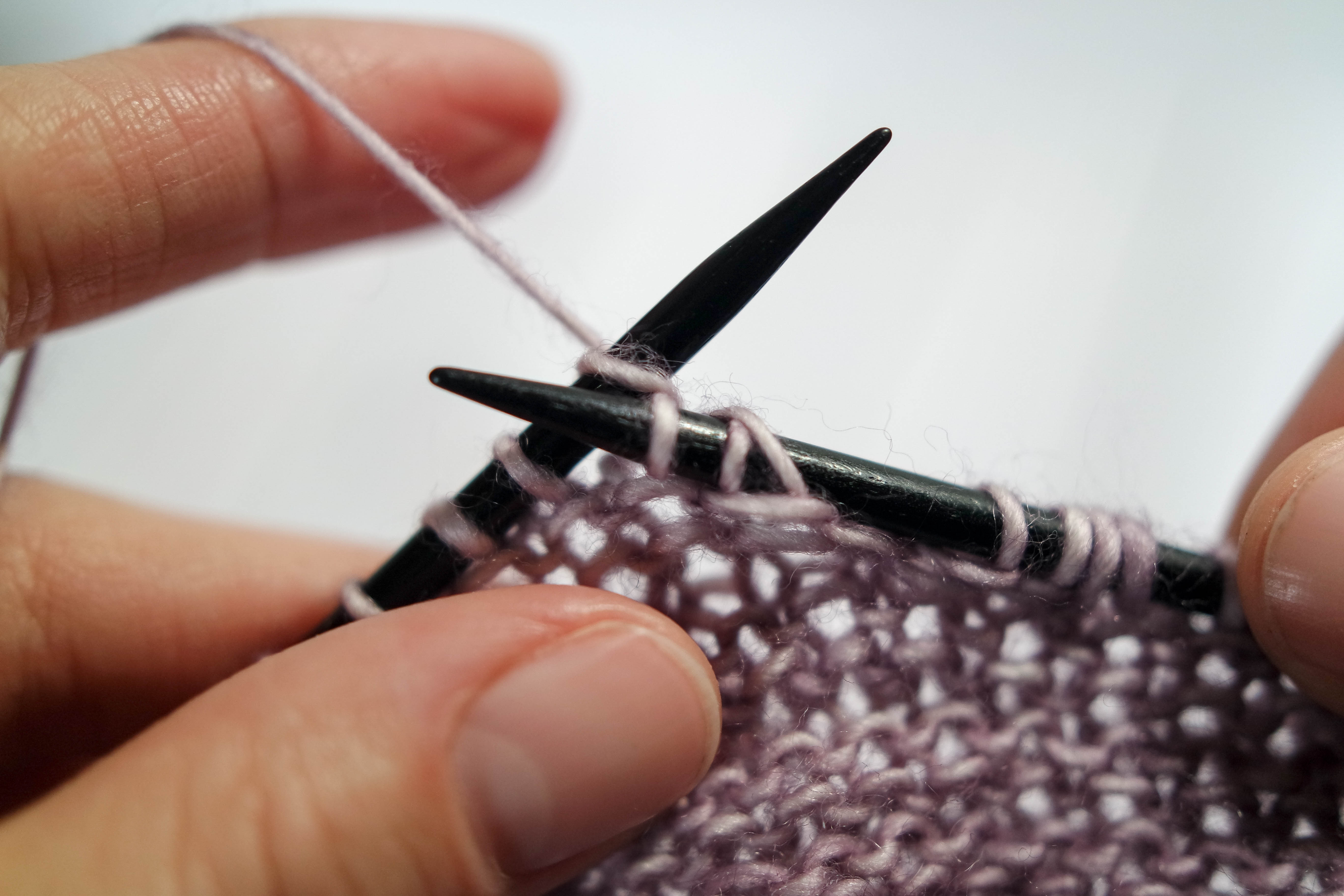
    I made the Blowout Cardigan for the Winter issue of Knitscene magazine. It’s a fun little cardigan worked in bulky yarn with a lace pattern on the sleeves; the perfect thing for holiday parties and cold weather layering. The bulky wool, Universal Yarns Deluxe Superwash Bulky, is soft and easy to work with, but it did present a challenge. I usually attach new skeins using the wet splice method, but I didn’t think the ends would felt together well enough in superwash wool. Simply weaving in the ends wouldn’t do either, because the yarn is so thick it would leave a noticeable bulge wherever I attached a new skein. Instead I used the method shown below, I don’t use it often, and I thought it would be unusual enough to merit a photo tutorial.


    SAMSUNG CAMERA PICTURES
    When it’s time to attach a new skein drop the old yarn and pick up the new yarn leaving about a six inch tail of each. I like to tie an overhand knot to keep the tension even in this spot, but I take it out before weaving in the ends.


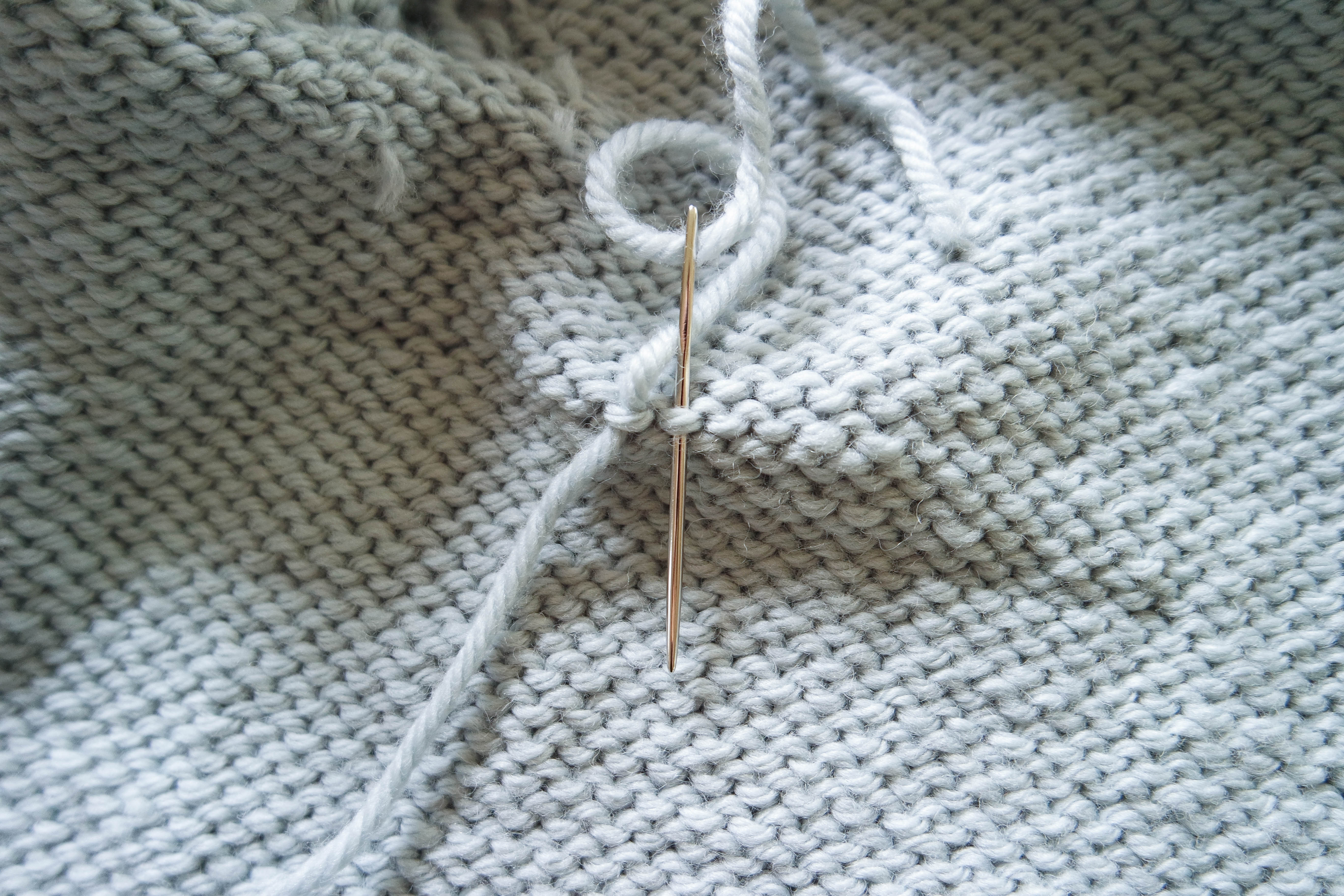
    SAMSUNG CAMERA PICTURES
    Using a tapestry needle weave each end into the stitch next to it to close up the small hole where skeins were changed.


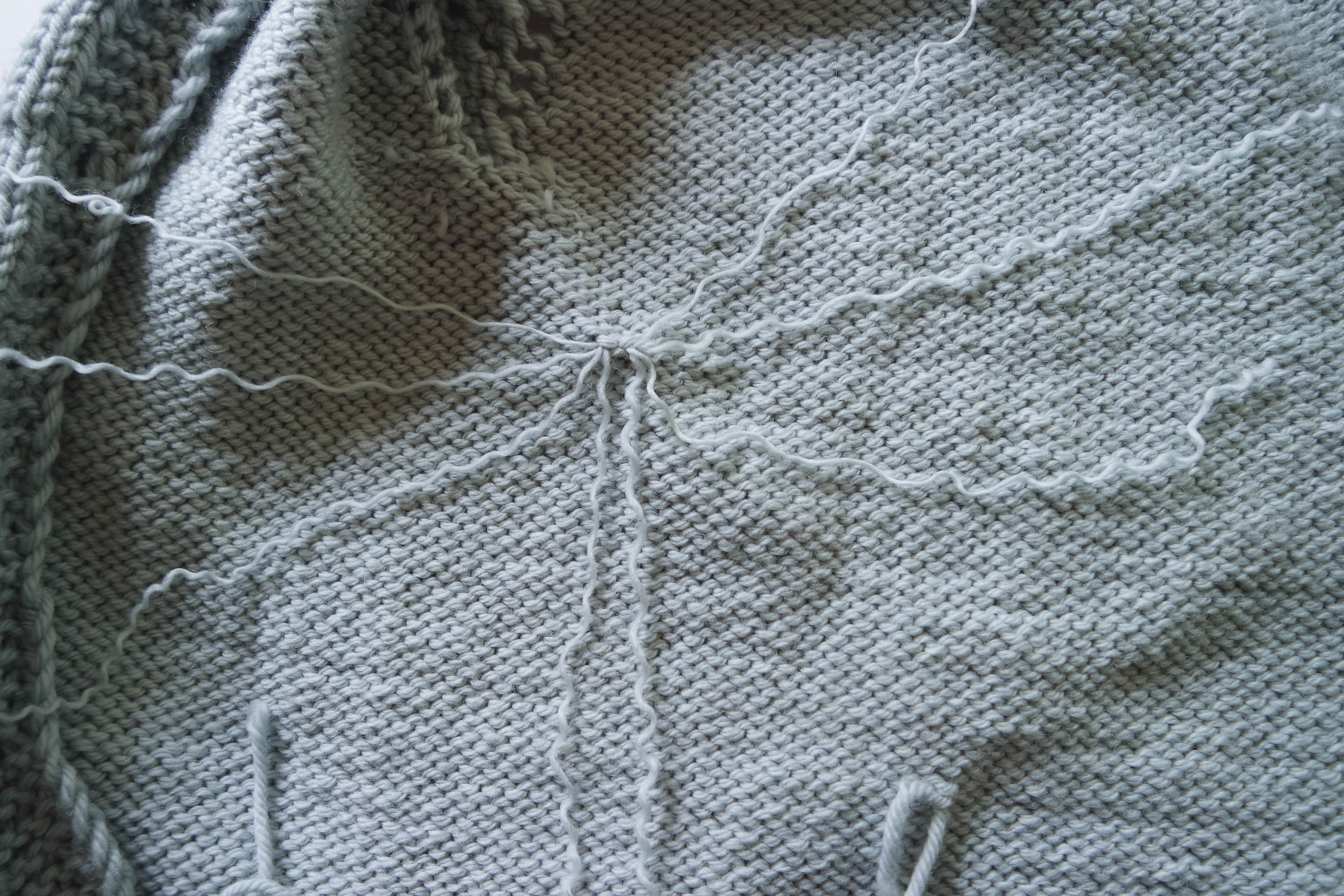
    SAMSUNG CAMERA PICTURES
    Now comes the fun part! Separate the plies of both strands of yarn. The yarn I used was a 4 ply, so there are 8 single plies to weave in.


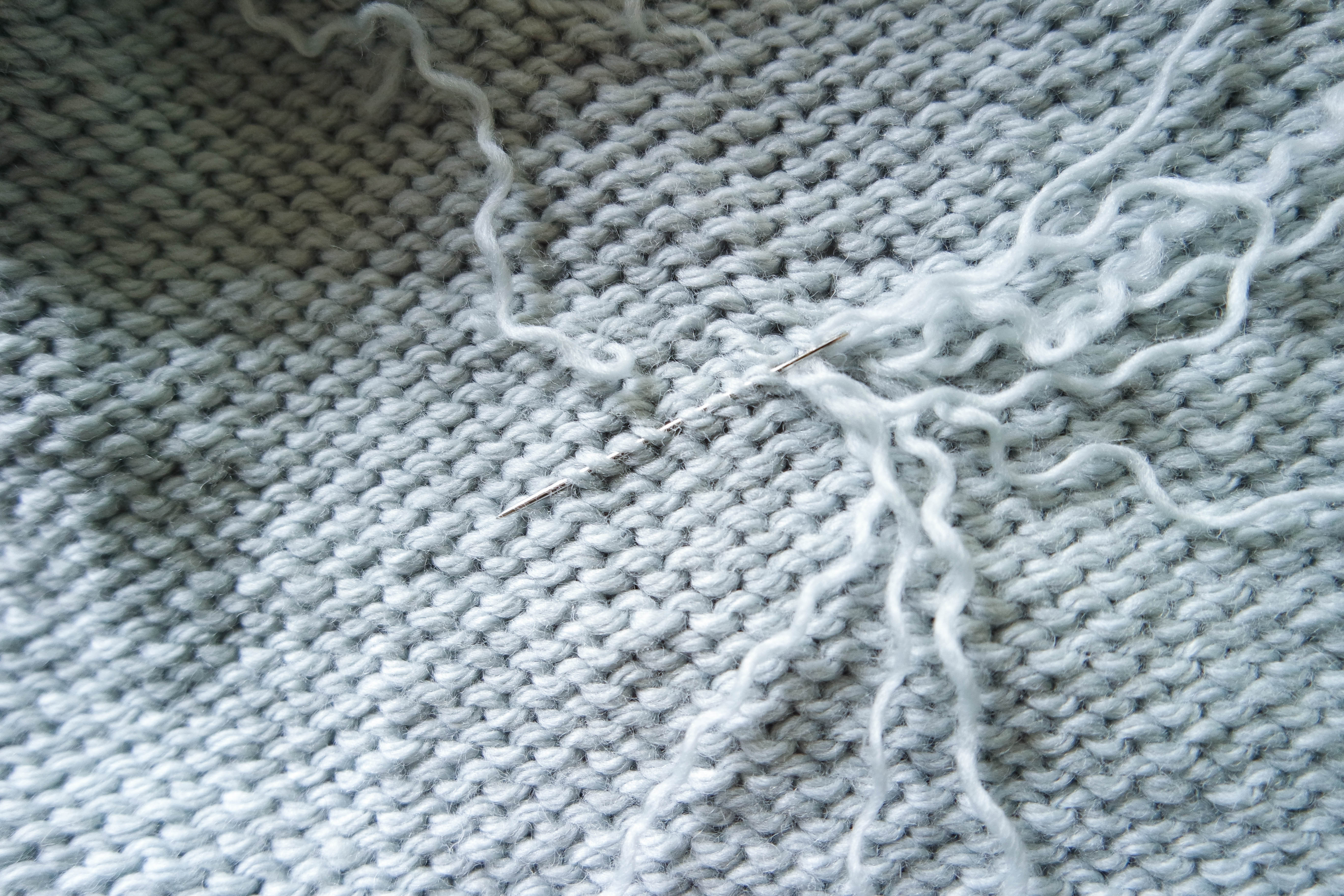
    SAMSUNG CAMERA PICTURES
    Using a sharp needle weave in each end by skimming the needle diagonally through the backs of the stitches. First in one direction…


    SAMSUNG CAMERA PICTURES
    and then back the opposite way.


    SAMSUNG CAMERA PICTURES
    When all the ends are woven in it will look like this.


    SAMSUNG CAMERA PICTURES
    Clip the excess yarn and you’re done!


    knitscene-winter-2016-0469_medium2
    copyright Knitscene/Harper Point Photography

    It may seem like a little extra work, but weaving in ends this way produces such a neat result that it is totally worth it!

    Thank you for knitting!
  • The Chain Space Bind-Off

    The Chain Space Bind-Off

    The chain space bind-off  creates an edge that is neat and flexible. It can also be used to create picots much more easily than the usual method of casting on extra stitches and then binding them off. The chain space is created by working 1 or more crochet chains between each pair of stitches. To work this bind-off you can use a crochet hook the same size as your knitting needle, or you can use a knitting needle as shown below. There is no need to use a larger needle or to try to bind off loosely, just work at your normal tension.

    Yarn over

    Yarn over

    Lift the stitch on the right needle over the yarn over

    Lift the stitch on the right needle over the yarn over,

    and off the needle

    and off the needle.

    One chain stitch after the stitch on the right needle.

    One chain made.

    Knit (or purl) the next stitch and bind it off in the usual manner.

    The finished bind-off looks like a standard bind-off, but the chain spaces give the edge more of the flexibility which is essential for a shawl. To make picots, work 3 chains in one space every 3 stitches. I hope you’ll try it out and tell me what you think. Thank you for knitting!
  • The Invisible Provisional Cast-On

    The invisible provisional cast-on is probably the easiest and fastest way to cast on, once you get the hang of it. To start, you’ll need the needle and yarn you are using for your project, and a spare circular needle or smooth waste yarn for holding the provisionally cast on stitches. If you are using waste yarn to hold your stitches, make a slip knot with both yarns held together and place it on the needle. This is only used to hold the yarn in place and doesn’t count as a stitch.

    The waste yarn is held over the thumb and the working yarn is held over the forefinger, similar to a long tail cast-on.


    The needle goes under the waste yarn from front to back…


    over the working yarn from back to front…


    and back to front under the waste yarn. One stitch cast on.


    For the next stitch the working yarn goes over the needle, just like a yarn over.


    Two stitches cast on.


    1. Under the waste yarn…


    2. over the working yarn…


    3. back under the waste yarn.


    4. Yarn over the needle.


    Two more stitches cast on.

    Repeat 1-4 until you have cast on all the stitches you need. If you need an odd number of stitches, repeat 1-3 once more.

    When you are ready to pick up the provisionally cast on stitches, Slip them onto the needle following the path of the waste yarn, then pull out the waste yarn. You will notice that every other stitch is mounted with the right leg to the back of the needle. You will have to turn the stitches the right way around by working into the back loop on the first row.

    Slip the provisionally cast on stitches onto the needle.

    Work into the back of every alternate stitch to prevent them being twisted.


    When worked in stockinette or garter stitch the provisional cast-on is completely invisible. I like to use this cast-on for toe-up socks, top-down hats, and the underarms of top-down sweaters. This is also the same cast-on used for Moebius knitting.

    Thank you for knitting!
  • The Crochet Chain Cast On

    The Crochet Chain Cast On

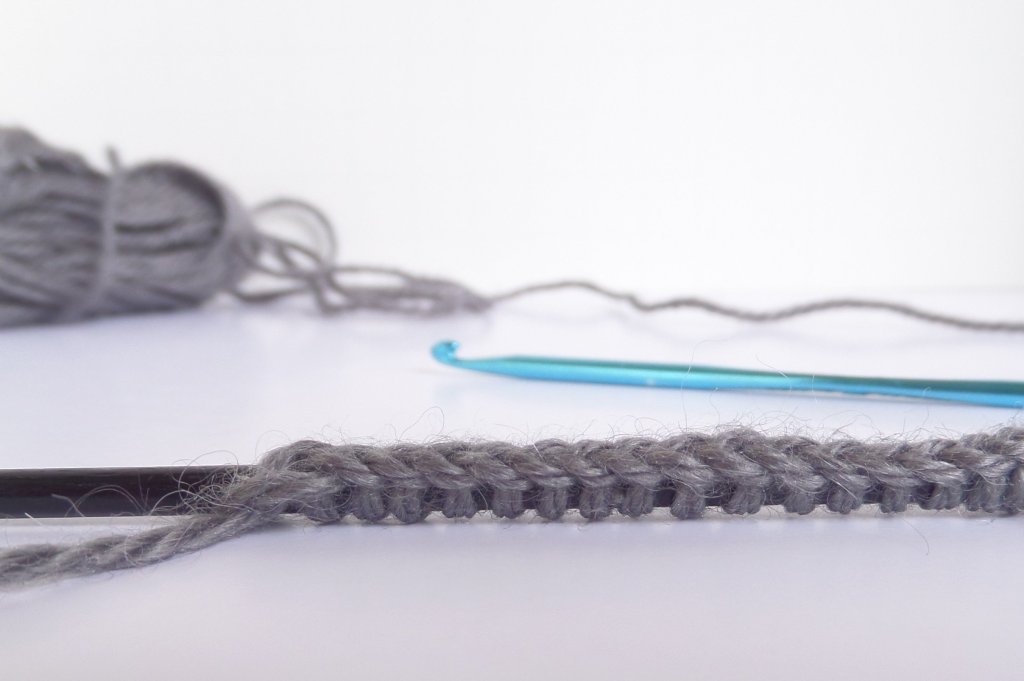
    The crochet chain cast on is one of my favorites. When worked in a smooth, contrasting yarn it can be used as a provisional cast on, holding the stitches securely until you are ready to slip them onto a needle. When used as a regular cast on the neat little chain stitches perfectly mirror a regular bind off, making it ideal for scarves and blankets. If you crochet as well as knit this will probably be an easy technique for you, if you don’t it may take a little more practice but it’s well worth it! To begin you’ll need some yarn and an appropriately sized needle and crochet hook. The hook should be roughly the same size as the needle.
    SAMSUNG CAMERA PICTURES
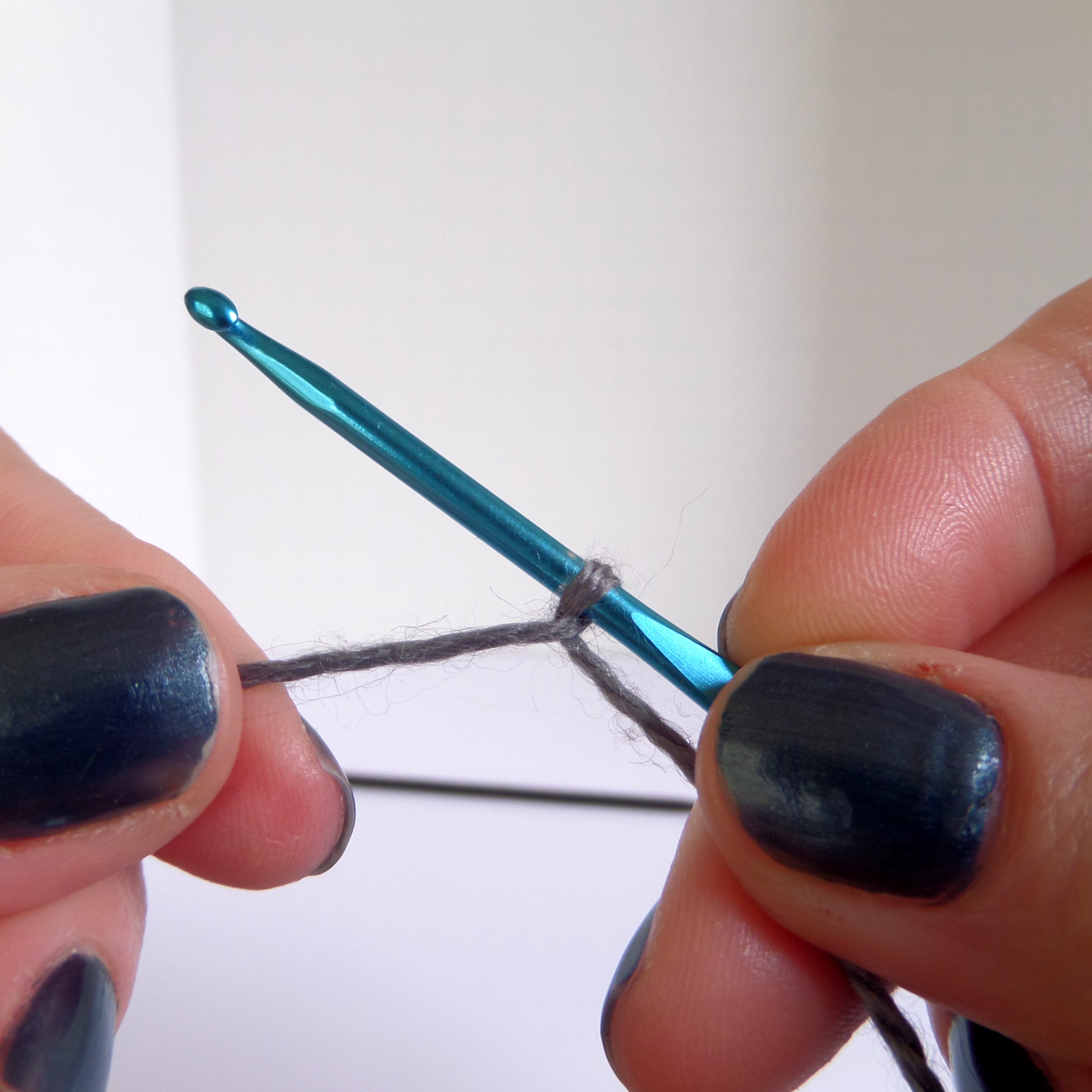
    Begin with a twisted loop or slip knot on the hook.

    SAMSUNG CAMERA PICTURES
    Position the needle between the hook and the working yarn.

    Yarn over hook from right to left.
    Yarn over hook from right to left…

    SAMSUNG CAMERA PICTURES
    and pull the loop through.

    SAMSUNG CAMERA PICTURES
    Bring the yarn to the back between needle and hook.

    SAMSUNG CAMERA PICTURES
    Ready to cast on the next stitch.

    SAMSUNG CAMERA PICTURES
    Yarn over hook…

    SAMSUNG CAMERA PICTURES
    and pull the loop through.

    If you are working a regular cast on, continue casting on until you have one less than the number of stitches needed. The loop on the hook becomes the last stitch.

    SAMSUNG CAMERA PICTURES
    Slip the last stitch on the hook onto the needle.

    SAMSUNG CAMERA PICTURES
    The completed cast on.

    For a provisional cast on, cast on the correct number of stitches and do not place the last loop on the needle. Instead, break the yarn and leave a long loop to make it easy to undo the cast on later.

    SAMSUNG CAMERA PICTURES
    Completed provisional cast on.

    I hope this helps you to try the crochet chain cast on and it becomes one of your favorites too.

    Happy knitting!