For the last few years I’ve been watching in awe as people post pictures of their handmade wardrobes on Instagram for Me-Made-May. It started on the So-Zo blog ten years ago. “Me-Made-May is a challenge designed to encourage people who make their own clothes to develop a better relationship with their handmade wardrobe. You set the specifics of your own challenge to make it suitable and useful for YOU. However, one very common pledge is for a participant to aim to wear one self-stitched or refashioned garment each day for the duration of May.”
I don’t have enough self-stitched items in my wardrobe to wear one every day, but I do want to develop a better relationship with my hand made wardrobe, so I decided to participate this year. This is my pledge: I, @kephrenknitting, sign up as a participant of Me-Made-May 2019. I endeavour to honestly assess my wardrobe, donate or repurpose the garments I don’t like to wear, and plan new pieces to coordinate with the garments I don’t wear enough. At the end of the month I intend to have a making plan for the rest of the year.
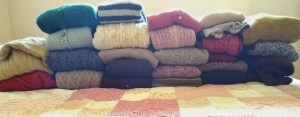
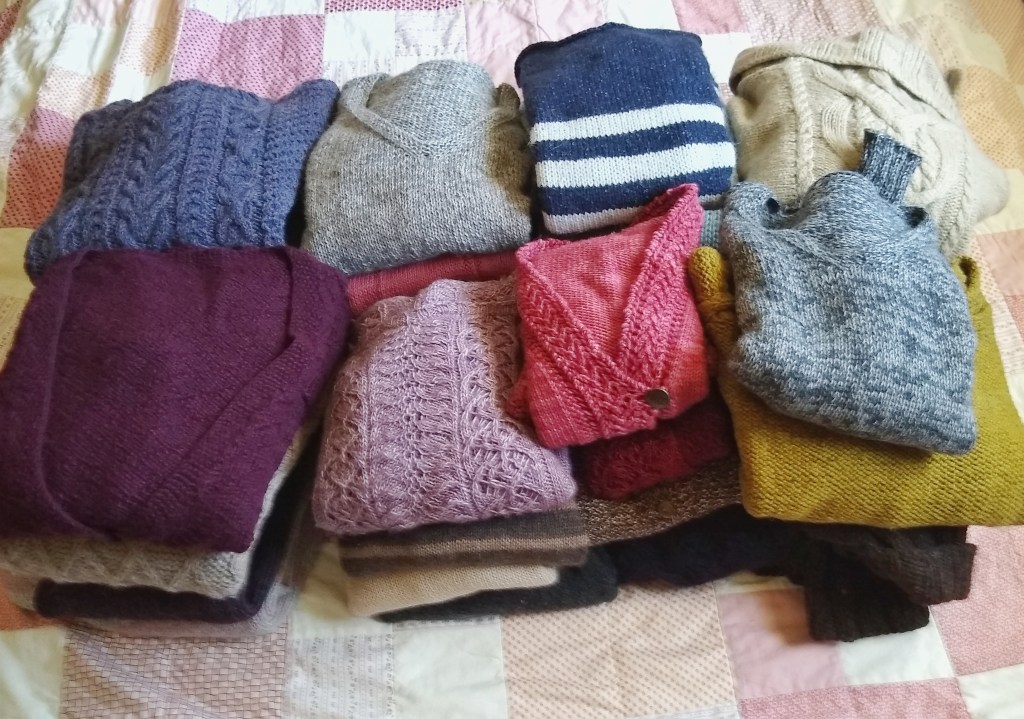
I started by sorting my sweaters. I have a lot of them. Over the winter I sold or gave away around 20 sweaters, and I still have more than 20 left. I started knitting about 13 years ago, and in the time since then my size has changed, my style has changed, and even my skin’s sensitivity to different fibers has changed. I used to love baby alpaca, it was my favorite fiber, but now it’s too warm and prickly on my skin. I also don’t like my sweaters to be as form-fitting as I used to, and I’m not as sensitive to the cold. My color preferences have changed too. My favorite neutral used to be brown, and now it’s gray.
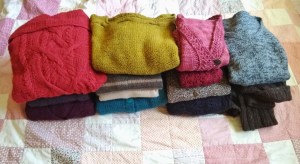
These are the sweaters that didn’t make the cut because of the fiber, fit, or color.
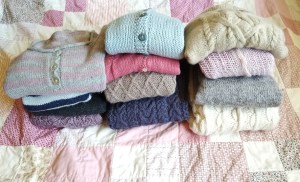
And these are the ones that I still love and want to wear. You can see that my new color palette is very calm and coordinated, and that’s just what I wanted. There are still some gaps in my sweater wardrobe that I plan to fill with yarns in my stash. I need to make a few short-sleeved cardigans and lightweight pullovers, so those are going to be my knitting goals for the rest of the year. I already have some ready-to-wear items in my wardrobe that coordinate with these sweaters, but I am also considering how I can create whole outfits when I sew new garments.
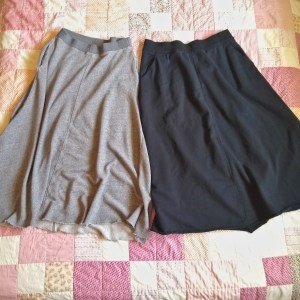
Some of my favorite ready-to-wear garments are wearing out and need to be replaced, like this this gray French Terry skirt that I’ve had for about ten years. It was one of my favorites, but the fabric was getting old and worn and starting to rip at the pockets. I made a replacement skirt in organic cotton sweatshirt fleece and it is even better than the original! I used Simplicity 8175 view C for the pattern, and I replaced the waistband and zipper with organic cotton rib knit and elastic. I left the hem raw so it naturally rolls up on the bottom. The original skirt had a raw hem that I occasionally had to trim because the French Terry frayed, but the sweatshirt fleece doesn’t! I would love to make this skirt again in gray if I can find the right fabric.

Having replaced the skirt, I decided to upcycle the fabric to practice making my new Hudson Pant pattern. I also repurposed two t-shirts for the waistband, cuffs, and pockets. I won’t be wearing these out of the house, but I learned how to put the pattern together and got an idea of the fit. The second pair (on the right) went together much more easily. These are both the cropped version, but I think I have enough of the white jersey to make a long version to test the length on me.
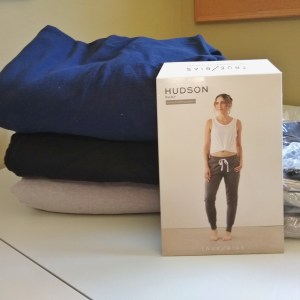
Once I have the fit perfected I plan to make at least three more pairs in organic cotton sweatshirt fleece. These neutral colors will coordinate with just about everything in my wardrobe.
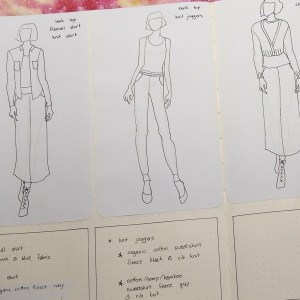
I’m planning my outfits and keeping notes on my projects in a design journal that I set up just like my bullet journal. This way I can take notes on my sewing projects just like I would on my Ravelry project page. The next garment on my sewing list is a button down flannel shirt. I’m taking an all-day sewing class this weekend to get help with the tricky bits, and hopefully, have a finished shirt by the end of the day! I’m excited to share more of my sewn garments with you and incorporate them into outfits for everyday and pattern photos. I hope you enjoy seeing the process!
Thank you for knitting!


 Kephren Pritchett