Tag: tutorial

  • The Side-to-Side Join

    The Side-to-Side Join

    When knitting cardigans, stitches are often picked up and worked onto the front edges of the sweater for the button bands and button hole bands. Perfectly serviceable bands are created this way, and if care is taken to pick up the correct amount of stitches and work at the right gauge, the bands will work, but there are a few things that can go wrong. The bands may pucker (too few stitches picked up) or flare (too many stitches picked up). Ribbing, seed stitch, and garter stitch, all excellent band choices for their non-curling properties, have a tendency to spread width wise, which can cause perpendicular bands to droop.

    One way to avoid all of these problems is by working the bands in the same direction as the body of the sweater, parallel to the fronts. The same number of rows can be worked on the band as there are on the front of the cardigan, but at a tighter gauge, giving the bands just the right amount of stretch. Seed stitch, ribbing, and garter stitch are given a firm vertical tug, keeping their width-wise spread in check. A different color can be used, or even a different yarn. Bands like this are often sewn on, or sometimes stitches are picked up along the sweater fronts and bound off as the band is attached.  I think the side-to-side join is the neatest and easiest way to attach parallel front bands, but I rarely see it used, so I’ve illustrated the technique in steps below.

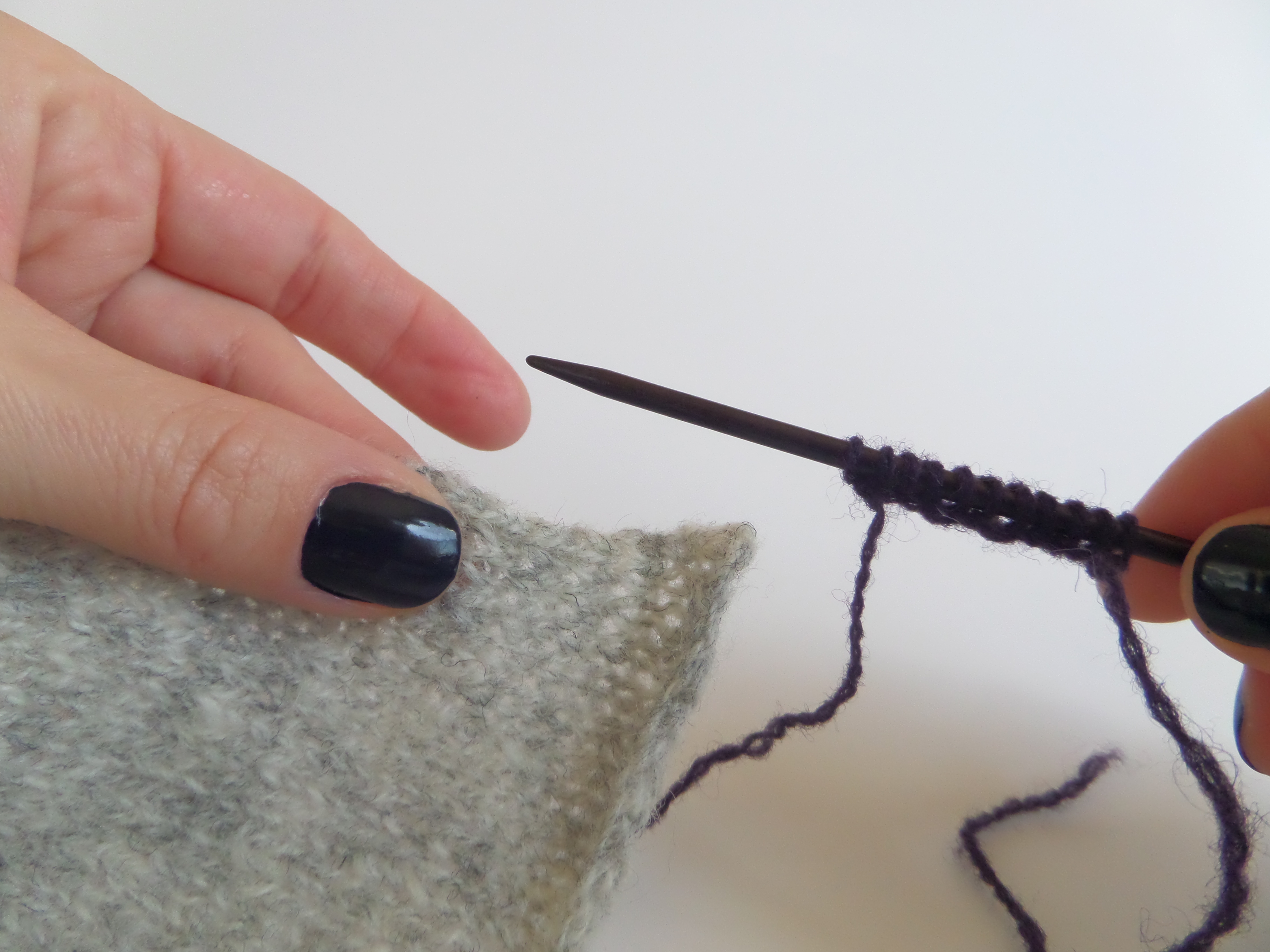
    Setup: Start by casting on the number of stitches needed for your band. Double pointed needles or short straight needles 1 or 2 sizes smaller than the needles used for the body of the sweater will work best.
    SAMSUNG CAMERA PICTURES

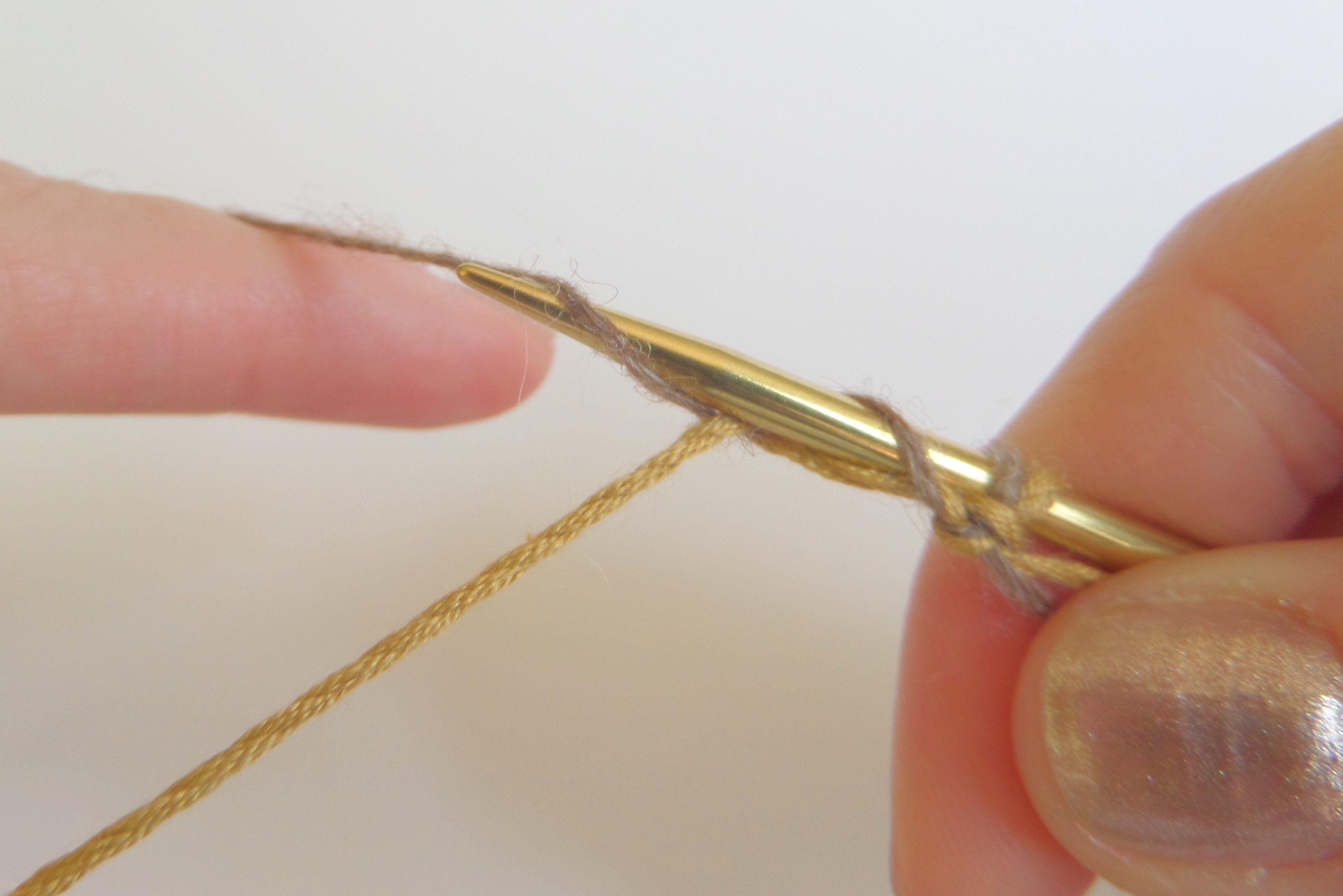
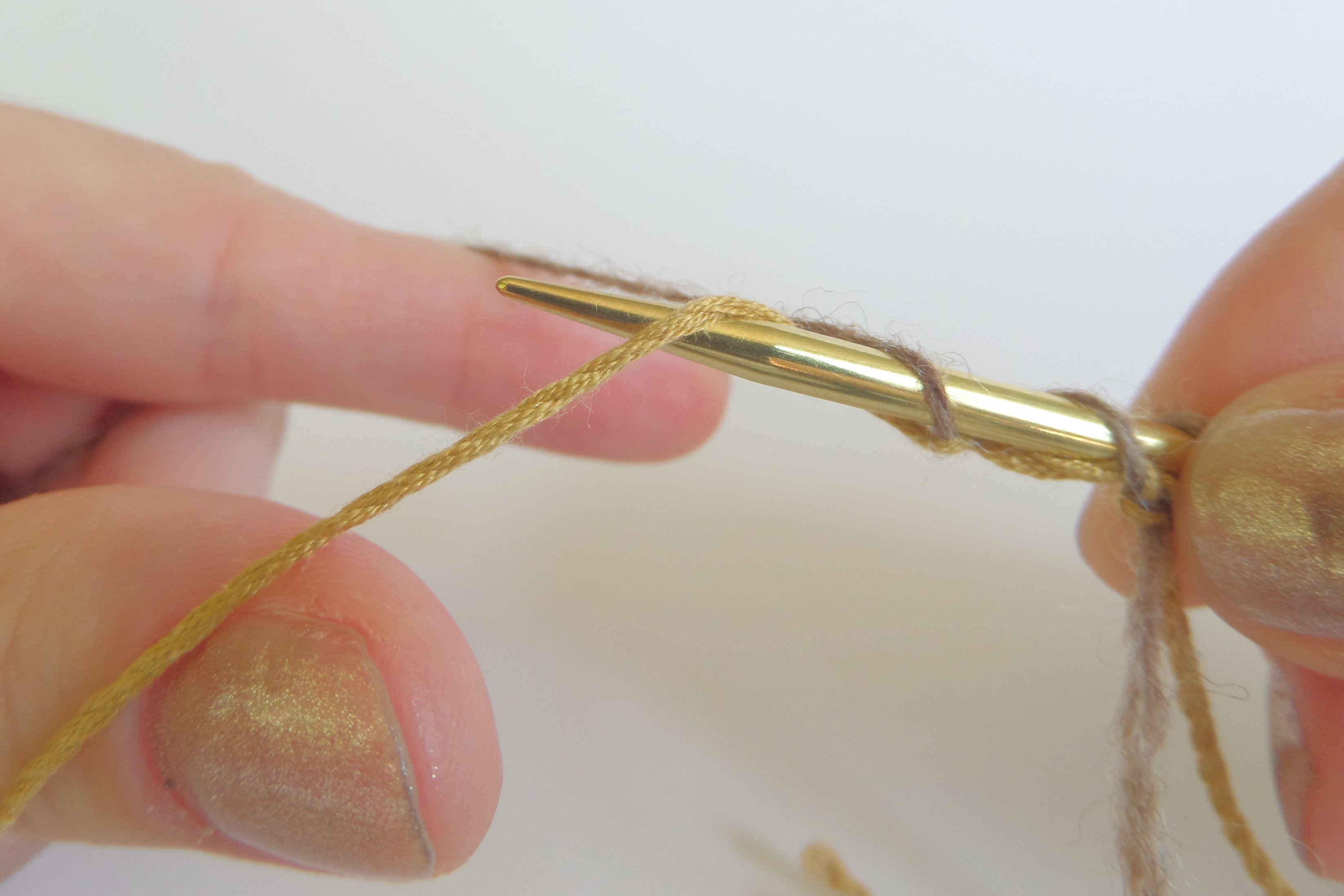
    Step 1: Insert the needle into the edge of your cardigan from front to back.
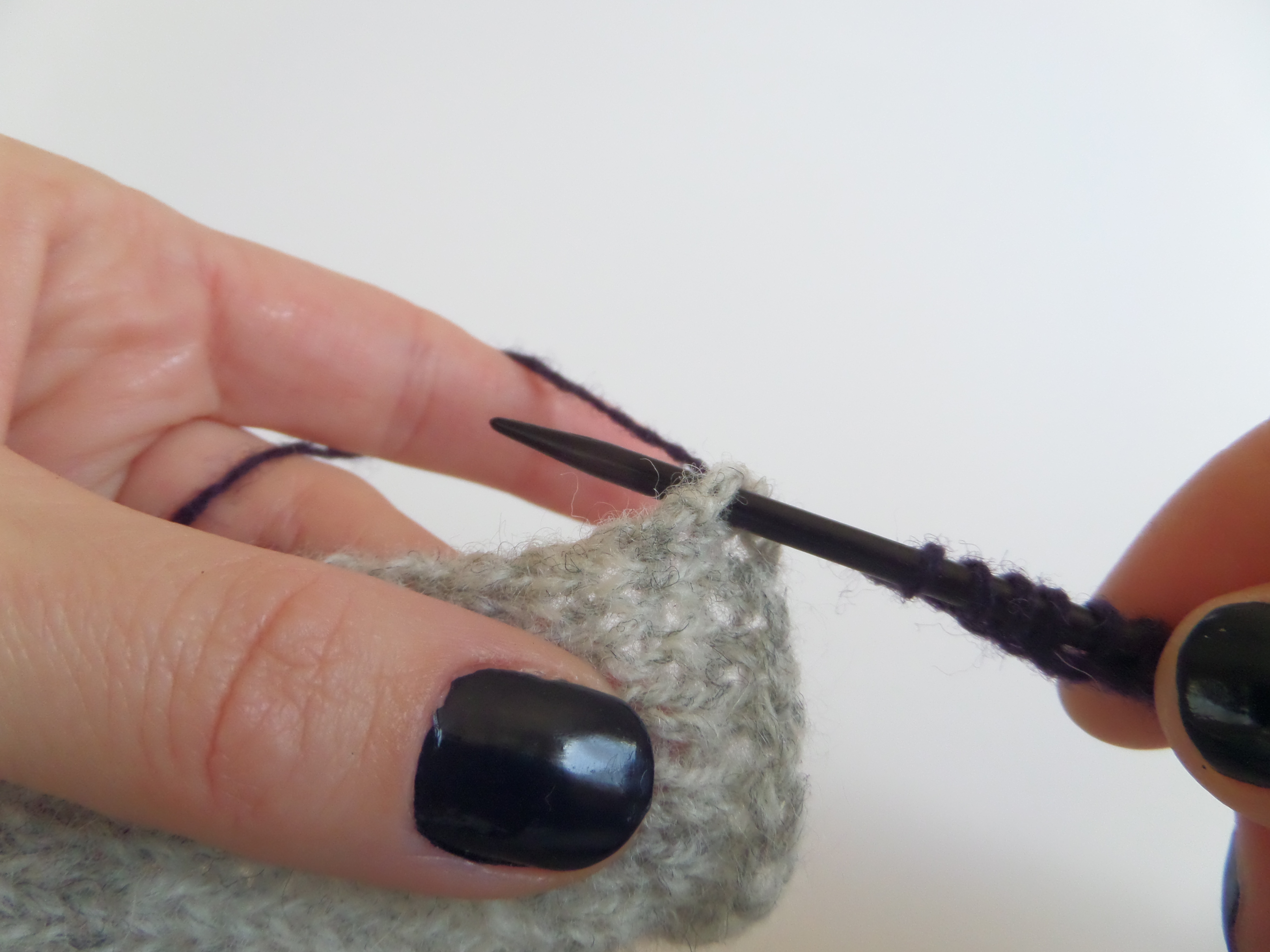
    SAMSUNG CAMERA PICTURES

    Step 2: Pull a loop through.SAMSUNG CAMERA PICTURES

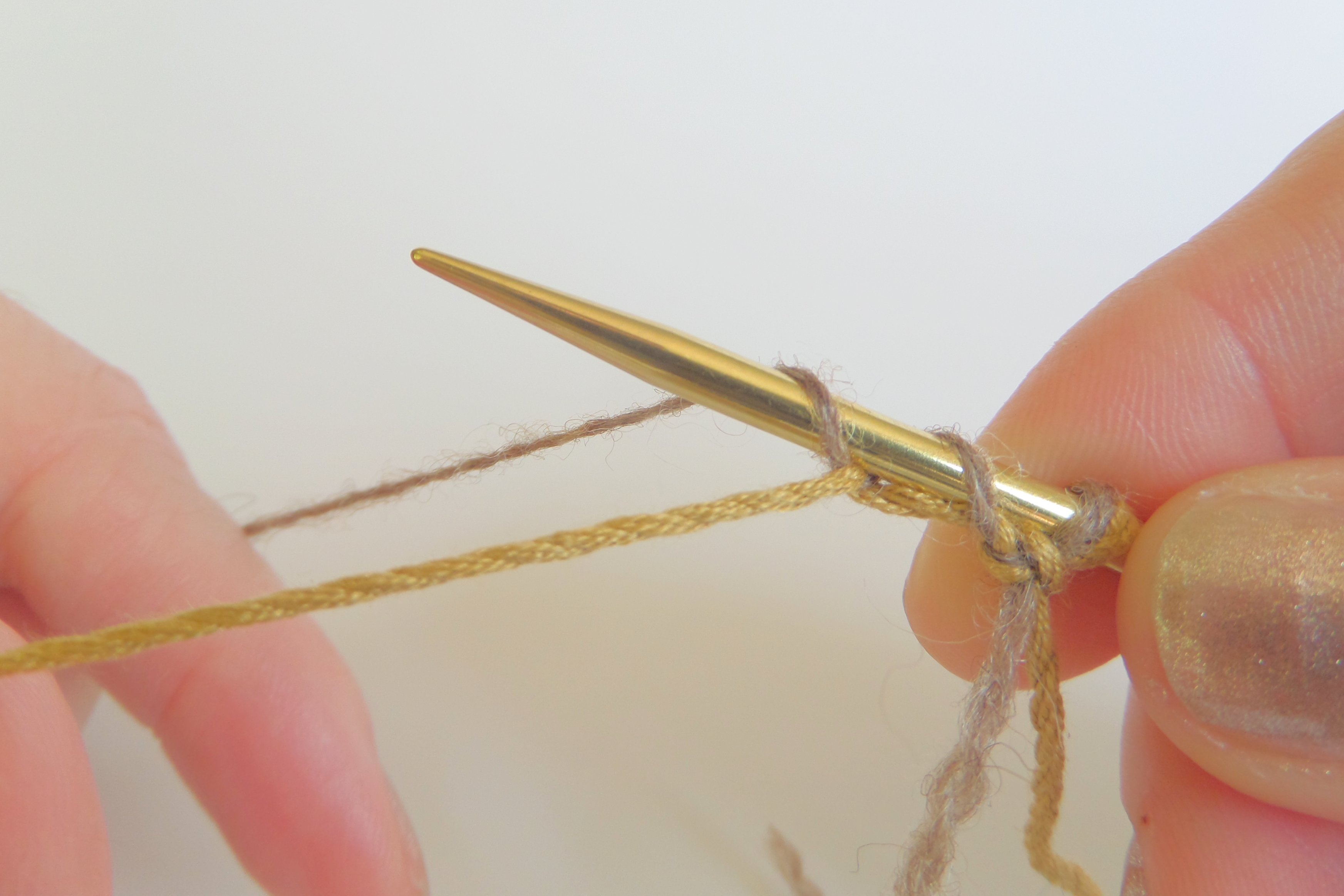
    Step 3: Remove the loop from the needle and pull out enough yarn to comfortably knit the next 2 rows. The excess length will be removed later so this does not need to be exact.SAMSUNG CAMERA PICTURES

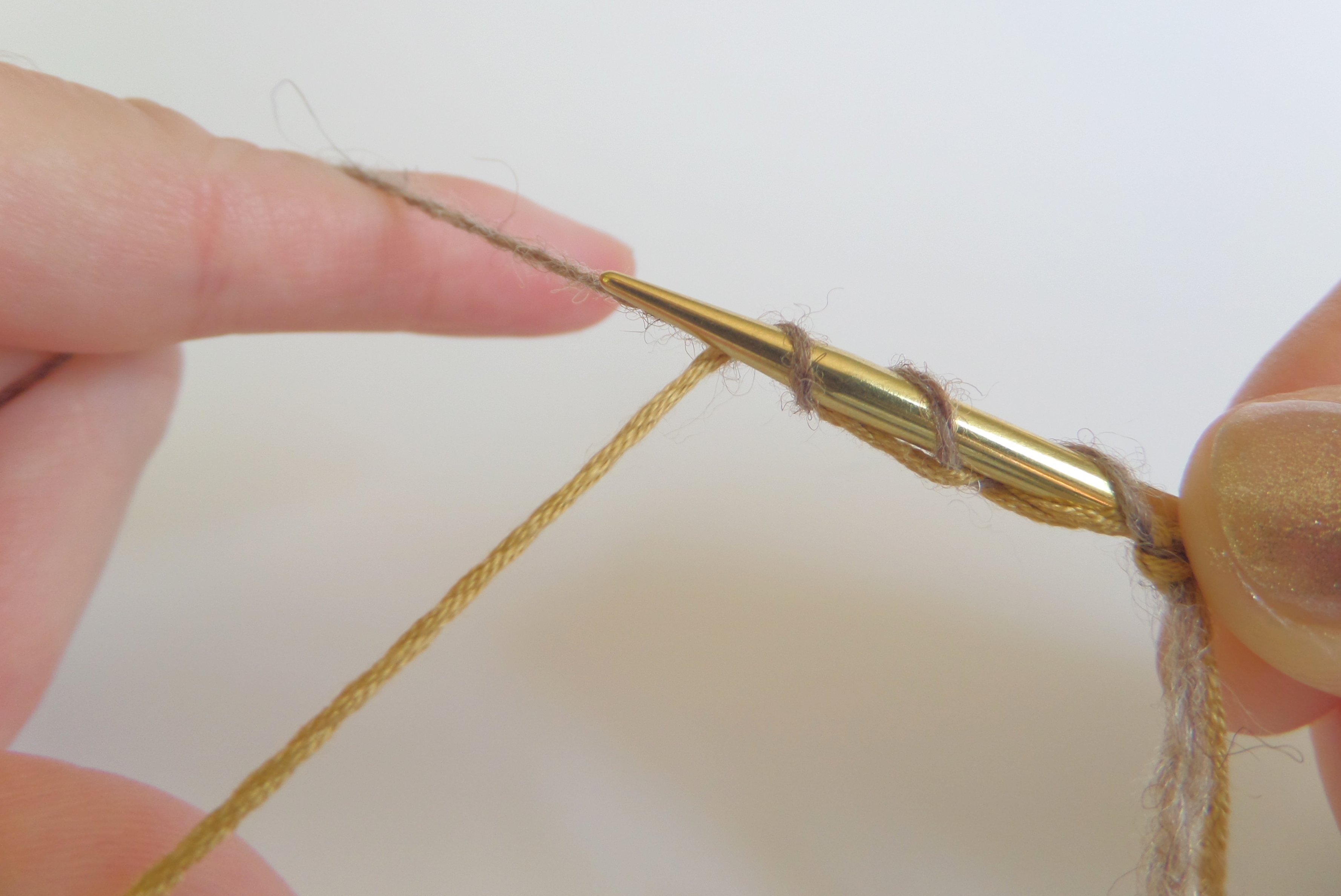
    Step 4: Work the first wrong-side row of the band with the bottom half of the loop.SAMSUNG CAMERA PICTURES

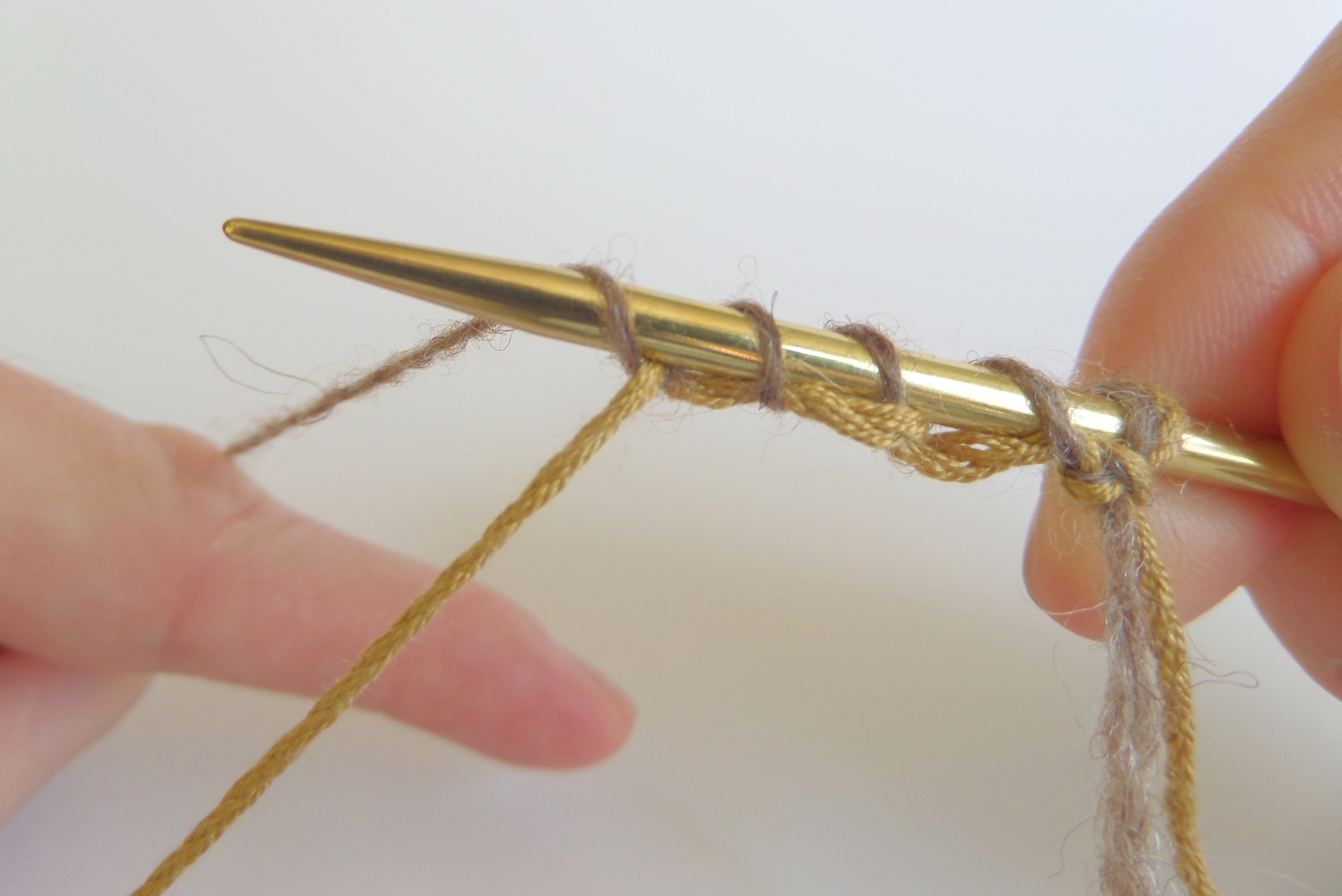
    Step 5: Work the second right-side row of the band with the top half of the loop and pull tight so the band is snugged up against the front.SAMSUNG CAMERA PICTURES
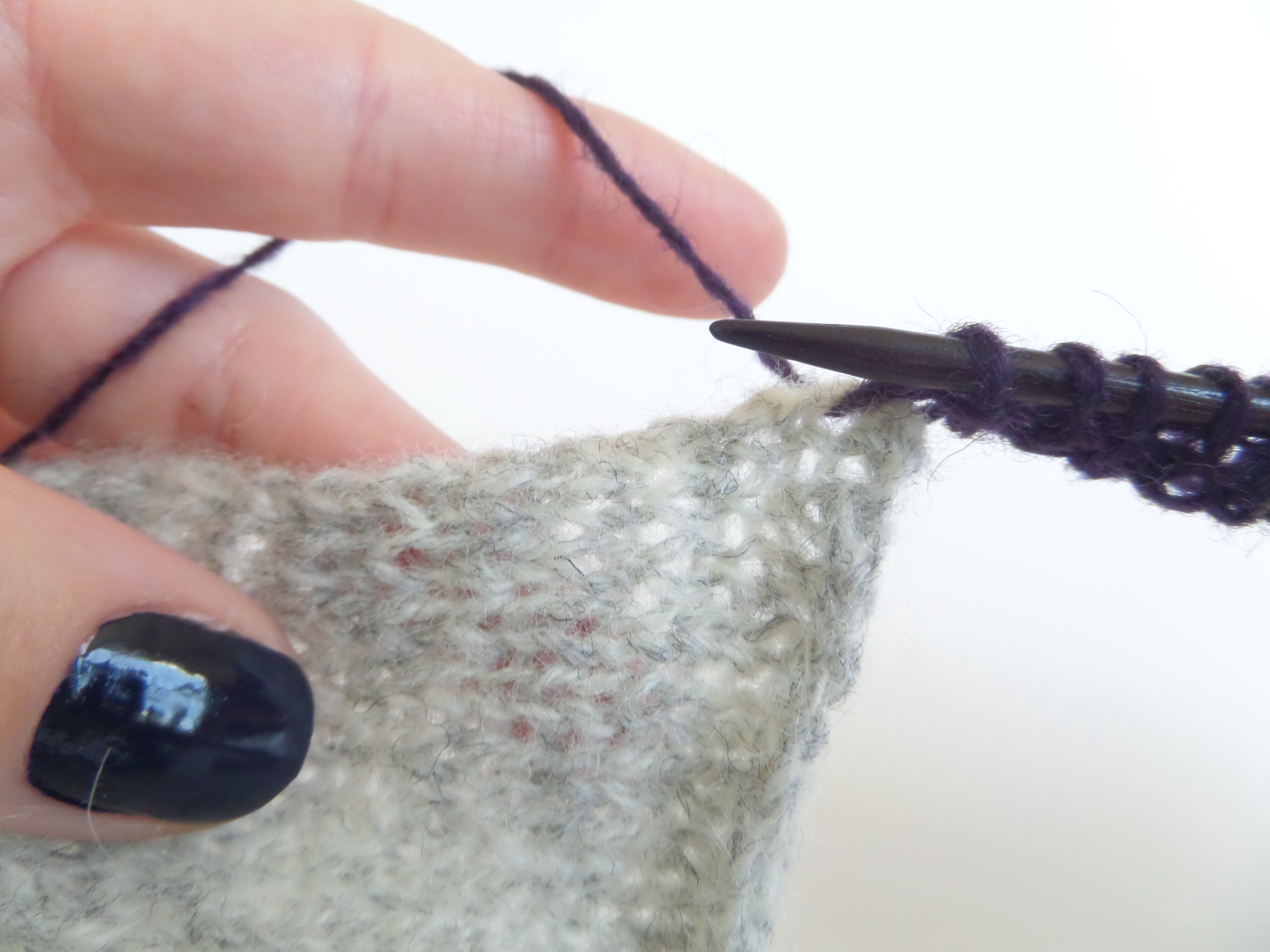
    Repeat steps 1 through 5 for the length of the fronts. Two rows are worked for every picked-up loop, so you will have to skip every second row on the sweater front for the band to have the same number of rows. If you are working a round neck cardigan, both bands can be worked first and continued into the neck band. For v-neck cardigans, the bands can continue around the neck edge to be joined at the back neck.

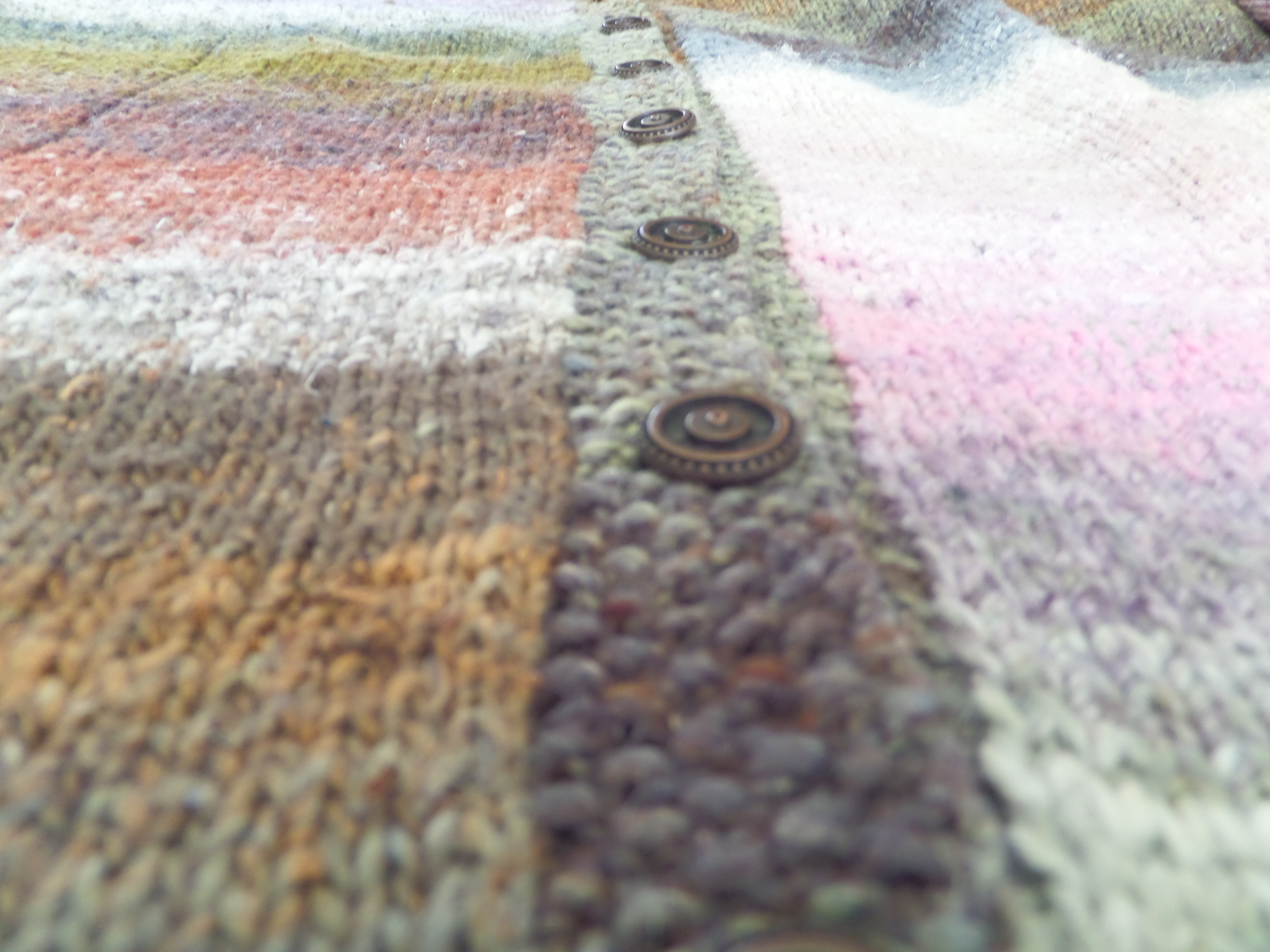
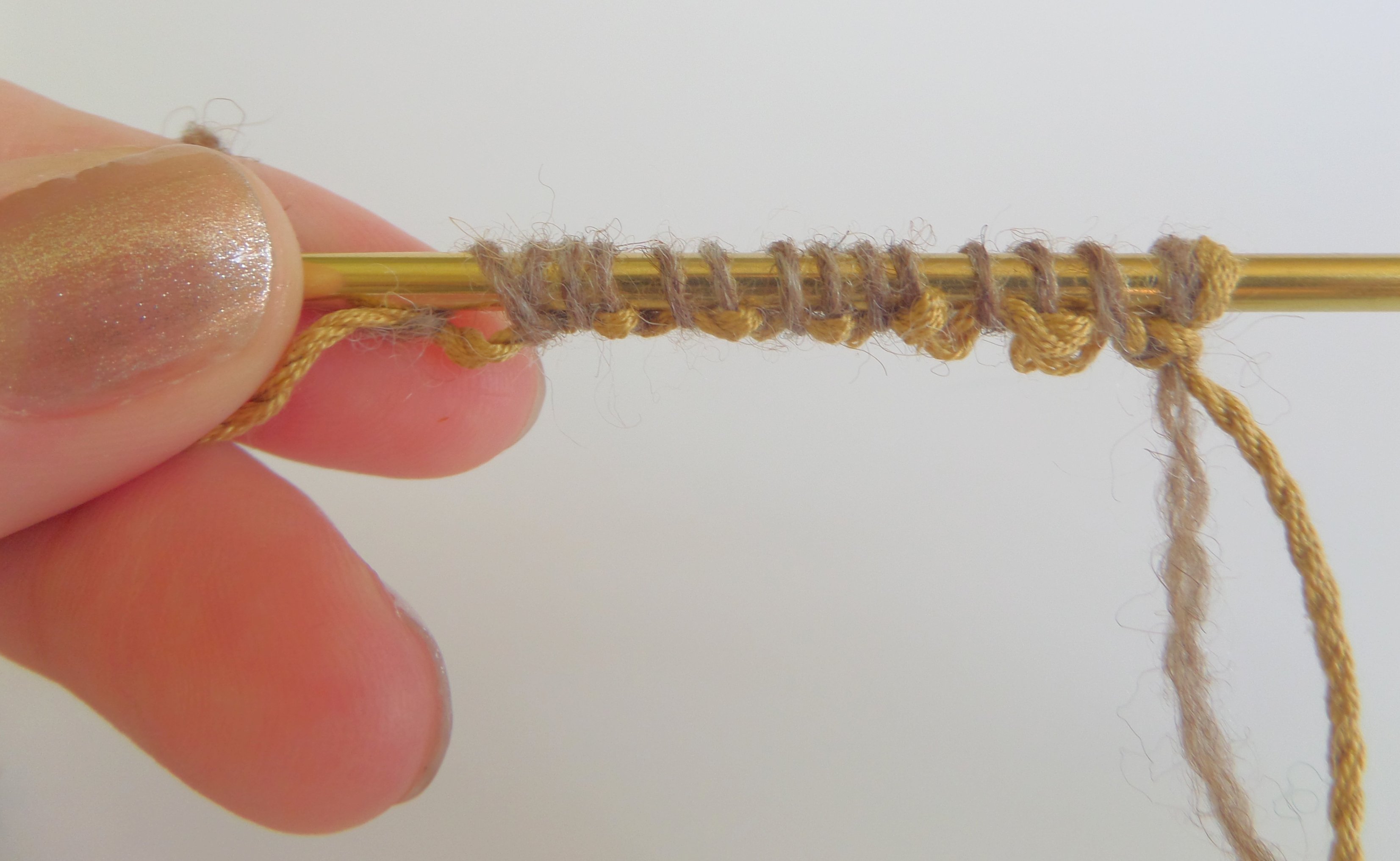
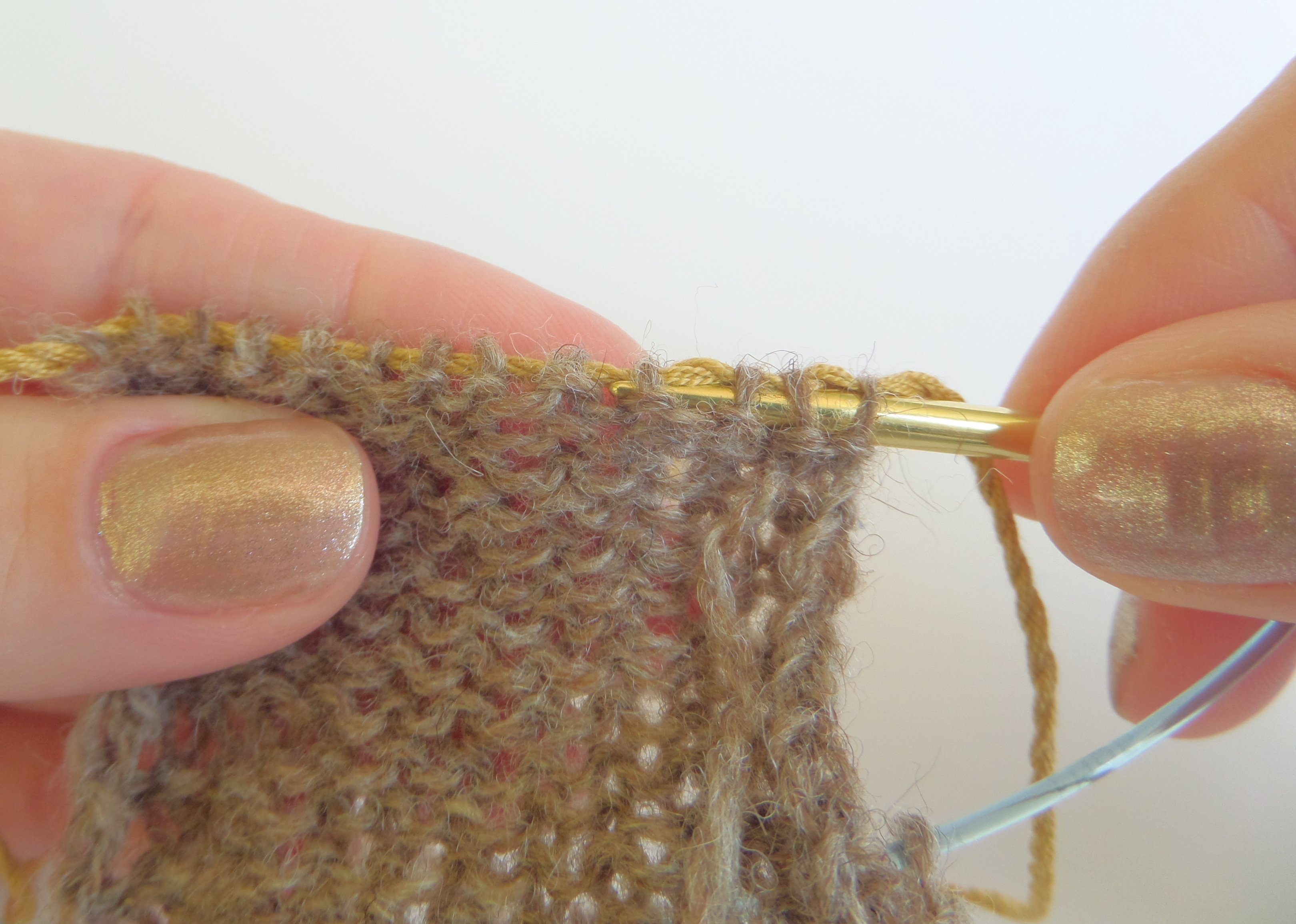
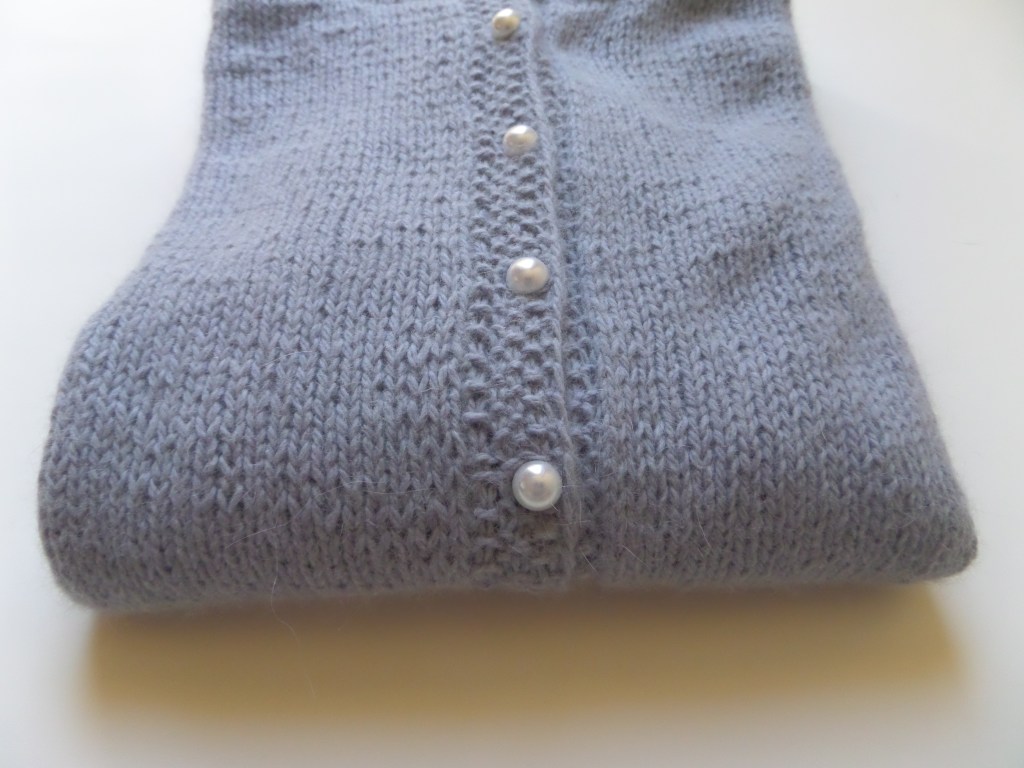
    Cardigans aren’t the only use for the side-to-side join! Anywhere you would would like to attach a parallel piece of knitting to an already finished piece this method will work. The cover photo and the photos below are examples of sweaters that I made using this technique.

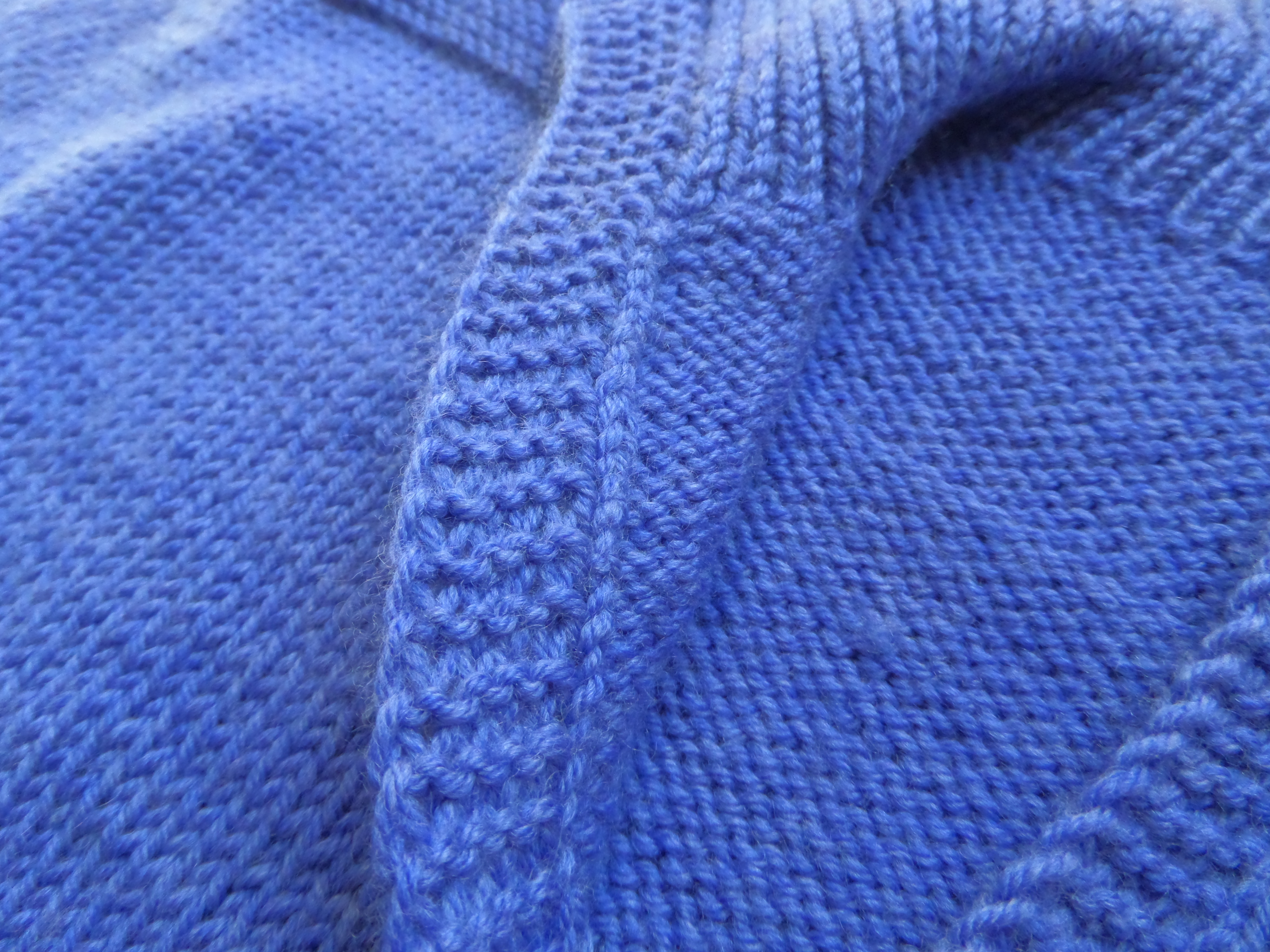
    Garter stitch bands.
    Garter stitch bands.
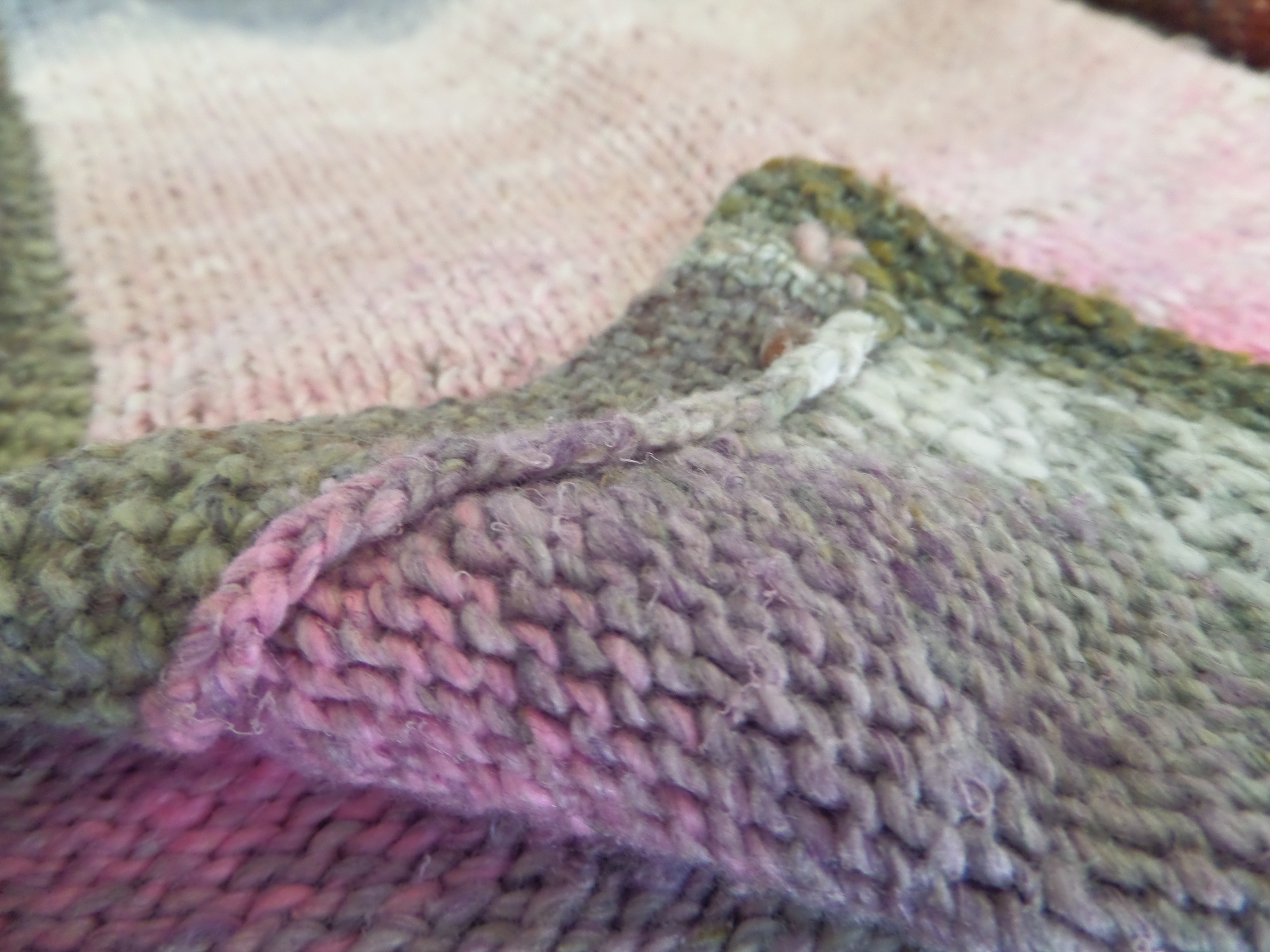
    From the wrong side you can see hoe the band continues into the collar.
    The wrong side view, Here you can see how the band continues into the collar.
    Seed stitch bands.
    Seed stitch bands.
    The wrong side view.
    From the inside.
    SAMSUNG CAMERA PICTURES
    Knit 1, purl 1 ribbing seen from the right side on the left and the wrong side on the right.

    Let me know in the comments if you’ve seen this method before or if you’ve tried it yourself.

    Thank you for knitting!
  • Estimating Yardage

    Estimating Yardage

    Have you ever wondered how designers arrive at the recommended yardage listed in a pattern? Are you designing a sweater and wondering how to accurately list the yardage for sizes that haven’t been knit yet? Or maybe you are changing the gauge or length of a sweater you’re knitting and want to make sure you don’t run out of yarn? In all of these situations you can estimate how much yarn you’ll need using a swatch, a kitchen scale, the information from your yarn’s ball band, and a calculator or spreadsheet. This is how I do it.

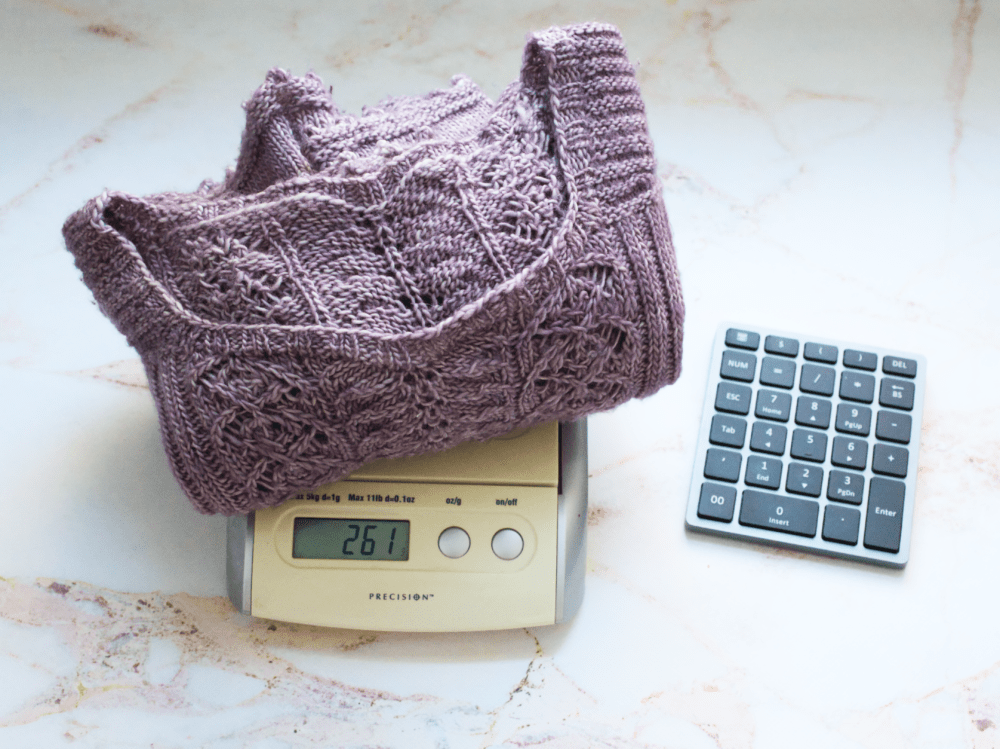
    First, determine how much yarn it takes to make a square inch or square centimeter of your knitted fabric. You can start with a large rectangular swatch or an entire garment. Weigh your swatch or sample using the kitchen scale. I like to use the weight in grams because it’s a smaller unit of measure than ounces, and ball or skein weights are usually given in grams.

    Next, determine the area of your swatch or sweater. If your swatch is a square or rectangle you can multiply the length by the height to determine the area. For example, if your swatch measures 8 x 8 inches the area is 64 inches. (If you’re more comfortable with metric go ahead and use centimeters for all measurements instead.) Divide the area by the weight. Let’s say your swatch weighs 10 grams. 64/10 = 6.4. It takes 1 gram of that particular yarn to make 6.4 square inches of that particular fabric. If you wanted to add 2 inches in length to a sweater with a circumference of 40 inches that’s 80 square inches. 80/6.4 = 12.5. You would need an additional 12.5 grams of yarn.

    To find the area of an entire sweater I reduce the design into simple shapes like rectangles and parallelograms as shown in the illustrations below, and multiply the length by the height to find the area of each shape.

    Drop Shoulder

    A line drawing of a drop shoulder sweater showing how the sleeves and body can be reduced to parallelograms and rectangles.

    A drop shoulder sweater is the simplest design for finding the area. The front and back are rectangles and there are two trapezoids for the sleeves. Add the length and width of the two sleeves together to make one parallelogram. If there is a collar it is probably a rectangle also, and you can add the length to the height to find its area.

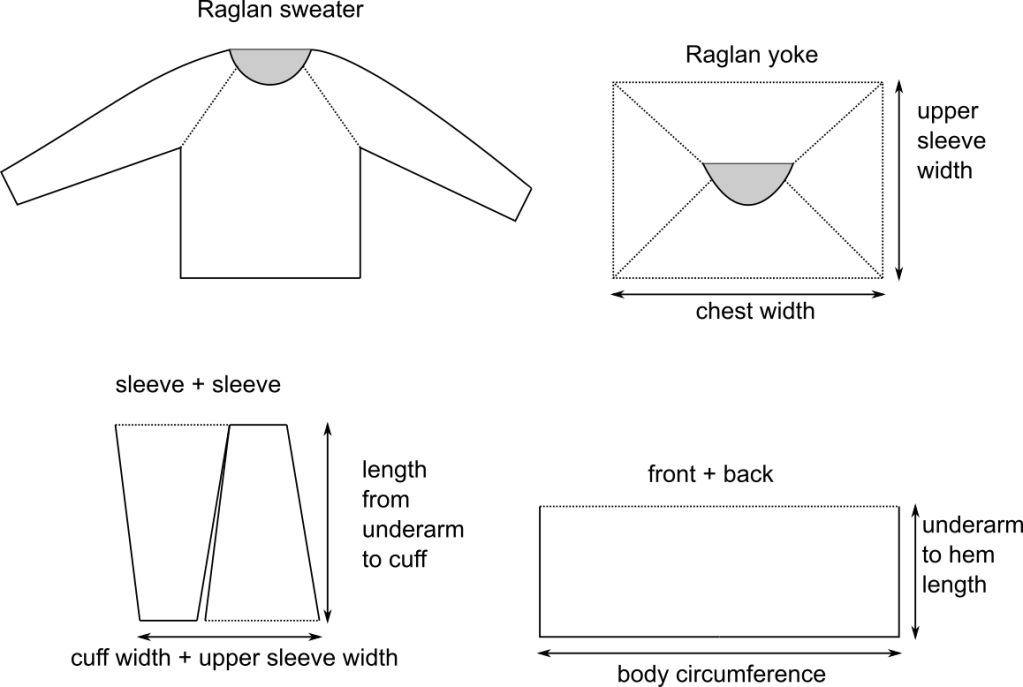
    Raglan Yoke

    A line drawing of a raglan sweater showing how the yoke forms a square.

    If you take a raglan sweater off the needles at the underarm and lay it out flat you’ll see how the yoke can be simplified into a rectangle. Multiply the chest width by the upper sleeve width before the underarm cast on to find the area of the yoke. Unless it’s a deep V or a scoop neck I don’t subtract anything for the neck. This just adds a little buffer to the yardage. The area of the body below the underarm and the sleeves below the shoulder can be calculated in the same way as the drop shoulder sweater.

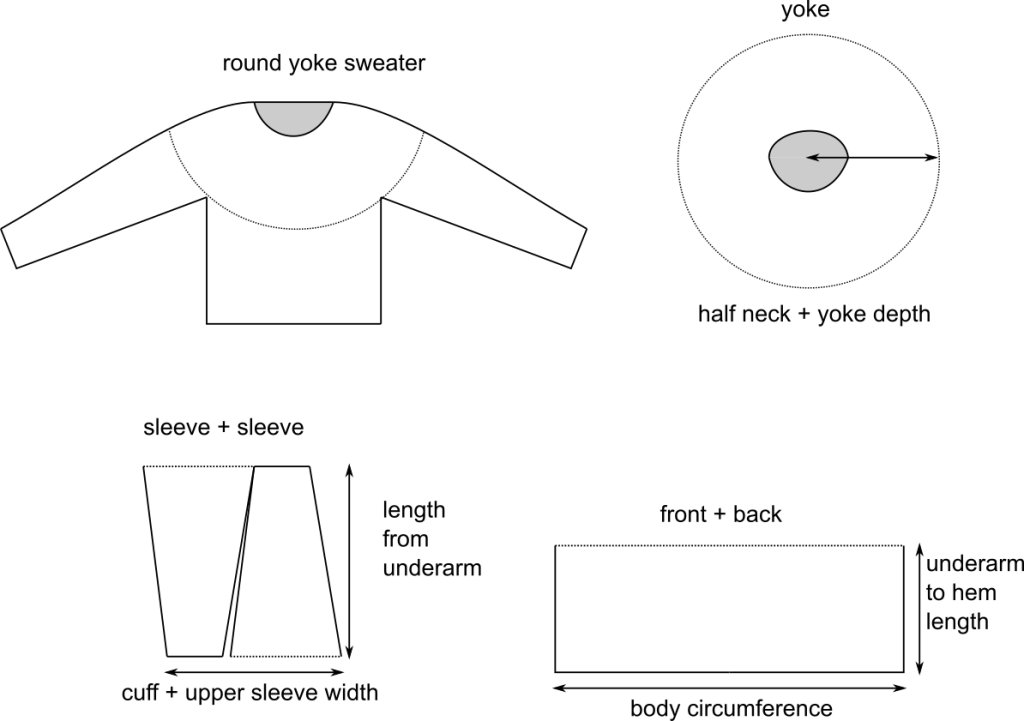
    Round Yoke

    A line drawing of a round yoke sweater showing how the yoke forms a circle, and how the sleeves, front, and back form rectangles when combined.

    For round yokes, first determine the radius of the yoke by adding half the neck width to the yoke depth, square the radius, then multiply by pi. This will give you the area of the yoke. The area of the sleeves and the body below the underarms will be the same as the raglan sweater.

    Set-In Sleeve

    A line drawing of a set-in sleeve sweater, and illustrations of all the sweater parts.

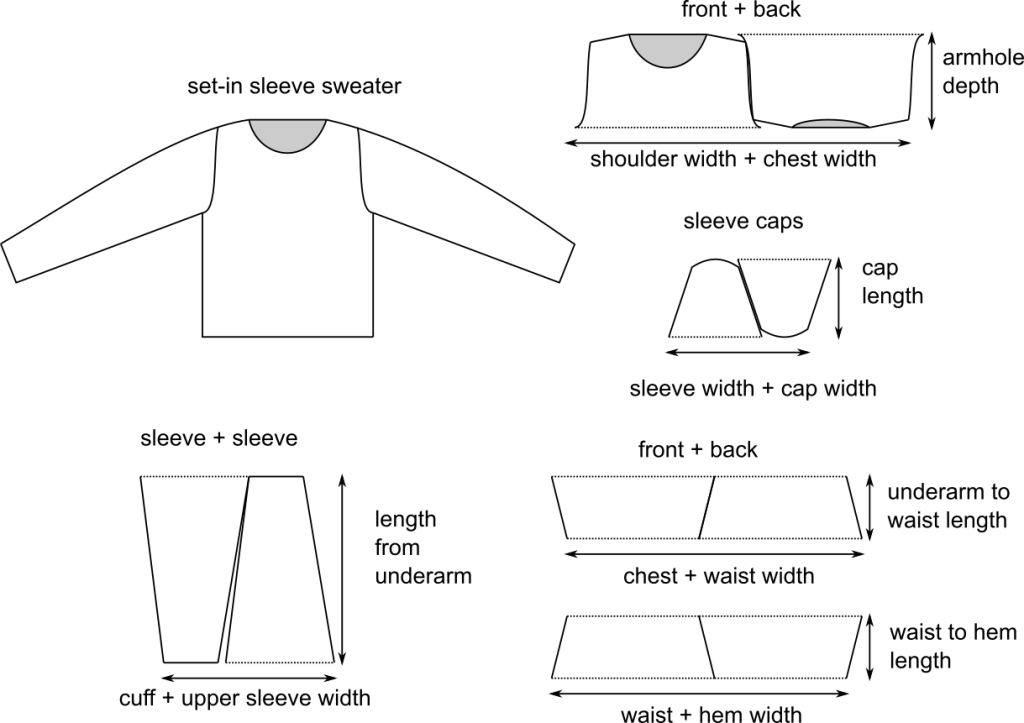
    A set-in sleeve sweater will have a few more shapes than the others. The sleeve caps can be treated as trapezoids the same way as the sleeves and added together to create one parallelogram. The body of the sweater below the underarms can still be treated as two rectangles, but if there is significant waist shaping you may wish to break the top and bottom into trapezoids and add them together. The yoke can also be treated as a trapezoid, and adding the front and back together will make a parallelogram.

    After you have determined the area of your sample you can find how many grams of your yarn it takes to make 1 square inch of your fabric by dividing the area of the sample by the weight of the sample. You can then multiply the grams per square inch by the total area of every other size in your pattern. This will tell you how much of that particular yarn it takes to make each size by weight, but you should also convert the weight into yards to make the estimate useful to knitters who want to use a different yarn.

    Using the information from the ball band of your sample yarn, divide the weight of one skein by the yards per skein to find the yards per gram, then multiply the yards per gram by the weight of each size. This will give you the yardage needed for each size. You can also estimate the number of skeins needed for each size by dividing the total weight by the weight of one skein and rounding up to the nearest whole number.

    You can see from the illustrations above that the area measurements are not exact, and each knitter’s tension will affect the amount of yarn used also. These are only estimates, but you want to be sure that your knitters will not run out of yarn before completing their projects, so it is a good idea to add a buffer to the recommended yardage, which is usually 10%, but could be more or less depending on the design.

    Estimating yardage is just one of the tech editing services I offer. Yardage estimates are included with every grading job I do, but I can also check your yardage estimates or calculate the yardage for you when I tech edit your pattern. Just let me know that’s a service you’re interested in and tell me the size and weight of your sample. I would love to know what you think of this method of estimating yardage in the comments!

    Thank you for knitting!
  • Hand Washing Hand-Knits

    Hand Washing Hand-Knits

    Hand washing isn’t any more difficult than machine washing. There are several different methods depending on the space and tools you have available, and I’ve tried most of them! A common misconception about wool is that it shrinks. It doesn’t; it felts. Shock and agitation cause felting, so those are the things to avoid when washing hand-knits made of wool and other animal fibers. Cotton also has a reputation for shrinking, but it doesn’t, it stretches. After you’ve been wearing your favorite jeans for a week they are stretched out, washing them and giving them a spin in a hot dryer just restores them to their natural shape. Hand washing avoids stretching and felting your hand-knits while getting them clean. It is important to keep your hand-knits clean because they will be less attractive to wool-eating bugs, but you really only have to wash them when they are dirty. I can tell when my handknits need a wash because they start to feel less soft, or they look a little stretched out. A good soak will restore softness and return your garments to their natural shape.

    Washing

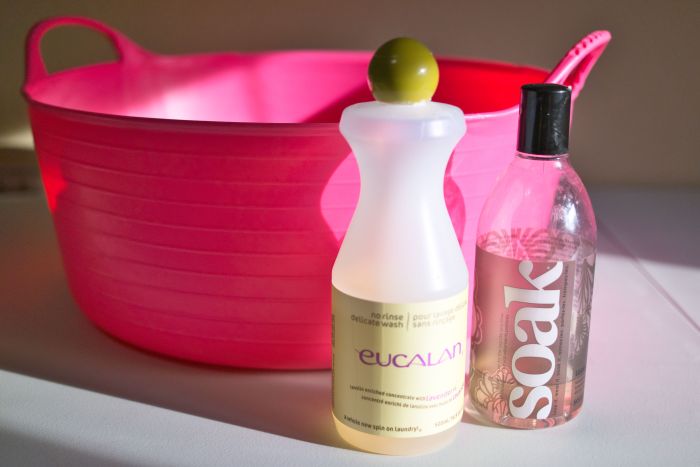
    You’ll need something to soak your hand-knits in, like a sink, basin, or top-loading washing machine. I like this 4 gallon Red Gorilla tub because it can hold about as much as I have room to dry. I have also heard that high-efficiency washers can be used when set to the wool cycle. Remember that we want to avoid shock and agitation, so don’t use water that is too hot or too cold. I like to use luke-warm water for pure wool, and cool water for wool and silk blends. Fill the vessel with water first, then add your soap. A good wool wash like Eucalan or Soak is ideal because it conditions the wool and doesn’t need to be rinsed out. Now add your knits. Squeeze gently to make sure the fabric is thoroughly saturated with water, and let them soak for 20 to 30 minutes.

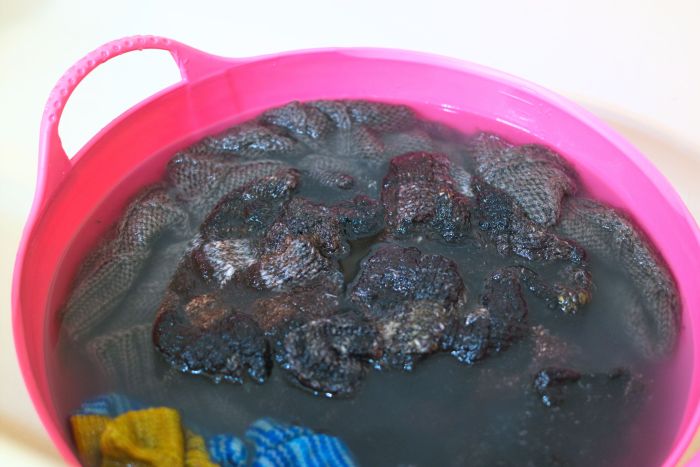
    A tub full of soapy water and handknits
    Knit soup

    Removing the water

    If you’re hand washing in a sink or basin allow the water to drain out and press your knits against the sides of the sink or tub to remove as much water as you can. Do not wring or twist, as that could cause stretching. Also avoid lifting your knits when they are soaking wet without supporting the full weight of the garment. After you’ve pressed out as much water as possible you’ll have to continue pressing out the excess water using towels. Lay a towel on the floor, preferably a tiled surface, then lay your garment on it in a single layer. Roll up the towel with the knits inside it and press the water out. Dancing a jig on the rolled up towel is especially effective. You may have to repeat the process with a second towel.

    If you are using a top-loading washer simply turn to the spin cycle and allow it to run until all the water has been spun out. This used to be my preferred method for hand washing because it effectively removes so much water, but now I use a spin dryer. This amazing gadget spins out so much water that even bulky sweaters dry overnight!

    Sweater drying racks holding socks and a sweater
    Sweater drying racks

    drying

    Now that most of the water has been removed, your hand-knits just need to be allowed to dry. If you were washing lace shawls you will probably want to pin them out on blocking mats or a spare bed to open up the lace to be sure the shawls dry in the right shape. If you washed sweaters you’ll still want to shape them to dry, but pins and wires are unnecessary, and can even distort the shape of your sweaters. Just spreading out your sweaters on a towel is enough to let them air dry, but I like to use sweater drying racks to allow for maximum airflow. I use these stackable sweater drying racks, but if your surface space is limited try these hanging sweater drying racks from Knitpicks. It should take between 1 and 3 days for your knits to dry.

    New Year’s Eve is the perfect time to catch up on cleaning, and I have a lot of handknits to keep clean. I’ve refined my hand washing process over the last ten or so years, and found the way that works best for me, but I would love to hear what your methods are! Please leave a comment below, and have a happy New Year!

    Thank you for knitting!

  • The Invisible Provisional Cast-On

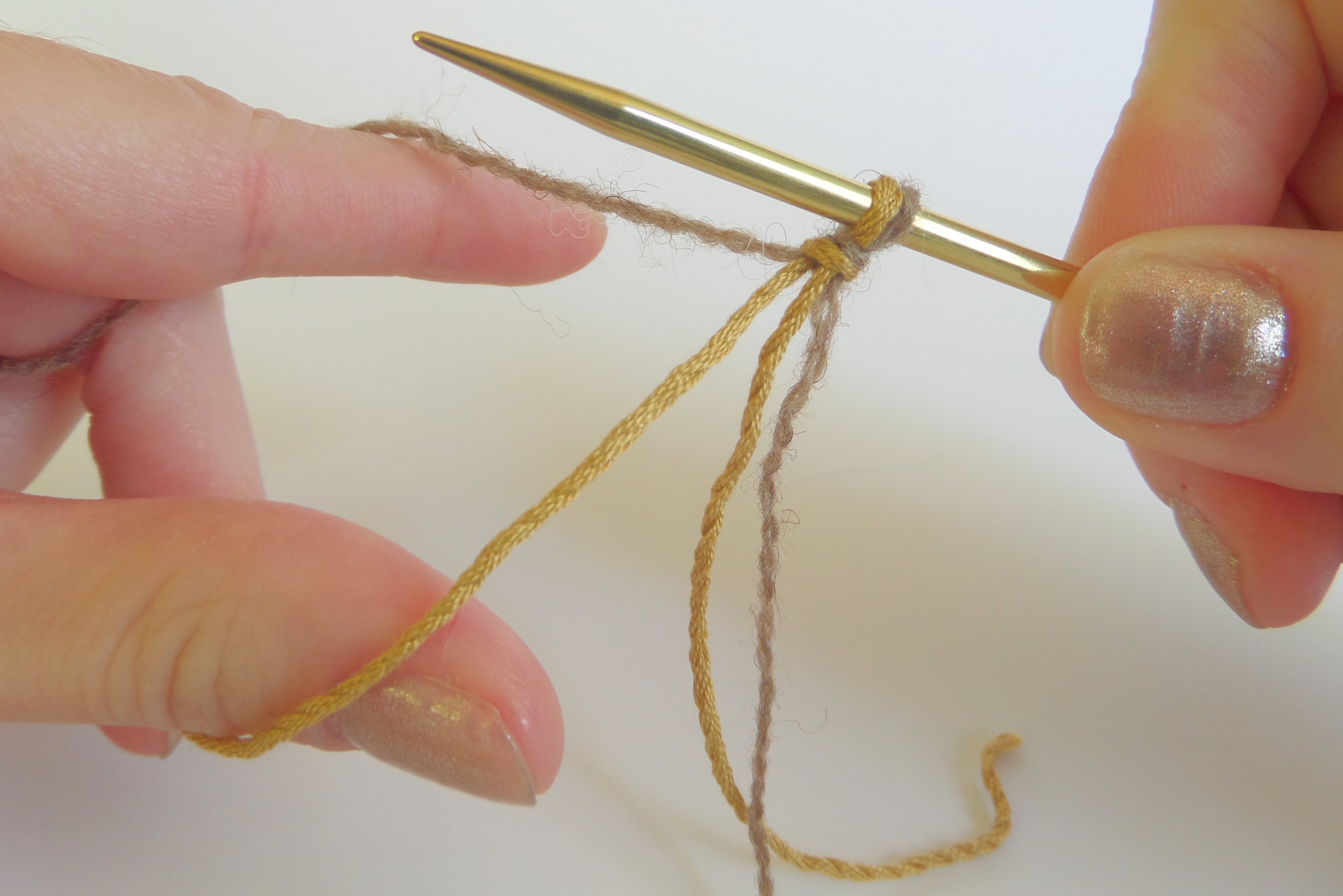
    The invisible provisional cast-on is probably the easiest and fastest way to cast on, once you get the hang of it. To start, you’ll need the needle and yarn you are using for your project, and a spare circular needle or smooth waste yarn for holding the provisionally cast on stitches. If you are using waste yarn to hold your stitches, make a slip knot with both yarns held together and place it on the needle. This is only used to hold the yarn in place and doesn’t count as a stitch.

    The waste yarn is held over the thumb and the working yarn is held over the forefinger, similar to a long tail cast-on.


    The needle goes under the waste yarn from front to back…


    over the working yarn from back to front…


    and back to front under the waste yarn. One stitch cast on.


    For the next stitch the working yarn goes over the needle, just like a yarn over.


    Two stitches cast on.


    1. Under the waste yarn…


    2. over the working yarn…


    3. back under the waste yarn.


    4. Yarn over the needle.


    Two more stitches cast on.

    Repeat 1-4 until you have cast on all the stitches you need. If you need an odd number of stitches, repeat 1-3 once more.

    When you are ready to pick up the provisionally cast on stitches, Slip them onto the needle following the path of the waste yarn, then pull out the waste yarn. You will notice that every other stitch is mounted with the right leg to the back of the needle. You will have to turn the stitches the right way around by working into the back loop on the first row.

    Slip the provisionally cast on stitches onto the needle.

    Work into the back of every alternate stitch to prevent them being twisted.


    When worked in stockinette or garter stitch the provisional cast-on is completely invisible. I like to use this cast-on for toe-up socks, top-down hats, and the underarms of top-down sweaters. This is also the same cast-on used for Moebius knitting.

    Thank you for knitting!