Tag: v-neck

  • The Side-to-Side Join

    The Side-to-Side Join

    When knitting cardigans, stitches are often picked up and worked onto the front edges of the sweater for the button bands and button hole bands. Perfectly serviceable bands are created this way, and if care is taken to pick up the correct amount of stitches and work at the right gauge, the bands will work, but there are a few things that can go wrong. The bands may pucker (too few stitches picked up) or flare (too many stitches picked up). Ribbing, seed stitch, and garter stitch, all excellent band choices for their non-curling properties, have a tendency to spread width wise, which can cause perpendicular bands to droop.

    One way to avoid all of these problems is by working the bands in the same direction as the body of the sweater, parallel to the fronts. The same number of rows can be worked on the band as there are on the front of the cardigan, but at a tighter gauge, giving the bands just the right amount of stretch. Seed stitch, ribbing, and garter stitch are given a firm vertical tug, keeping their width-wise spread in check. A different color can be used, or even a different yarn. Bands like this are often sewn on, or sometimes stitches are picked up along the sweater fronts and bound off as the band is attached.  I think the side-to-side join is the neatest and easiest way to attach parallel front bands, but I rarely see it used, so I’ve illustrated the technique in steps below.

    Setup: Start by casting on the number of stitches needed for your band. Double pointed needles or short straight needles 1 or 2 sizes smaller than the needles used for the body of the sweater will work best.
    SAMSUNG CAMERA PICTURES

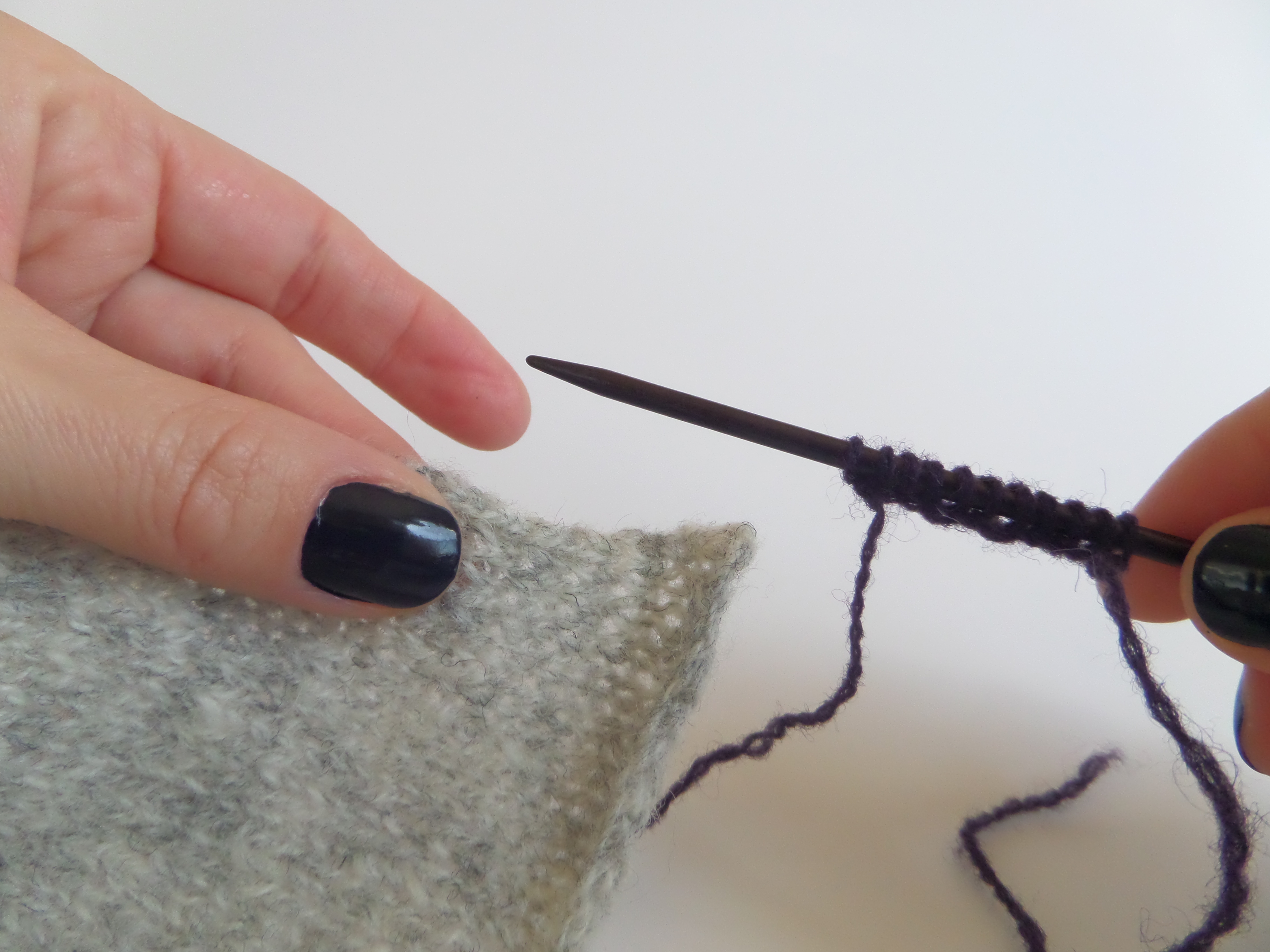
    Step 1: Insert the needle into the edge of your cardigan from front to back.
    SAMSUNG CAMERA PICTURES

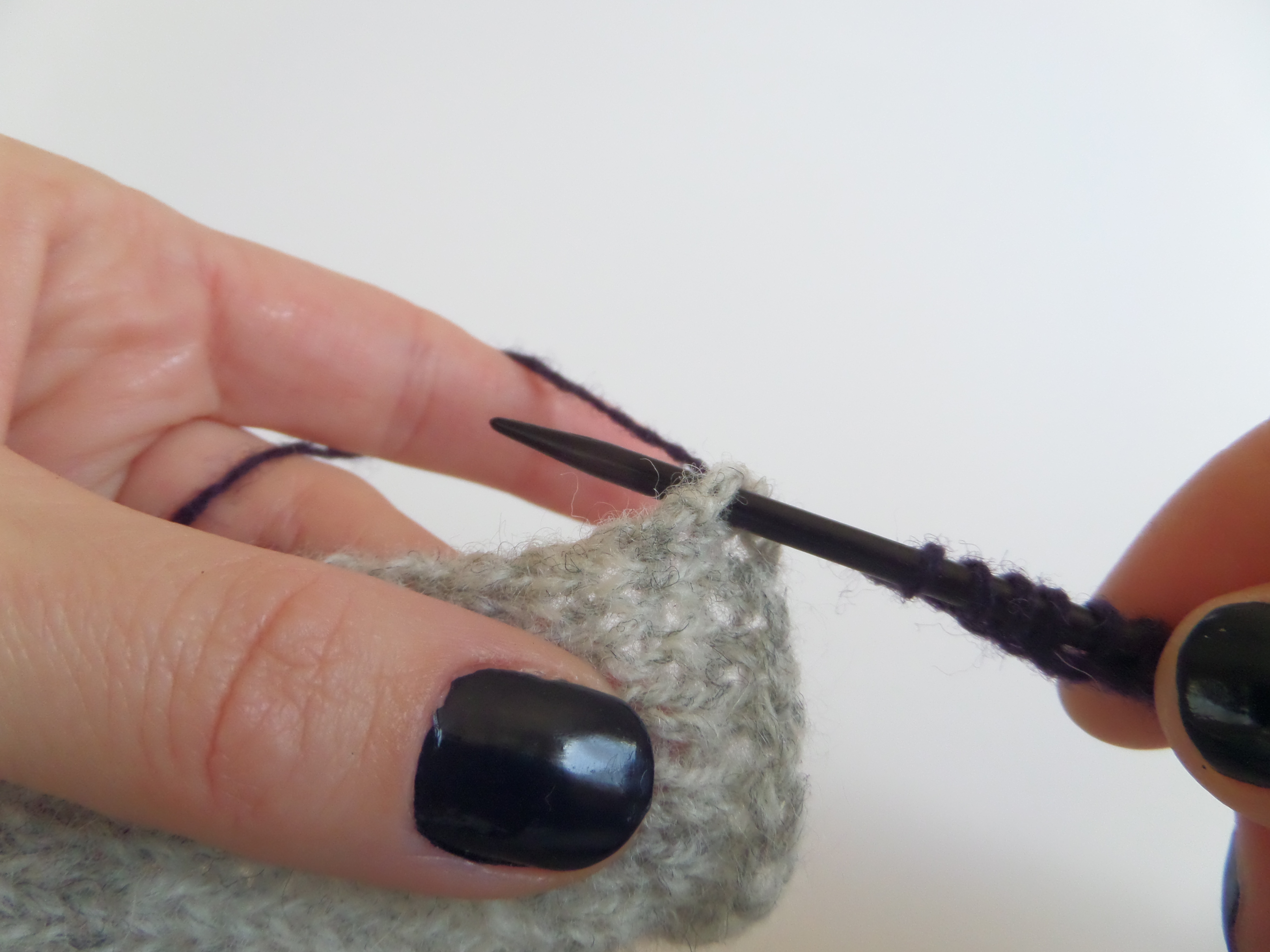
    Step 2: Pull a loop through.SAMSUNG CAMERA PICTURES

    Step 3: Remove the loop from the needle and pull out enough yarn to comfortably knit the next 2 rows. The excess length will be removed later so this does not need to be exact.SAMSUNG CAMERA PICTURES

    Step 4: Work the first wrong-side row of the band with the bottom half of the loop.SAMSUNG CAMERA PICTURES

    Step 5: Work the second right-side row of the band with the top half of the loop and pull tight so the band is snugged up against the front.SAMSUNG CAMERA PICTURES
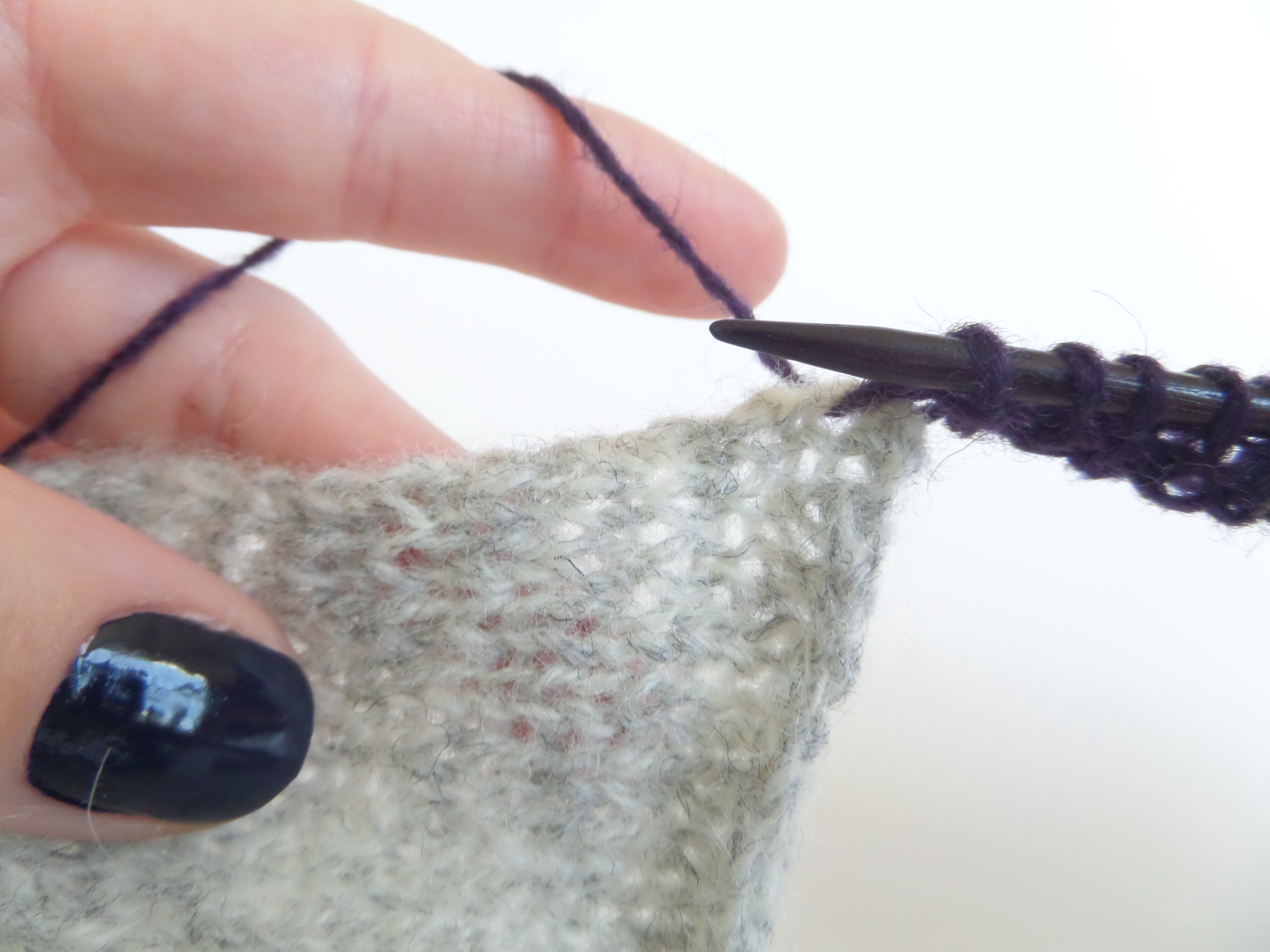
    Repeat steps 1 through 5 for the length of the fronts. Two rows are worked for every picked-up loop, so you will have to skip every second row on the sweater front for the band to have the same number of rows. If you are working a round neck cardigan, both bands can be worked first and continued into the neck band. For v-neck cardigans, the bands can continue around the neck edge to be joined at the back neck.

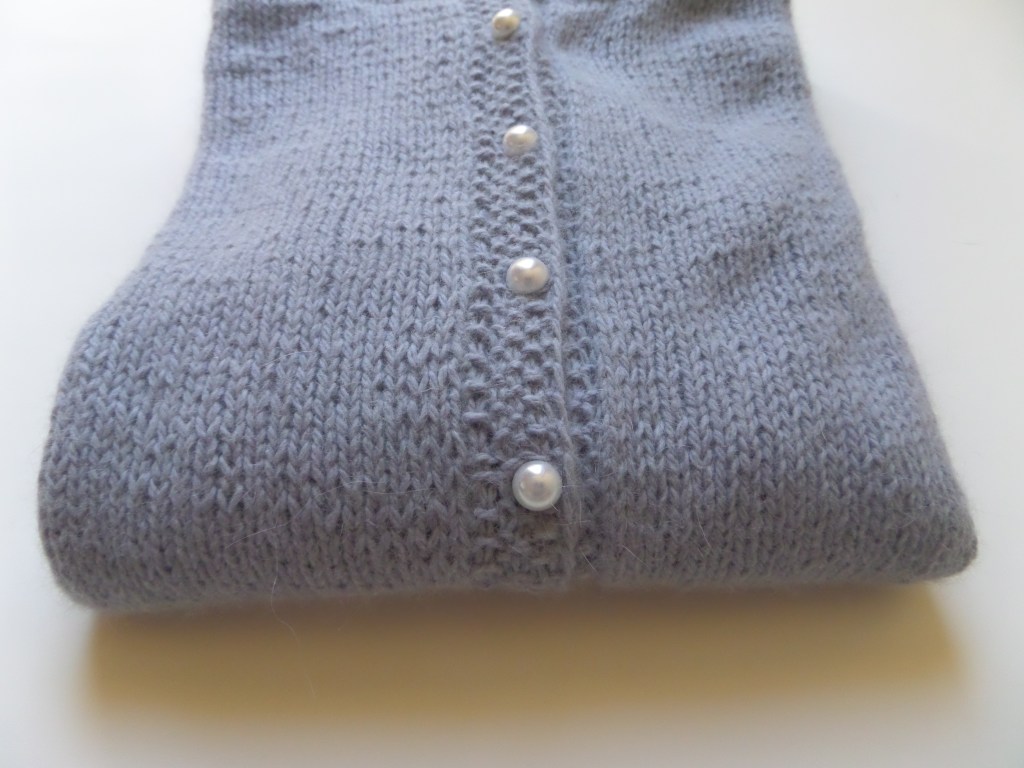
    Cardigans aren’t the only use for the side-to-side join! Anywhere you would would like to attach a parallel piece of knitting to an already finished piece this method will work. The cover photo and the photos below are examples of sweaters that I made using this technique.

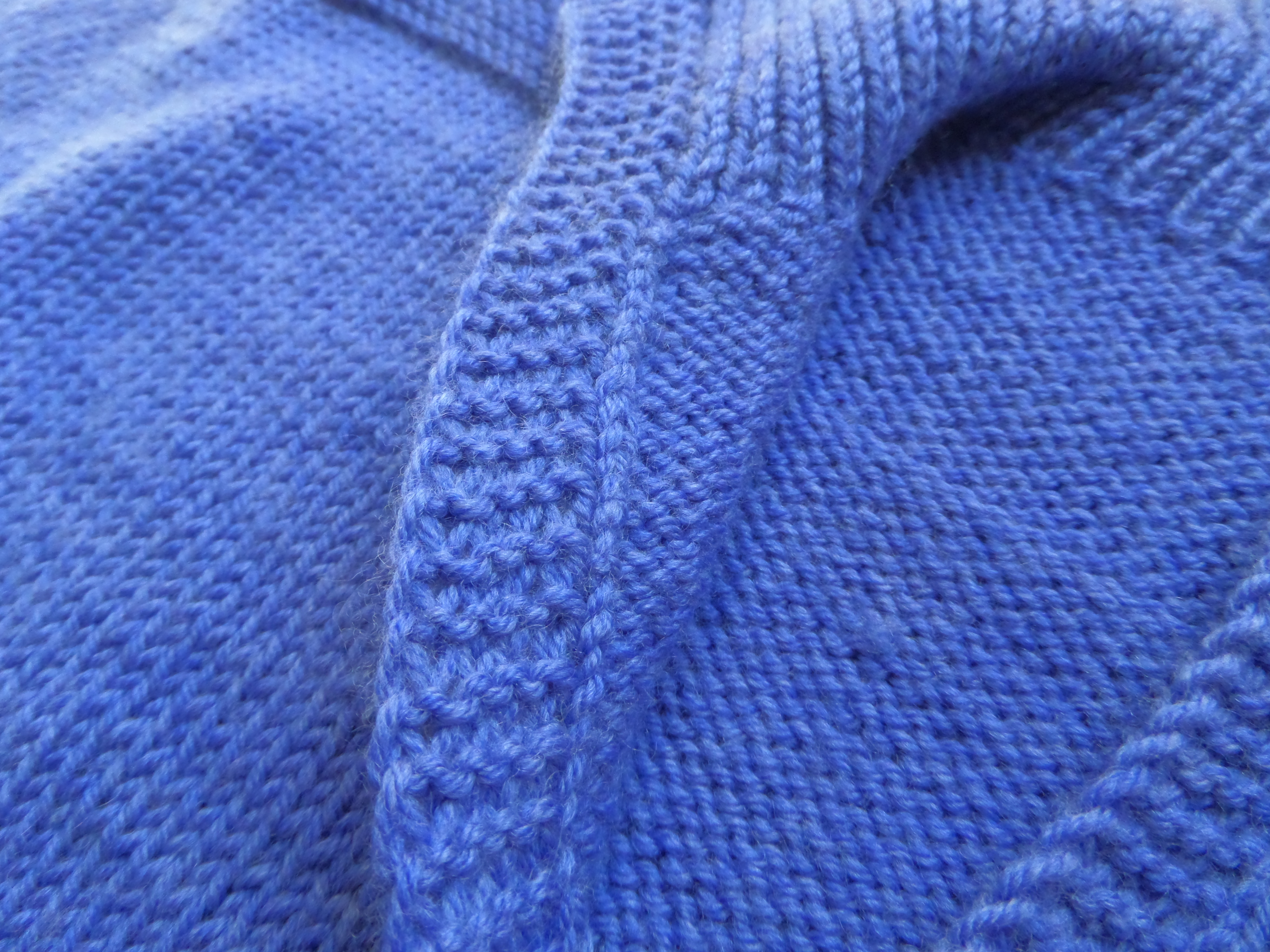
    Garter stitch bands.
    Garter stitch bands.
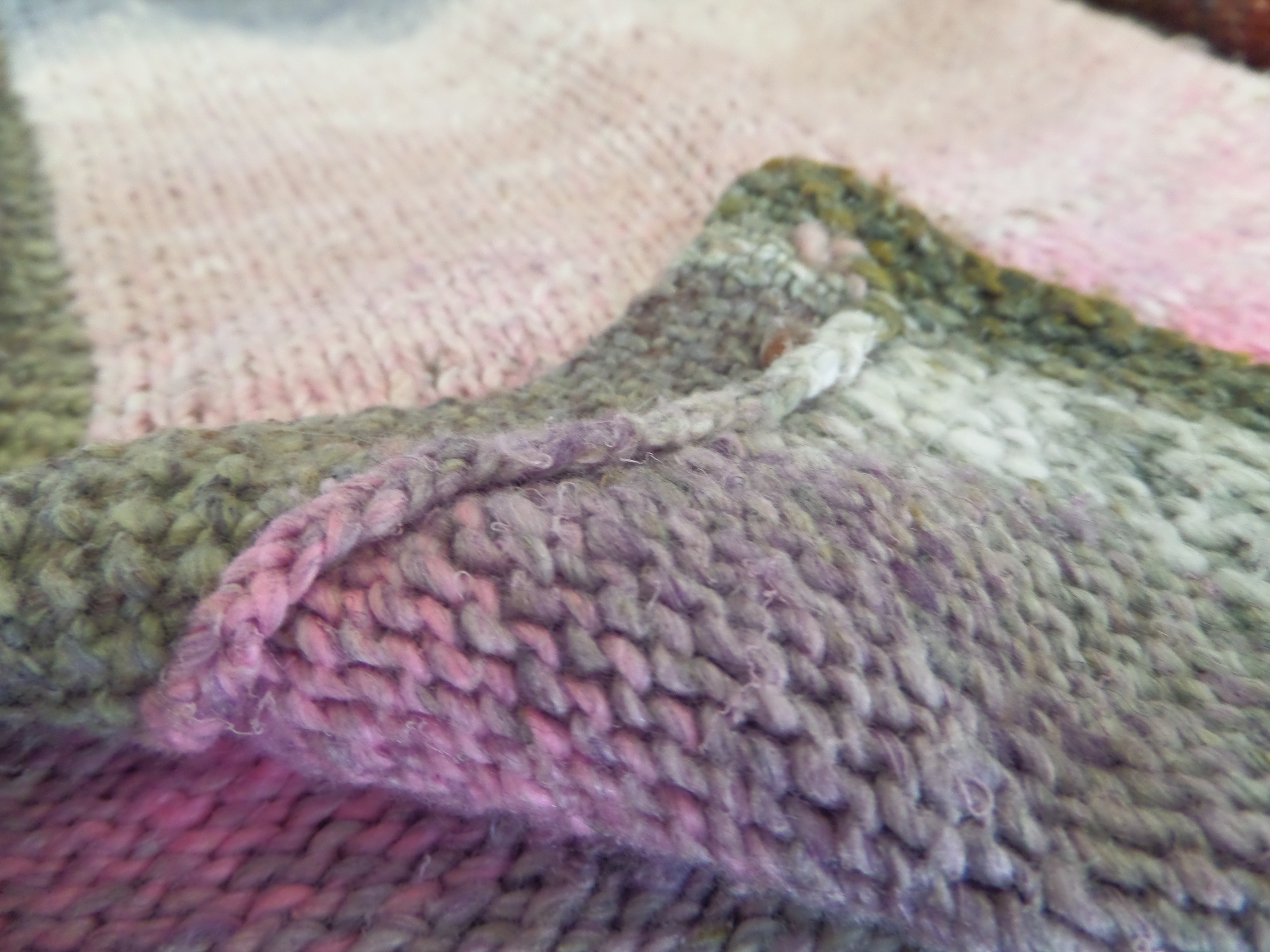
    From the wrong side you can see hoe the band continues into the collar.
    The wrong side view, Here you can see how the band continues into the collar.
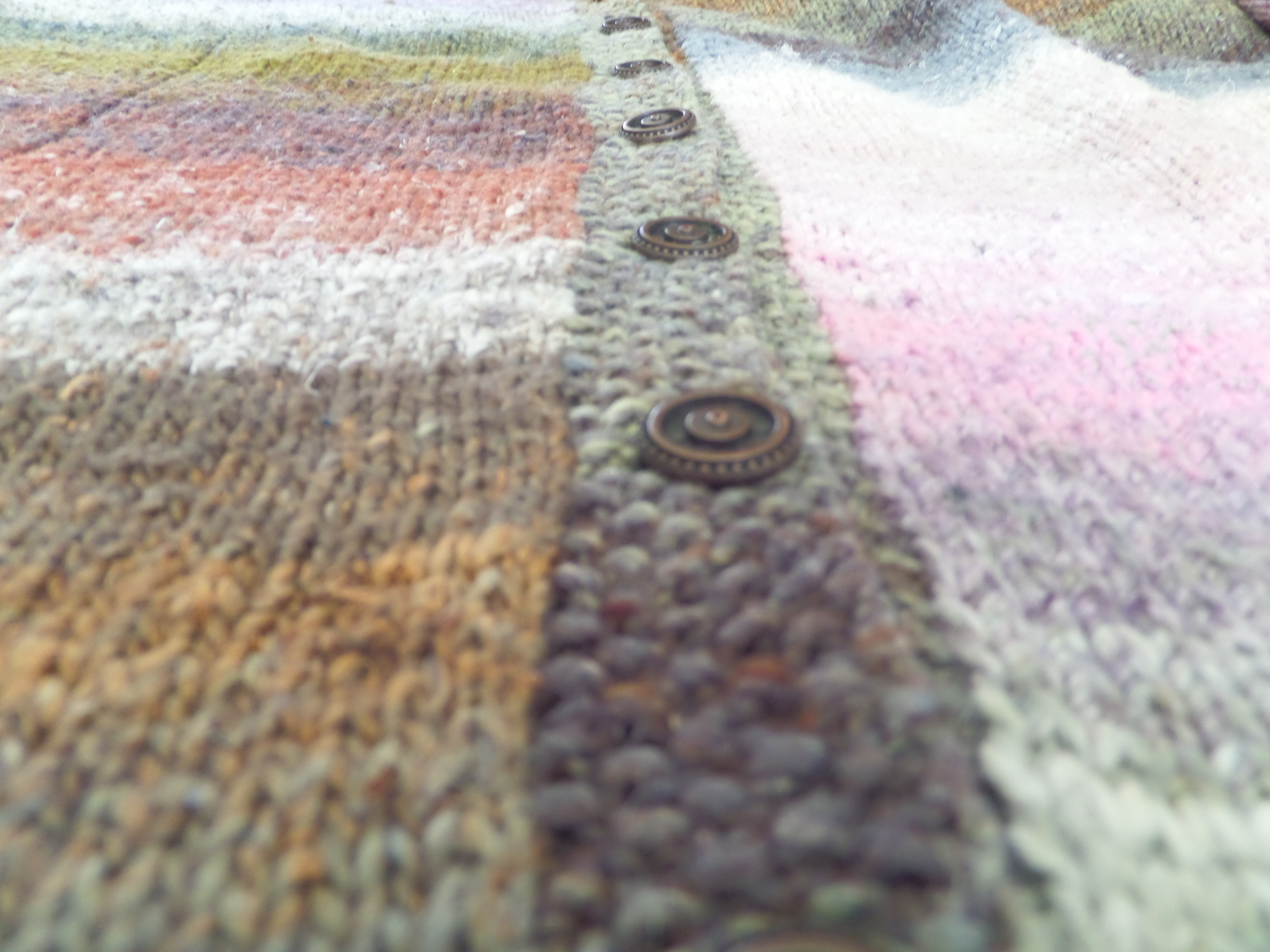
    Seed stitch bands.
    Seed stitch bands.
    The wrong side view.
    From the inside.
    SAMSUNG CAMERA PICTURES
    Knit 1, purl 1 ribbing seen from the right side on the left and the wrong side on the right.

    Let me know in the comments if you’ve seen this method before or if you’ve tried it yourself.

    Thank you for knitting!

  • Lake Geneva Sweater

    Lake Geneva Sweater

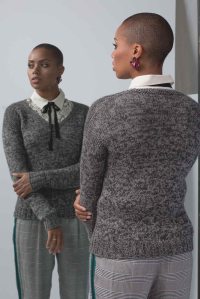
    The Lake Geneva Sweater is my design for the Winter issue of Knitscene. It’s a top-down, drop shoulder, V-neck sweater, made entirely without seams. The marled effect is created by holding two strands of fingering weight yarn together. For the sample I used Cascade Yarns Sorata in Charcoal and Silver. I love the simplicity of this design and I think it will be a fun and easy knit for both beginner and experienced sweater knitters. Worked at a worsted weight gauge, this sweater goes fast!

    Copyright Knitscene/Harper Point Photography


    One of my favorite features of this design is the way the shoulders are shaped. Drop shoulders can get a little droopy (think of big shouldered sweaters from the 1980s) unless they are tapered toward the sleeve, and that is usually achieved by working short rows. For this design I did something even easier; the shoulders are worked in garter stitch and the taper is created by gradually working more stitches in stockinette stitch until only the armhole border is worked in garter stitch. The shorter row gauge of garter stitch makes the length at the armhole shorter than at the neck edge.

    Copyright Knitscene/Harper Point Photography


    The V-neck shaping couldn’t be simpler from the top down. There is no need to cast on stitches for the front neck as you would for a round neck, instead increases are worked at the neck edge until there are enough stitches to join the fronts and work in the round. The V-neck shaping was carefully planned so that it doesn’t start until the garter stitch shoulders are complete, and the fronts are joined at the base of the neck on the same row the front and back are joined at the armhole. I’m not a fan of “at the same time” instructions, so I avoid them whenever possible!

    Copyright Knitscene/Harper Point Photography


    The body of the pullover is worked straight to the hem, and the sleeves are picked up and worked in the round from the armholes, so after doing the hard work of shaping the neck and shoulders it’s all mindless stockinette. There is a little column of garter stitches on each side, which acts as a faux seam and makes a fun detail. It is also repeated on the sleeves at the underarm. Ribbed cuffs and hem complete the sweater adding to the casual, comfortable feel.

    The Winter issue of Knitscene is available in the Interweave Store, and at bookstores and yarn shops all over. Thank you for knitting!